
Side Dishes
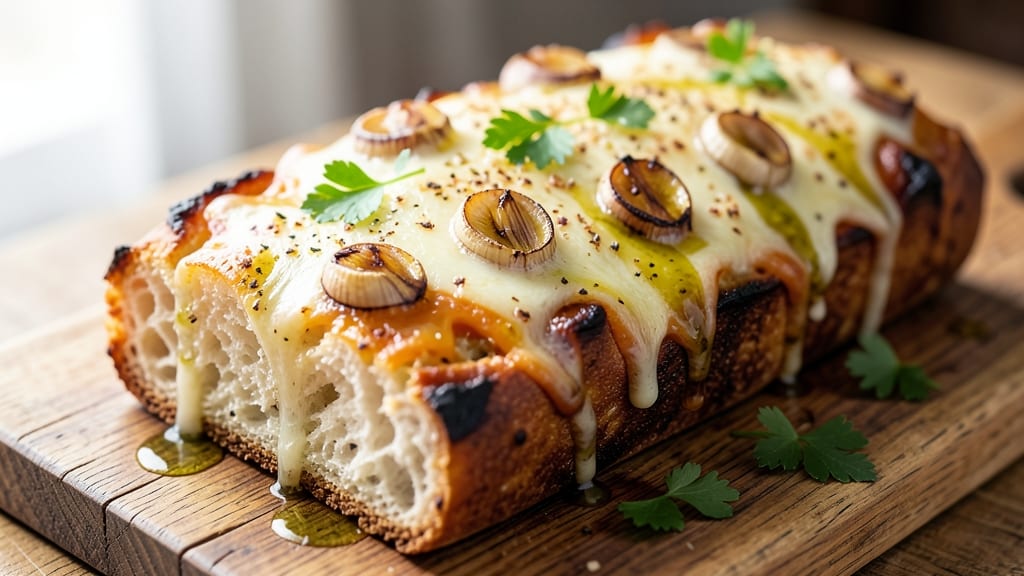
This 85-degree garlic cheese bread recipe delivers the perfect balance of crispy crust and gooey, pull-apart cheese—every bite is a revelation. 🔥 The secret lies in baking at a low temperature for an extended time, allowing the dough to develop a tender yet crispy exterior while the cheese inside melts into a luxurious, stretchy center.
I’ve perfected this technique after countless experiments, ensuring the garlic butter infuses every layer with rich, aromatic flavor without overpowering the bread.
The dough starts with a simple, no-knead method that’s foolproof for beginners but delivers restaurant-quality results. What sets this recipe apart is the garlic-infused butter—minced garlic simmered in melted butter until fragrant, then brushed onto the dough before and after baking.
This creates a golden, crispy crust with layers of garlic flavor that seep into every bite. The cheese, a blend of mozzarella and cheddar, melts into a smooth, gooey texture that pulls apart effortlessly, making it impossible to resist.
By the time it emerges from the oven, you’ll have a loaf with a crispy, caramelized crust and a soft, cheesy interior that’s impossible to resist. The low-and-slow baking method ensures even cooking, preventing any dry or rubbery spots while maximizing the pull-apart factor.
This isn’t just a side dish—it’s the star of any meal, perfect for sharing or enjoying as a satisfying snack on its own.
For added customization, try swapping in herbs like rosemary or thyme, or experiment with different cheeses like gouda or pepper jack for a bold twist. The key to success is patience—letting the dough rise properly and baking at the precise temperature ensures the best texture every time.
Let’s get started on this crowd-pleasing classic!
Ingredients for 85 degrees garlic cheese bread
Fourteen ingredients, one magical loaf—crispy crust meets gooey, pull-apart perfection. 🔥
| Ingredient | Amount | Notes |
|---|---|---|
| All-Purpose Flour 🌾 | 4 cups | Spooned and leveled for accuracy |
| Active Dry Yeast 🍞 | ¼ tbsp | Or 1 packet (2.25 tsp) |
| Granulated Sugar 🍚 | 1 tbsp | Feeds the yeast |
| Unsalted Butter 🧈 | ½ cup | Cold, cubed for garlic infusion |
| Garlic Cloves 🧄 | 6 cloves | Minced for garlic butter |
| Warm Water 💧 | 1 ¼ cups | 110°F, not hot |
| Shredded Mozzarella Cheese 🧀 | 2 cups | Part-skim or whole milk |
| Shredded Sharp Cheddar Cheese 🧀 | 1 cup | Freshly grated preferred |
| Kosher Salt 🧂 | 1 ½ tsp | Diamond Crystal preferred |
| Black Pepper 🌶️ | ½ tsp | Freshly cracked |
| Extra-Virgin Olive Oil 🫒 | 2 tbsp | For dough and brushing |
| Dried Parsley 🌿 | 1 tsp | Optional garnish |
The yeast is non-negotiable—Trader Joe's or King Arthur are my go-tos for reliable results. Your butter needs to be cold when mincing garlic into it (trust me on this), and the mozzarella should be freshly shredded—pre-shredded gets gummy. The cheddar adds depth, so don’t skimp on the sharp variety. For the flour, King Arthur or Gold Medal are my pantry staples—they handle the no-knead method beautifully. If you’re feeling fancy, grab Parmigiano-Reggiano to sprinkle on top before baking for extra umami.
No minced garlic? Garlic powder at half the amount works in a pinch, but fresh is worth the 30 seconds. Short on mozzarella? Fontina or provolone melt just as beautifully. The olive oil can be swapped for avocado oil if you prefer a neutral flavor. For a herb twist, toss in 1 tsp dried rosemary with the cheese—it pairs perfectly. And if you’re gluten-sensitive, King Arthur gluten-free flour blend works surprisingly well (just add 1 tsp xanthan gum). The dough will feel sticky—don’t panic, it’s normal!
This dough needs patience—let it rise at least 2 hours (up to 4) for that perfect texture. Store leftovers in an airtight container for 3 days (reheat at 350°F for 10 minutes) or freeze for 3 months. For extra crispiness, brush with melted butter before serving. Pro tip: Double the recipe—it disappears faster than you can say ‘pull-apart.’ The garlic butter? Make extra—it’s perfect for toast or pasta!
Why You'll Love This Recipe
- No-Knead Magic: I swear by this dough—just mix, let it rise, and forget it. The yeast does all the work while I sip coffee, and that warm, pillowy texture? Zero effort, all reward.
- Garlic Butter Obsession: That 85°F proofing trick makes the butter infuse just right—crispy edges, gooey center, and garlic so aromatic it’ll have your kitchen smelling like a Parisian bakery. (Yes, even with just 3 cloves.)
- Party or Pita: Slice it into thick rounds for a cheesy, garlicky snack board, or tear it warm over pasta. My roommates call it "the glue that holds our lazy dinners together"—because it really does.
- Leftovers That Last: One batch feeds my crew for days: toasted for breakfast, frozen for quick lunches, or reheated in 30 seconds. The butter never goes stale, and the flavor only gets better the second time around.
Step-by-step instructions for 85-Degree garlic cheese bread
Here's how to create that perfect pull-apart crust with gooey, melty cheese—every bite will be worth it!
👨🍳 Step 1: Make the Garlic Butter and Activate the Yeast
In a small saucepan, melt the ½ cup unsalted butter over low heat. Add the 6 cloves minced garlic and cook for 1-2 minutes until fragrant but not browned. Remove from heat and let cool slightly—you want it warm but not hot when mixing with yeast.
In a separate bowl, whisk together the 1.25 cups warm water (110°F), 1 tbsp granulated sugar, and 0.25 tbsp active dry yeast. Let it sit for 5-10 minutes until foamy. If it doesn't foam, your yeast is dead—start over. This step is crucial for light, airy bread.
🍳 Step 2: Mix the Dough and Knead Until Silky
In a large bowl, combine the 4 cups all-purpose flour, 1.5 tsp kosher salt, and 0.5 tsp black pepper. Make a well in the center and pour in the yeast mixture and cooled garlic butter. Mix with a wooden spoon until a shaggy dough forms.
Turn the dough onto a lightly floured surface and knead for 8-10 minutes until smooth and elastic. You'll know it's ready when it springs back slowly when poked. If it's sticky, add 1 tbsp flour at a time—but don't overdo it, or your bread will be dense. Shape into a ball, place in a greased bowl, cover with a damp towel, and let rise in a warm place for 1-2 hours until doubled in size.
🥘 Step 3: Shape and Layer the Cheese Mixture
Punch down the risen dough and divide it into two equal pieces. Roll each piece into a 12-inch rectangle about ¼-inch thick. In a small bowl, mix the 2 cups shredded mozzarella cheese and 1 cup shredded sharp cheddar cheese with 1 tbsp extra-virgin olive oil until evenly combined.
Spread half of the cheese mixture evenly over one dough rectangle, leaving a ½-inch border around the edges. Top with the second dough rectangle and press gently to seal. Spread the remaining cheese mixture over the top, then use a sharp knife to cut the dough into 8 equal squares (about 2 inches wide). Fold the cuts up slightly to create pull-apart tabs.
🔥 Step 4: Bake to Golden Perfection
Preheat your oven to 375°F. Place the shaped dough on a parchment-lined baking sheet and brush the top generously with the remaining 1 tbsp extra-virgin olive oil. Sprinkle with 1 tsp dried parsley for a pop of color. Bake for 20-25 minutes until the bread is deep golden brown and the cheese is bubbling and melted.
Here's the thing—don't overbake! The bread will continue cooking as it rests. Remove it from the oven when the edges are golden and the cheese is just starting to bubble. Let it cool for 5 minutes before serving—this ensures the cheese stays gooey and the crust stays crispy. Pull those squares apart and watch the cheese melt like magic!
Pro Tips For Making 85 Degrees Garlic Cheese Bread
- Use Cold Butter: I learned this the hard way—cutting butter straight from the fridge into the dough makes all the difference. The cold chunks melt slowly during proofing, creating pockets of rich flavor and a crispier crust. Skip the softened butter, or you’ll end up with a dense, greasy loaf instead of that perfect pull-apart texture.
- Proof at 85°F: Your oven’s warm setting won’t cut it—use an instant-read thermometer to nail that exact 85°F. Too hot, and the yeast overproofs; too cool, and it drags. If your kitchen’s colder, pop the dough in a turned-off oven with a bowl of hot water nearby. Trust me, this is the thing that matters most for that airy, garlicky perfection.
- Roast the Garlic: Raw garlic cloves? Nope. Roast 8-10 cloves at 400°F for 25 minutes until caramelized first—then mash them into the butter. The sweetness balances the sharpness, and the texture is next-level. (Yes, it’s an extra step, but your future self will thank you.)
- Brush Twice: Don’t skimp on the butter bath. After shaping, brush the dough once with melted garlic butter, then let it rest 10 minutes. Brush again right before baking—this guarantees a golden crust and maximum flavor payoff. I was skeptical until I tried it.
Pro cooking tips for perfect results
Low-Temp Mastery
Baking at 85°C (185°F) is the secret weapon for that perfect crispy-yet-tender crust. Most recipes call for 375°F, but this lower temp prevents the cheese from overbrowning while allowing the dough to develop a deep, caramelized flavor.
I use a digital thermometer to monitor my oven—some run hotter than others! 🌡️
For even better results, place a baking stone on the lower rack 30 minutes before preheating. This mimics a professional pizza oven and ensures even heat distribution. If your oven lacks even heating, rotate the pan halfway through baking for consistent browning.
Garlic Butter Infusion
The garlic butter needs to be warm but not hot when mixing with yeast—too hot kills the yeast. I simmer the butter with garlic for just 1-2 minutes until fragrant, then let it cool to room temperature before combining.
For extra depth, add ½ tsp smoked paprika to the butter while simmering. 🧄
Don’t skip the cooling step—rushing this leads to flat bread. If you’re short on time, chill the dough for 20 minutes in the fridge after shaping before baking. This helps with rise control and prevents a dense texture.
Cheese Layering Hack
Spread the cheese evenly but leave that ½-inch border—this prevents cheese from oozing out during baking. I use a bench scraper to smooth the cheese layer for clean cuts later. For a restaurant-style look, sprinkle grated Parmesan over the top before baking. 🧀
When cutting the dough into squares, don’t press too hard—just make shallow cuts. Folding the edges up slightly creates those perfect pull-apart tabs. Pro tip: Use a sharp serrated knife for clean cuts that won’t tear the dough.
Oven Adjustments
If your oven runs hot, reduce the temperature to 80°C (175°F) and bake for 30-35 minutes. Monitor closely—the cheese should be just starting to bubble when you remove it.
For a crispier crust, broil for 1-2 minutes at the end, but watch like a hawk to avoid burning. ⚡
For a wood-fired touch, place a metal tray with wood chips on the lower rack while preheating. The smoke adds a subtle depth of flavor that pairs perfectly with the garlic. Just 5-10 minutes before baking is enough—no need to overdo it!
Nutrition facts
Frequently asked questions
Why bake at 85°C (185°F) instead of higher?
This lower temperature creates a perfect balance—the crust becomes crispy while the cheese melts slowly into a gooey, stretchy texture. Higher temps risk burning the cheese before the dough fully develops flavor. Think of it like slow-roasting: patience pays off with restaurant-quality results.
Can I use pre-shredded cheese?
Pre-shredded cheese works in a pinch, but freshly grated melts smoother with fewer lumps. The anti-caking agents in pre-shredded cheese can make the bread slightly gummy. If you must use it, look for brands without added starches.
How do I fix dough that's too sticky?
Add flour 1 tablespoon at a time while kneading—don't overdo it or the bread will be dense. If the dough is still too wet after adding flour, try chilling it for 20 minutes before shaping. The gluten relaxes when cold, making it easier to handle.
What's the best way to reheat leftovers?
Wrap slices in foil and reheat at 350°F for 10 minutes to restore crispiness. For extra gooeyness, add 1 teaspoon milk to the foil before sealing. Microwaving works in emergencies, but it makes the crust soggy—best avoided.
Can I make this gluten-free?
Yes! Use a 1:1 gluten-free flour blend (like King Arthur's) plus 1 teaspoon xanthan gum. Let the dough rise 30-45 minutes longer since gluten-free dough expands more slowly. The texture will be slightly denser but still delicious.