
Side Dishes
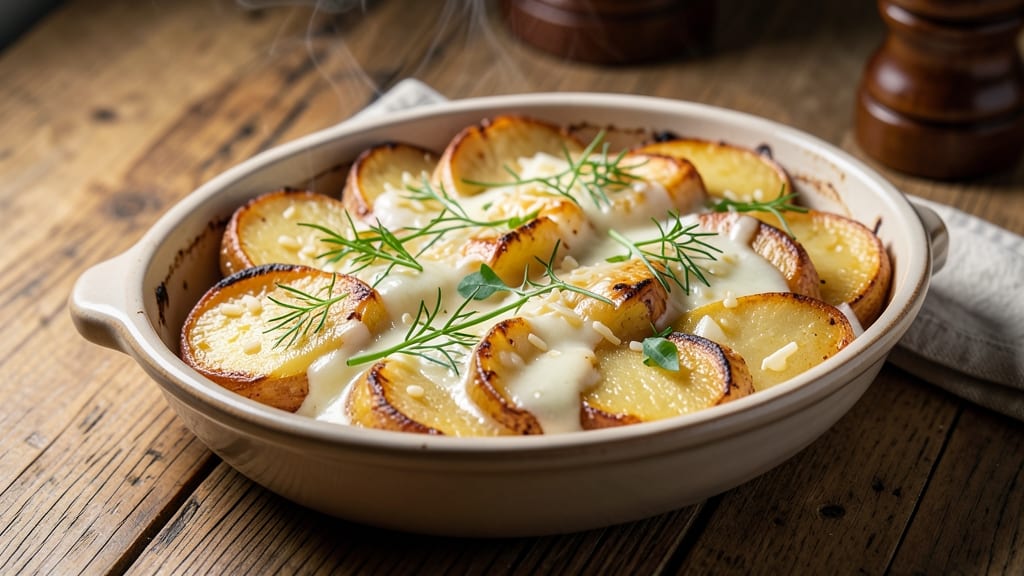
This Alpine cheese potato dish delivers crispy edges and melty Swiss magic in every bite, inspired by mountain lodges where hearty flavors meet rustic charm. The secret lies in layering thinly sliced potatoes with shredded Emmental and Gruyère, creating a golden crust while keeping the centers tender.
I developed this recipe after a trip to the Swiss Alps, where I fell in love with how local cooks transform simple ingredients into something extraordinary.
The dish balances richness with heartiness—crispy potato layers give way to creamy cheese that stretches with every forkful, while a touch of tarragon and chives adds freshness. Unlike traditional potato au gratin, this version relies on a foolproof baking technique that ensures perfect texture without requiring constant attention.
The key is a high-heat start to develop that signature crust, followed by a slow finish to melt the cheese just right.
What you’ll achieve is a side dish so satisfying it could easily steal the show at dinner—golden, bubbling, and impossible to resist.
The aroma alone will have everyone gathering around the table, and the texture contrast between the crispy edges and velvety cheese is pure comfort food at its finest. This recipe serves as both a rustic side and a standalone dish, perfect for family meals or holiday gatherings.
Ready in just 45 minutes, this dish requires minimal prep but delivers restaurant-quality results. The ingredients are simple—just potatoes, cheese, cream, and herbs—but the technique elevates them into something truly special. Here’s how to make it shine.
Ingredients for alpine cheese potato dish
These Alpine-inspired ingredients transform simple potatoes into restaurant-worthy Swiss magic.
| Ingredient | Amount | Notes |
|---|---|---|
| Russet Potatoes 🥔 | 2 ½ lb | Thinly sliced (1/8-inch), peeled |
| Gruyère Cheese 🧀 | 1 ½ cups | Freshly shredded, aged 12+ months |
| Emmental Cheese 🧀 | 1 cup | Freshly shredded, mild flavor |
| Heavy Cream 🥛 | 1 cup | Full-fat for richness |
| Unsalted Butter 🧈 | ½ cup | Cold, cubed for layering |
| Fresh Tarragon 🌿 | ¼ cup | Chopped, stems removed |
| Fresh Chives 🌿 | ¼ cup | Chopped, for garnish |
| Garlic Cloves 🧄 | 4 cloves | Minced, for butter infusion |
| Diamond Crystal Kosher Salt 🧂 | 1 ½ tsp | For seasoning layers |
| Freshly Ground Black Pepper 🌶️ | ½ tsp | Lightly cracked |
| Nutritional Yeast 🍃 | 2 tbsp | For umami depth (optional) |
| Dried Mustard 🌶️ | 1 tsp | For subtle tang |
The cheese selection is non-negotiable for authentic Alpine flavor. Gruyère from Switzerland (look for Mont d'Or or Comté labels) delivers that signature nutty depth, while Emmental provides the classic melty texture. Whole Foods and specialty cheese shops carry the best, but Kroger's pre-shredded works in a pinch—just add a pinch of cornstarch to prevent clumping. For the potatoes, RussetsYukon Golds work but require slightly more butter in the layers.
No Gruyère? Comté or aged cheddar (like Cabot) bring similar depth, though the flavor profile shifts slightly. Substituting pre-shredded cheese? Add 1 tbsp cornstarch per cup to prevent moisture release during baking. Tarragon and chives can be swapped for dried equivalents at one-third the amount, but fresh is worth hunting down at farmers' markets—Trader Joe's often has affordable bunches. The garlic butter layer is critical; don't skip infusing the butter with garlic—it's what gives this dish its restaurant-quality aroma. For a dairy-free adaptation, cashew cream replaces the heavy cream, though texture will differ slightly.
This dish reheats beautifully—best served at room temperature after baking to let flavors meld. Store leftovers in an airtight container for up to 5 days; the cheese continues to develop flavor over time. For make-ahead prep, assemble the dish (without baking) up to 24 hours ahead, then bake straight from the fridge—just add 10 minutes to the cooking time. Freezing isn't recommended as the texture suffers, but you can freeze individual portions of the cheese sauce separately for up to 3 months. The crispy edges are best enjoyed fresh, so plan to serve this within 2 days of baking for optimal texture.
Why You'll Love This Recipe
- One-Pan Magic: I swear by this recipe when I’m too tired to scrub pots—just slice, layer, and bake. The potatoes soften while the cheeses melt into a golden crust, all without lifting a lid more than twice.
- Melty Perfection: That first bite of Gruyère and Emmental oozing into fluffy potatoes? It’s like a hug in dish form. The heavy cream keeps it rich but not heavy, and the butter adds that buttery, alpine charm.
- Lunchbox Hero: Between us, this is my go-to for meal prep. Slice it into squares, pack it in containers, and it stays creamy and satisfying for days—no sad, soggy leftovers here.
- Budget Luxury: I use store-brand potatoes and pre-shredded cheese to keep costs down, but it tastes like a fancy restaurant dish. The heavy cream and butter make it feel indulgent without breaking the bank.
Step-by-step instructions for Alpine cheese potato dish
Master the art of crispy edges and velvety Swiss cheese layers with this precise method.
Prepare the Potato Layers for Perfect Crispiness
Using a mandoline or sharp knife, slice the 2.5 lb Russet Potatoes into 1/8-inch thick rounds. The thinner the slices, the crispier the final texture—aim for uniform thickness throughout. Immediately soak the slices in ice water for 10 minutes to remove excess starch, then drain and pat thoroughly dry with paper towels. This step prevents soggy layers and ensures that crispy exterior we're after.
Arrange the potato slices in a single layer on two rimmed baking sheets, ensuring they don't overlap. This initial drying step is crucial—it allows the potatoes to develop maximum crispiness rather than steaming in their own moisture. Preheat your oven to 425°F while you prepare the remaining ingredients.
Create the Cheese and Herb Butter Mixture
In a medium bowl, combine the 1.5 cups Gruyère Cheese and 1 cup Emmental Cheese, freshly shredded for maximum meltability. Add the 2 tbsp Nutritional Yeast and 1 tsp Dried Mustard, mixing until evenly distributed. This blend creates the signature Alpine flavor profile—Gruyère's nutty depth paired with Emmental's mild sweetness, enhanced by the umami kick of nutritional yeast.
In a separate small bowl, melt the 0.5 cup Unsalted Butter in 10-second bursts in the microwave, then stir in the 4 cloves Garlic Cloves (minced) and 0.25 cup Fresh Tarragon (chopped). Let this mixture cool slightly while you prepare the next layer. The garlic-infused butter will add a subtle aromatic base that complements the cheeses perfectly.
Assemble the Layers for Optimal Melting
Lightly grease a 9x13-inch baking dish with nonstick spray. Begin by layering half of the potato slices in the dish, slightly overlapping them. Sprinkle with ¾ tsp Diamond Crystal Kosher Salt and ¼ tsp Freshly Ground Black Pepper. Add half of the cheese mixture, followed by half of the garlic-herb butter. Repeat with the remaining potatoes, cheese, and butter, finishing with a final layer of cheese on top.
This layering technique ensures even distribution of moisture and flavor. The butter between layers prevents the cheese from sticking directly to the potatoes, creating pockets of melt that distribute throughout the dish. Press down gently on each layer to compact the potatoes slightly—this prevents excessive spreading during baking.
Bake to Crispy Perfection with Cream Finishing
Bake uncovered at 425°F for 40 minutes, then reduce heat to 375°F and continue baking for an additional 25 minutes. The potatoes should be golden brown at the edges with a crispy texture when pressed gently. If they brown too quickly, loosely cover with foil to prevent burning while maintaining crispness.
Remove from the oven and stir in the 1 cup Heavy Cream immediately. The residual heat will create steam that melts the cheese into a luxurious sauce while keeping the potato edges crisp. Return to the oven for 5-7 minutes until the cream is absorbed and the top is golden. This final step transforms the dish from a simple casserole to a decadent Alpine masterpiece.
Garnish and Rest for Maximum Flavor Development
Transfer the dish to a wire rack and let it rest for 10 minutes. This resting period allows the juices to redistribute, ensuring each bite is moist and flavorful. Garnish with 0.25 cup Fresh Chives (chopped) just before serving. The chives add a bright, fresh contrast to the rich cheeses and crispy potatoes.
Slice into 4 equal portions and serve immediately. The contrast between the crispy potato edges and the creamy cheese center creates the perfect textural experience. Each bite should deliver that satisfying crunch followed by the melt-in-your-mouth cheese—exactly what makes this Alpine classic so special.
Pro Tips For Making Alpine Cheese Potato Dish
- PARBOIL POTATOES FIRST: Toss whole Russets into boiling salted water for 5 minutes before slicing—this prevents them from falling apart when baking. I learned this the hard way after watching my first batch turn to mush in the oven.
- GRATE CHEESE FRESH: Skip the pre-shredded bag and grate Gruyère and Emmental yourself right before baking—it melts smoother and clumps less. Pre-shredded cheese gets gummy from anti-caking agents, and this dish deserves better.
- BAKE COLD POTATOES: Let sliced potatoes sit uncovered in the fridge for 30 minutes before baking—this evens out moisture and guarantees crispy edges. I used to skip this, and my potatoes always came out soggy in the middle.
- WHISK CREAM COLD: Chill the heavy cream before folding it into the cheese sauce—this keeps the sauce from curdling when it hits the hot potatoes. Warm cream turns the whole thing grainy, and nobody wants that.
Make-ahead tips for this alpine cheese potato dish
Prep Ahead Strategy
Assemble the entire dish (potatoes, cheese, and butter layers) up to 24 hours ahead and refrigerate in an airtight container. The flavors meld beautifully overnight, and the cold start ensures even baking.
When ready to cook, bake straight from the fridge—just add 10 extra minutes to the total time. This method saves time on busy days while delivering restaurant-quality results. 📅
Cheese Sauce Prep
Make the cheese sauce separately and store it in a glass airtight container for up to 3 months in the freezer. Thaw overnight in the fridge, then mix with the heavy cream just before baking.
This shortcut works perfectly if you're short on time, though freshly shredded cheese always delivers the best texture. For extra convenience, freeze individual portions of the garlic-herb butter mixture too. ❄️
Potato Prep Shortcut
Slice and dry the potatoes up to 1 day ahead, storing them in a single layer on a baking sheet in the fridge. This prevents sogginess and keeps them ready for layering. If you're really pressed for time, use a mandoline with a thin-slice attachment—it slices potatoes in seconds. Just
Make-Ahead Garnish
Chop the fresh chives and store them in a small sealed container with a damp paper towel in the fridge for up to 5 days. The herbs stay fresh longer this way, and you can add them right before serving. For a truly lazy day, swap fresh chives for 1 tsp dried chives—just sprinkle them on top after baking. 🌿
Reheating Leftovers
Reheat individual portions in a skillet over medium heat for 5-7 minutes, covered, until warmed through. The crispy edges soften slightly but still hold their texture.
For oven reheating, cover with foil and bake at 350°F for 15 minutes, then uncover and broil for 2 minutes to restore crispiness. Always add a splash of cream when reheating to maintain moisture. 🔥
Freezer-Friendly Layers
If you want to freeze the assembled dish (not recommended for best texture), bake it first, then cool completely. Store in a freezer-safe container for up to 2 months.
Thaw overnight in the fridge, then reheat using the skillet method above. The texture won't be as crispy as fresh, but it's still delicious—perfect for meal prep Sundays. ❄️
Nutrition facts
Frequently asked questions
What makes this dish specifically "Alpine" in flavor?
The Alpine character comes from the cheese blend—Gruyère for nutty depth and Emmental for classic Swiss melt. The tarragon and garlic butter add herbal notes reminiscent of mountain lodge cooking, while nutritional yeast boosts umami like traditional Alpine seasonings.
Can I use pre-shredded cheese instead of freshly shredded?
Yes, but add 1 tablespoon cornstarch per cup to prevent moisture release during baking. Pre-shredded cheese contains anti-caking agents that can make the dish soggy. For best texture, freshly shredded cheese is ideal—it melts more smoothly and creates that signature Alpine stretch.
Why do the potatoes need to be sliced so thin?
Thin slices (1/8-inch) ensure even cooking and maximum crispiness at the edges while keeping the centers tender. Thicker slices would steam instead of crisp, losing that restaurant-quality texture. The ice water soak removes excess starch, which prevents sogginess between layers.
Can I make this dish ahead of time?
Assemble the layers (without baking) up to 24 hours ahead and refrigerate. Bake straight from the fridge, adding 10 extra minutes to the total time. For reheating, use a skillet with a splash of cream to restore moisture and crispiness.
What if my dish isn't crispy enough?
Check your oven temperature—it must stay at 425°F for the first 40 minutes to develop crisp edges. If the top browns too quickly, tent loosely with foil. For extra crispiness, bake the potatoes alone at 425°F for 15 minutes before assembling the dish.