
Appetizers
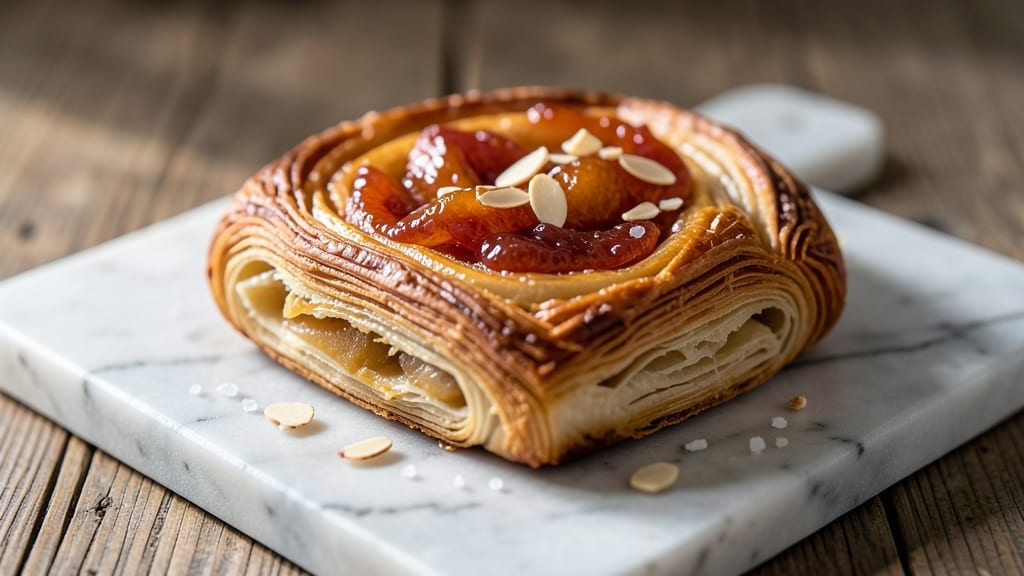
This apricot cheese Danish recipe delivers the perfect balance of flaky, buttery layers and sweet-tart fruit filling that makes every bite irresistible. ✨ The secret lies in a simple yeast dough that transforms into delicate, melt-in-your-mouth pastry when baked, while the apricot jam and cream cheese filling adds just the right amount of sweetness and tang.
I've perfected this recipe over years of baking, ensuring the crust stays crisp while the filling remains soft and gooey.
What sets this recipe apart is the technique for achieving that signature flaky texture—layering the dough with thin spreads of cream cheese before folding, then letting it rest properly before baking. This method creates those beautiful, airy pockets that make Danish pastries so special.
The apricot filling, made with high-quality jam and a touch of lemon zest, adds vibrant color and a perfect sweet-tart contrast to the rich dough.
By the time you pull these golden-brown Danishes from the oven, you'll have a batch of pastries with crisp edges, tender centers, and a filling that's just sweet enough to balance the buttery crust.
The aroma alone will have everyone gathering in the kitchen, and each bite delivers that perfect combination of textures and flavors. This recipe is perfect for breakfast, brunch, or even as a sweet treat with coffee.
Whether you're baking for a special occasion or just craving something delicious, these apricot cheese Danishes will impress. The recipe includes tips for achieving that perfect flaky crust and balancing the sweetness, so even beginners can create restaurant-quality pastries at home. Let's get started!
Ingredients for apricot cheese danish
Six ingredients transform into golden, flaky Danishes with sweet-tart apricot filling—every bite is pure magic.
| Ingredient | Amount | Notes |
|---|---|---|
| All-Purpose Flour 🌾 | 4 cups | Sifted for light dough |
| Granulated Sugar 🍚 | ¼ cup | For dough sweetness |
| Active Dry Yeast 🍞 | ¼ oz | Or 2 1/4 tsp |
| Unsalted Butter 🧈 | ½ cup | Cold, cubed (8 tbsp) |
| Large Eggs 🥚 | 1 whole | Room temperature |
| Whole Milk 🥛 | ¼ cup | Warm (110°F) |
| Salt 🧂 | ½ tsp | Fine sea salt |
| Cream Cheese 🧀 | 8 oz | Softened, full-fat |
| Apricot Jam 🍑 | ½ cup | High-quality, unsweetened |
| Lemon Zest 🍋 | 1 tsp | From 1 lemon |
| Powdered Sugar 🍚 | 2 tbsp | For dusting |
| Vanilla Extract 🌸 | ½ tsp | Pure vanilla |
The flour is your foundation—King Arthur or Gold Medal brands work best for that tender crumb. Butter is non-negotiable: Plugrá or Land O’Lakes unsalted, cold and cubed (not softened!). The cream cheese? Philadelphia or Kirkland—full-fat only, no low-fat shortcuts. For the apricot jam, Bon Appétit or Smucker’s unsweetened varieties give the best balance of sweetness and tartness. I always grab lemon zest from a fresh Meyer lemon if I can find them—they’re sweeter and more aromatic than regular lemons.
No cream cheese? Neufchâtel works in a pinch, but it’s trickier to work with. Apricot jam too sweet? Mix in 1 tsp lemon juice to cut the sugar. Butter too hard to cube? Microwave it for 10 seconds to soften slightly before handling. The yeast needs to be active—test it in warm water with a pinch of sugar first (should foam in 5-10 minutes). Vanilla extract is worth splurging on—Nielsen-Massey or McCormick pure vanilla makes all the difference. For a nutty twist, swap 1 tbsp flour for almond flour in the dough.
Store unbaked dough wrapped in plastic in the fridge for up to 24 hours—it actually improves overnight. Baked Danishes stay fresh for 3 days at room temperature in an airtight container, or freeze for up to 3 months. Pro tip: Brush the baked pastries with melted butter before dusting with powdered sugar for extra shine. Leftover filling? Spread it on toast with a sprinkle of flaky salt—trust me, it’s delicious.
Why You'll Love This Recipe
- You’re using pantry staples: flour, sugar, butter, eggs—no specialty ingredients or pricey fillings. A single batch stretches to four days of morning snacks, and the leftovers reheat beautifully. Plus, the yeast makes it feel indulgent without the grocery bill.
- No Yeast Nightmare: I swear, the dough comes together faster than my coffee brews. Just mix the flour, sugar, and yeast with warm water—no kneading, no waiting for it to rise like some fancy sourdough. The butter and eggs bind it effortlessly, so you’re shaping and filling in under 20 minutes.
- Sweet-Tart Magic: That apricot jam swirled into the creamy cheese filling? It’s the kind of balance that makes you close your eyes mid-bite. The buttery dough caramelizes just enough to contrast the jam’s tang, while the sugar keeps it from being too heavy—like a hug from a pastry chef.
- Breakfast or Snack Hero: Honestly, these work at any hour. Pack one in your lunchbox for a sweet pick-me-up, or serve them warm with coffee for a weekend treat. My kids grab them after school, and my husband sneaks them during meetings—no judgment here.
Step-by-step instructions for apricot cheese Danish
Here's how to build those iconic flaky layers—no shortcuts, just perfect pastry science!
👨🍳 Step 1: Make the Cream Cheese Filling
In a medium bowl, beat the 8 oz softened cream cheese with the 0.5 cup apricot jam until completely smooth. Add the 1 tsp lemon zest, 0.5 tsp vanilla extract, and 2 tbsp powdered sugar, mixing until fully combined. This filling should be thick but spreadable—like a rich, fruity buttercream.
Here's the thing—don't overmix or you'll develop lumps. If it feels too thick, add 1 tsp whole milk at a time until it reaches a pipeable consistency. Cover and refrigerate while you make the dough. The lemon zest brightens the apricot flavor and prevents the filling from tasting too heavy.
👨🍳 Step 2: Prepare the Yeast Dough
In a stand mixer fitted with the dough hook, combine the 4 cups sifted all-purpose flour, 0.25 cup granulated sugar, and 0.5 tsp salt. Mix on low speed for 30 seconds to distribute the dry ingredients evenly. Add the 0.25 oz active dry yeast and pulse briefly to incorporate.
Add the 0.5 cup cold cubed unsalted butter and mix on low speed until the butter is broken down into pea-sized pieces. Pour in the 0.25 cup warm whole milk (about 110°F) and the 1 whole large egg, mixing on medium speed until the dough comes together. The dough should be slightly tacky but not sticky—if it's too dry, add 1 tsp milk; if too wet, add 1 tbsp flour.
🍳 Step 3: Laminate for Flaky Layers
Turn the dough onto a lightly floured surface and roll it into a 12x8-inch rectangle. Place the dough on a baking sheet and spread the cream cheese filling evenly, leaving a ½-inch border. Roll the dough tightly into a log, sealing the edge well. This is where the magic happens—those layers build as it chills!
Chill the log in the refrigerator for 30 minutes to firm up. Preheat your oven to 375°F. Cut the log into 6 equal pieces (about 2 inches thick) and place them on a parchment-lined baking sheet, 1 inch apart. Bake for 15-18 minutes until golden brown and puffed. Watch closely—they rise quickly!
🔥 Step 4: Bake to Golden Perfection
Transfer the baked danishes to a wire rack and let them cool for 5 minutes. This resting time prevents the filling from oozing out when you slice. Brush the tops with a little extra apricot jam if you want that glossy finish—it adds a beautiful sheen and extra fruit flavor.
Serve warm for the ultimate experience. The layers should be crisp and flaky, with a tender yet slightly chewy texture. Each bite delivers that perfect balance of sweet-tart apricot, creamy cheese, and buttery pastry. Store leftovers in an airtight container at room temperature for up to 2 days—though they rarely last that long!
Pro Tips For Making Apricot Cheese Danish
- CHILL THE DOUGH: I learned this the hard way—skipping the fridge overnight makes rolling out the dough a nightmare. Even 12 hours in the fridge (wrapped tightly) keeps the butter from melting and makes shaping those delicate layers a breeze. Trust me, your future self will curse you if you skip this.
- WEIGH YOUR FLOUR: That "cup" of flour in your measuring cup isn’t foolproof—it varies wildly. Use a kitchen scale for the dough and filling instead; 250g of flour gives you consistent results every time. I was skeptical until I tried it—no more dry, crumbly pastries or gummy fillings.
- DON’T OVERWORK THE YEAST: Once the dough rises, handle it like it’s made of glass. Over-kneading after the first rise kills the yeast and makes the texture dense. Just fold it gently when shaping, and resist the urge to punch it down—this isn’t bread, after all.
- USE COLD BUTTER FOR LAMINATION: Room-temperature butter sounds easier, but it melts too fast when rolling. Keep the butter blocks ice-cold when layering, and stash the dough between sheets of parchment in the fridge while you work. Sounds weird, but it works: those crisp, flaky layers stay intact.
Troubleshooting your apricot cheese danish
Dough Too Sticky?
If your dough feels too wet after mixing, resist adding more flour—this disrupts the gluten structure. Instead, chill it for 15 minutes uncovered in the fridge. The cold air will firm it up.
I’ve found King Arthur flour absorbs moisture better than generic brands, so if you’re using that, you might need just 1 extra tablespoon of flour. Never over-knead or you’ll lose those delicate layers. 🌾
Filling Too Runny?
The cream cheese filling should be thick enough to hold its shape but still spreadable. If it’s too loose, mix in 1 tsp cornstarch to stabilize it. For extra brightness, add ½ tsp lemon juice alongside the zest.
I’ve learned the hard way—overmixing turns it grainy, so use a spatula to gently fold in the jam. Store unused filling in an airtight container for up to 5 days in the fridge. 🧀
Danishes Not Rising?
If your Danishes stay flat after baking, your yeast might be dead or the oven temperature too low. Test your yeast first—it should foam in 5-10 minutes in warm milk. Preheat your oven for 20 minutes before baking to ensure 375°F accuracy.
For extra lift, place a small bowl of water on the oven rack to add moisture. I’ve also had success brushing the tops with egg wash before baking for a golden crust. ⚡
Filling Oozing Out?
This happens when the Danishes cool too quickly. Let them rest on a wire rack for 10-15 minutes before slicing. If the filling still leaks, your filling might be too warm—chill it for 30 minutes before assembling.
For a cleaner look, brush the tops with apricot jam after baking, then dust with powdered sugar. This creates a barrier that keeps the filling contained. 🍑
Crust Too Thick?
Thick crusts often mean the dough wasn’t rolled thin enough. Aim for a ¼-inch thickness when rolling out the log. If your butter melts too quickly, chill the dough for 10 extra minutes between folds.
For a lighter texture, replace ¼ cup flour with almond flour—it adds tenderness without heaviness. I’ve also found using European-style butter (like Plugrá) creates a richer, more delicate crust. 🧈
Burning Before Golden?
Oven hot spots cause uneven browning. Rotate your baking sheet halfway through the 15-18 minutes if the edges brown too fast. For even heat distribution, place a second baking sheet on the lower rack.
If your Danishes brown too quickly, lower the oven to 350°F and add 2-3 minutes to the bake time. A light spray of water on the oven rack before baking can also help regulate temperature. 🔥
Nutrition facts
Frequently asked questions
Can I make this recipe without yeast?
While traditional Danishes use yeast for that perfect rise, you can adapt this recipe with puff pastry instead. Simply replace the yeast dough with 1 sheet of high-quality puff pastry, spread the cream cheese filling, roll it up, and bake at 375°F for 20-25 minutes. The texture will be more flaky than fluffy, but still delicious!
How do I store leftover apricot cheese Danishes?
Keep them fresh in an airtight container at room temperature for 2-3 days. For longer storage, freeze them for up to 3 months. To reheat, wrap in a damp paper towel and microwave for 10-15 seconds—just enough to soften without making the filling runny.
Can I use store-bought dough instead?
For a quicker version, use 1 tube of refrigerated biscuit dough or 1 sheet of puff pastry. Roll out the dough, spread the cream cheese filling, roll it up, and cut into slices. Bake at 375°F for 15-18 minutes until golden. The texture will be slightly different but still tasty!
Why is my filling oozing out when I slice?
This happens when the Danishes cool too quickly after baking. Let them rest on a wire rack for 10-15 minutes before slicing. If the filling still leaks, your filling might be too warm—chill it for 30 minutes before assembling. For a cleaner look, brush the tops with extra apricot jam after baking, then dust with powdered sugar.
Can I make this recipe gluten-free?
Yes, but with adjustments! Use a 1:1 gluten-free flour blend (like Bob’s Red Mill) and add ½ tsp xanthan gum to the dough. The yeast may need 5 extra minutes to activate, and the dough will be stickier—chill it longer to firm up. For the filling, ensure your apricot jam is gluten-free, and use certified gluten-free cream cheese. The texture will be slightly denser but still flavorful!