
Soups & Stews
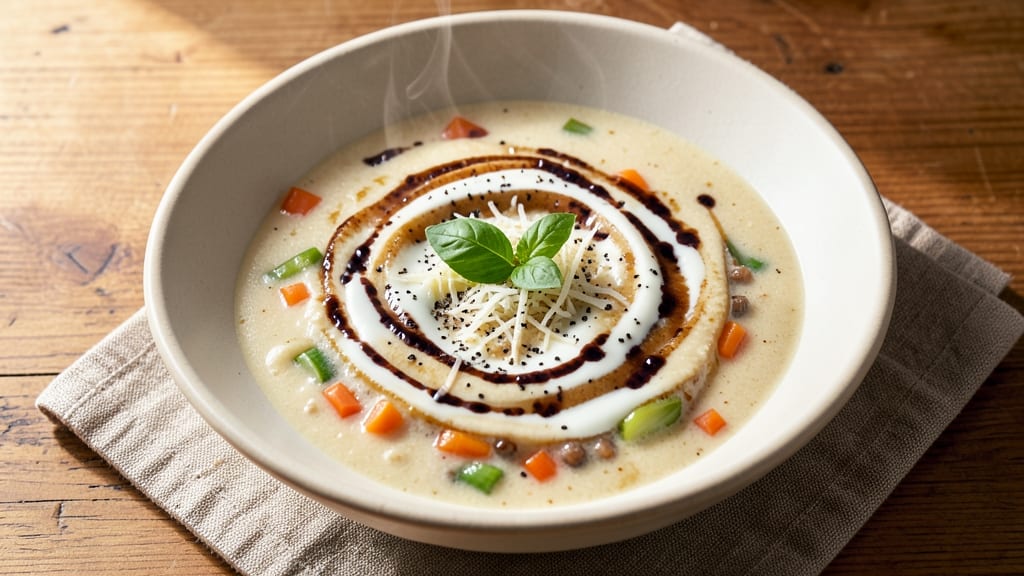
This Asiago cheese bisque soup delivers the velvety richness of a gourmet restaurant in just 30 minutes—no fancy techniques required. The secret lies in slow-simmered broth, perfectly blended cheese, and a touch of cream that transforms simple ingredients into something luxurious.
I developed this recipe after years of perfecting the balance between nutty Asiago, creamy texture, and savory depth that keeps everyone asking for seconds.
The process is simpler than it sounds: sauté aromatic vegetables, build a flavorful base with garlic and onions, then simmer until the broth reduces to a velvety consistency. When it’s time to blend, the Asiago melts into a smooth, nutty sauce that coats every spoonful.
A splash of cream at the end ensures that signature bisque silkiness without overpowering the cheese’s natural flavor.
What you’ll end up with is a soup that’s creamy yet light, packed with umami from the cheese and subtle sweetness from the vegetables. The aroma alone—warm, comforting, and rich—will have your kitchen feeling like a cozy Italian trattoria.
Serve it with crusty bread to soak up every last drop, or garnish with fresh herbs for a pop of color and brightness.
Best of all, this recipe scales effortlessly—whether you’re feeding a crowd or prepping leftovers for the week. The technique is foolproof, and the ingredients are likely already in your pantry. Let’s get cooking!
Ingredients for asiago cheese bisque soup
Velvety Asiago cheese transforms simple pantry staples into restaurant-worthy bisque soup.
| Ingredient | Amount | Notes |
|---|---|---|
| Asiago Cheese (Grated) 🧀 | 1 ½ cups | Freshly grated, nutty variety preferred |
| Heavy Cream 🥛 | ½ cup | Full-fat for best creaminess |
| Chicken Broth 💧 | 4 cups | Low-sodium preferred, homemade or quality store-bought |
| Yellow Onion 🧅 | 1 medium | Diced, about 1 cup |
| Carrots 🥕 | 2 medium | Peeled, diced (about 1 cup total) |
| Celery Stalk 🧅 | 2 whole | Diced, about 0.5 cup |
| Garlic Cloves 🧄 | 4 cloves | Minced, fresh preferred |
| All-Purpose Flour 🌾 | 2 tbsp | For thickening, optional |
| Unsalted Butter 🧈 | 2 tbsp | Cold, for sautéing |
| Fresh Thyme Leaves 🌿 | 1 tbsp | Or 1 tsp dried thyme |
| Salt 🧂 | 1 tsp | Kosher or sea salt, adjust to taste |
| Black Pepper 🌶️ | ½ tsp | Freshly ground preferred |
| Fresh Parsley 🌿 | ¼ cup | Chopped, for garnish |
The Asiago cheese is non-negotiable here—look for a young, nutty variety at specialty cheese shops or well-stocked grocery stores like Whole Foods or Trader Joe's. Pre-grated cheese lacks the rich, complex flavor you're after, so invest in a block and grate it yourself. For the broth, homemade is ideal, but quality store-bought like Pacific Foods or Kitchen Basics works in a pinch. The vegetables should be fresh but don't stress about organic—just make sure they're firm and vibrant. Carrots and celery can be prepped ahead and stored in the fridge for up to 5 days.
No Asiago? Parmigiano-Reggiano or Gruyère can stand in, though the flavor profile will shift slightly. Short on thyme? Dried oregano at half the amount works, but fresh is worth hunting down at farmers markets. The flour is optional but recommended for that signature bisque thickness—Diamond Crystal kosher salt is perfect here, but any fine sea salt will do. For extra depth, a pinch of white pepper complements the black. The cream should be cold when added to prevent curdling, and full-fat is a must for that luxurious mouthfeel.
This soup tastes even better the next day as the flavors meld together. Store leftovers in an airtight container in the fridge for up to 4 days, or freeze for 3 months in portion-sized containers. For make-ahead prep, sauté the vegetables and store them separately—just add the broth and cheese when ready to blend. Garnish with fresh parsley just before serving to maintain vibrant color and freshness. The Asiago cheese can be stored in the fridge for up to 2 weeks after opening, wrapped tightly in parchment paper.
Why You'll Love This Recipe
- One-Pot Magic: I swear by this recipe—just toss in the onions, carrots, and broth, then let it simmer while you prep the rest. No extra pots, no fuss, and that Asiago melts in like a dream.
- Rich Without Effort: The heavy cream and grated Asiago transform simple broth into something velvety and deeply satisfying. Honestly, the first sip makes me forget it took less than 30 minutes.
- Weeknight to Dinner Party: Same recipe, different vibes—serve it in mugs for a quick weeknight dinner or ladle it into bowls with crusty bread for guests. The creamy texture and nutty cheese always impress.
- Leftovers That Don’t Suck: Unlike soups that turn watery, this one reheats like a dream—just add a splash of cream to keep it luscious. I make a double batch because it’s my go-to for lazy nights.
Step-by-step instructions for Asiago cheese bisque soup
Transform simple ingredients into a rich, velvety bisque with this method—precision matters at every stage.
Sauté the Aromatic Base
Melt the 2 tablespoons unsalted butter in a large pot over medium heat. Once foaming subsides, add the 1 medium yellow onion, 2 medium carrots, and 2 whole celery stalks, all diced. Cook for 8-10 minutes until the vegetables soften and the onion becomes translucent.
Add the 4 cloves garlic cloves and 1 tablespoon fresh thyme leaves, stirring constantly for 30 seconds until fragrant. The garlic should release its aroma without browning—this prevents bitterness. If the vegetables stick, add 1-2 tablespoons chicken broth to deglaze. This step builds the flavor foundation for the entire soup.
Thicken and Incorporate Cheese
Sprinkle the 2 tablespoons all-purpose flour over the vegetables and stir vigorously for 1-2 minutes to cook out the raw flour taste. Gradually whisk in the 4 cups chicken broth, ensuring no lumps form. Bring to a gentle simmer and cook for 10 minutes until slightly thickened.
Reduce heat to low and gradually whisk in the 1.5 cups grated Asiago cheese until completely melted and smooth. I like to add it in two batches to prevent clumping. Stir continuously for 2-3 minutes until the cheese fully incorporates and the soup becomes velvety. The cheese should dissolve completely—if it doesn't, strain through a fine-mesh sieve for a silky texture.
Finish with Cream and Seasoning
Remove the pot from heat and stir in the 0.5 cup heavy cream. The cream should blend seamlessly, creating a luxurious mouthfeel. Return to low heat and add the 1 teaspoon salt and 0.5 teaspoon black pepper, adjusting to taste. Simmer gently for 5 minutes to meld all flavors.
Taste and make final adjustments—this is where the soup comes together. The Asiago should provide a nutty depth, while the cream adds richness. If too thick, thin with additional warm broth; if too thin, simmer uncovered for 2-3 minutes to reduce. The perfect consistency should coat the back of a spoon lightly.
Garnish and Serve Immediately
Divide the bisque among bowls and garnish with 0.25 cup chopped fresh parsley. The parsley adds a bright contrast to the rich cheese flavors. Serve immediately with crusty bread or grilled cheese croutons for the ultimate comfort food experience.
This soup develops best when served fresh—waiting even 10 minutes allows the cream to separate slightly. For extra indulgence, top with a sprinkle of extra Asiago or a drizzle of truffle oil. The nutty, cheesy aroma will fill your kitchen, making it impossible to resist the first spoonful.
Pro Tips For Making Asiago Cheese Bisque Soup
- Bloom the Onion Slowly: I used to rush this step and end up with bitter, charred onion flavor that ruined the whole soup. Instead, cook the diced yellow onion over medium-low heat for 8–10 minutes—until it’s soft and translucent but not browned. This builds a sweet, rich base that makes the Asiago taste even more luxurious.
- Strain the Broth: Skip this, and you’ll end up with a grainy, uneven texture that fights with the heavy cream. Strain the chicken broth through a fine-mesh sieve before adding it to the pot—it removes any impurities and makes the soup silky smooth. (Yes, it’s extra work, but trust me, it’s worth it.)
- Temper the Cream: Pouring cold heavy cream directly into hot soup will curdle it faster than you can say “disaster.” Warm the cream separately over low heat until it’s just steaming, then whisk it into the soup gradually. This keeps the sauce velvety instead of lumpy.
- Grate Asiago Fresh: Pre-shredded Asiago has anti-caking agents that make the soup taste like it’s fighting for its life. Grate your own cheese just before adding it to the soup—it melts faster, coats the broth evenly, and tastes sharper. (Bonus: Save the rind for garnish if you’re feeling fancy.)
Pro cooking tips for this recipe
Cheese Melting Secrets
Add the Asiago cheese gradually in two batches to prevent clumping and ensure a silky texture. I start with ½ cup while stirring constantly on low heat, then add the remaining 1 cup once fully melted.
If your cheese doesn’t dissolve completely, strain through a fine-mesh sieve for that restaurant-quality smoothness. 🧀
Flour Thickening Hack
Cook the flour with the vegetables for 1-2 minutes to remove its raw taste before adding broth. This step creates a natural roux that thickens the soup without a floury aftertaste. For extra richness, replace 1 tbsp flour with 1 tbsp cornstarch—it blends better and gives a glossier finish.
Broth Reduction Timing
Simmer the broth uncovered for 10 minutes after adding flour to reduce it slightly. This concentrates the flavors and creates that signature bisque body. If your kitchen gets too hot, reduce heat to medium-low to prevent scorching. The goal is a lightly thickened consistency that coats the spoon.
Cream Temperature Control
Always use cold heavy cream when adding it to the hot soup. Warm cream can cause curdling and ruin your velvety texture. Stir gently in slow circles while off heat to blend seamlessly. For extra decadence, substitute ½ cup cream with ½ cup crème fraîche—it adds subtle tanginess.
Deglazing Technique
If your vegetables stick to the pot, immediately add 1-2 tbsp chicken broth and scrape up the browned bits with a wooden spoon. These caramelized bits pack deep umami flavor that elevates the entire soup. I like to use a heatproof spatula for maximum scraping efficiency.
Final Flavor Balance
Taste your soup before adding salt—Asiago is naturally salty, and you might need less than 1 tsp. For extra depth, add a pinch of white pepper or a splash of dry sherry (about 1 tbsp).
The key is letting the cheese’s nutty notes shine while balancing with acidity or heat.
Nutrition facts
Frequently asked questions
Can I use a different cheese instead of Asiago?
Yes! While Asiago provides that signature nutty depth, you can substitute with Parmigiano-Reggiano (for sharper flavor) or Gruyère (for creamier texture). Avoid pre-shredded cheese—it contains anti-caking agents that prevent smooth melting. For a dairy-free option, try nutritional yeast (½ cup) blended with ½ cup cashew cream for a cheesy flavor without the richness.
Why did my bisque turn grainy after blending?
Graininess usually happens when cheese doesn't fully melt or when adding cold cream too quickly. First, ensure your cheese is freshly grated (not pre-shredded) and add it gradually while stirring on low heat. If grainy spots remain, strain the soup through a fine-mesh sieve for a silky finish. For extra insurance, whisk the cheese with a splash of warm broth before adding to the pot.
How can I make this soup ahead of time?
This bisque actually tastes better the next day as flavors meld! Store in an airtight container in the fridge for up to 4 days. For freezing, cool completely first, then portion into containers with 1-inch headspace. Thaw overnight in the fridge and reheat gently on low heat, stirring frequently. Avoid microwaving—it can cause separation. The texture will be slightly thicker after reheating, so add a splash of warm broth if needed.
What's the best way to reheat leftovers?
Reheat on the stovetop over low-medium heat, stirring constantly to prevent scorching. Add 1-2 tablespoons warm broth or water to restore creaminess if needed. Microwaving can separate the cream—if you must, use 30-second intervals on medium power, stirring between each. For extra richness, stir in 1 tablespoon cold butter or a splash of cream after reheating. Never boil—just warm until steaming.
Can I make this soup vegetarian?
Replace the chicken broth with vegetable broth and use vegetable oil instead of butter. For extra depth, sauté 1 diced shallot and 1 cup mushrooms with the onions. Swap the heavy cream for coconut cream or cashew cream (blend ½ cup soaked cashews with ½ cup water) for a dairy-free option. The Asiago can stay as-is, or use vegan Parmesan for a cheesy alternative.