
Appetizers
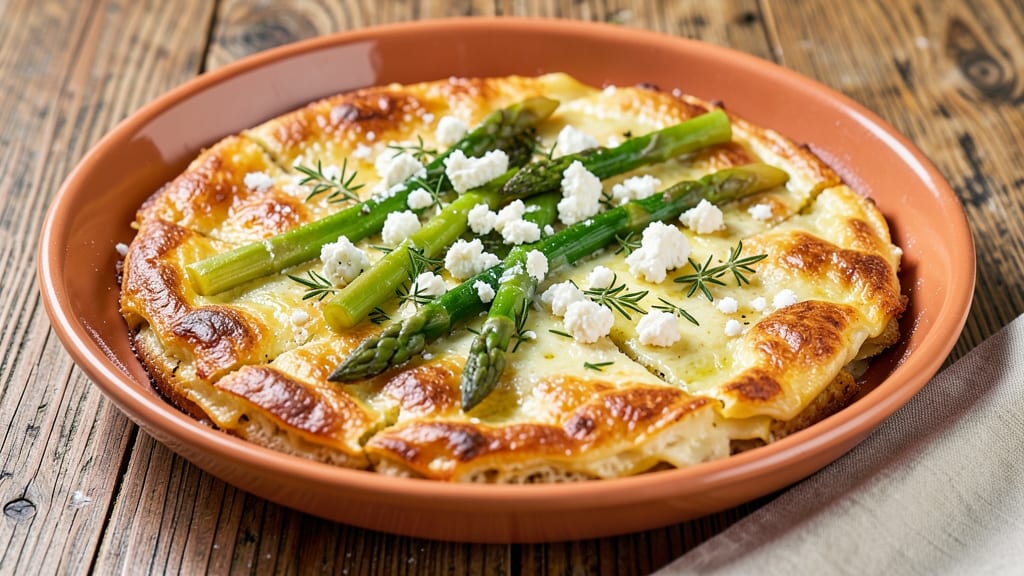
This asparagus goat cheese frittata delivers creamy layers of tangy goat cheese and crisp-tender asparagus wrapped in a golden, flaky crust—perfect for brunch or a light dinner. 🌟 The secret lies in whisking eggs until silky smooth and incorporating finely chopped asparagus and crumbled goat cheese for even distribution, ensuring every bite is rich and satisfying.
This vegetarian-friendly dish comes together in 30 minutes with minimal active time, making it ideal for busy weekdays.
The combination of earthy asparagus and velvety goat cheese creates a restaurant-quality texture that’s both elegant and approachable. Unlike traditional frittatas, this version features a crispy top achieved by broiling briefly at the end, while the interior stays moist and custardy.
The tangy brightness of the goat cheese balances the richness of the eggs, resulting in a dish that’s as visually appealing as it is delicious.
What sets this recipe apart is its versatility—serve it warm with a side of roasted cherry tomatoes or a simple arugula salad for a complete meal, or enjoy it at room temperature for a quick lunch.
The frittata’s sturdy structure makes it perfect for meal prep, holding up well for 2-3 days in the refrigerator. Whether you're feeding a crowd or treating yourself to a solo meal, this dish delivers foolproof results every time.
Ready in just 30 minutes, this frittata is the ultimate no-fuss recipe that transforms simple ingredients into something extraordinary. The key steps—whisking the eggs, layering the fillings, and achieving that perfect golden crust—are straightforward but yield a dish that tastes like it took hours to prepare.
Let’s get started on creating your next brunch or dinner star.
Ingredients for asparagus and goat cheese frittata
Eight essential ingredients transform into a restaurant-quality frittata with golden crust and creamy layers.
| Ingredient | Amount | Notes |
|---|---|---|
| Large Eggs 🥚 | 8 whole | Room temperature for best whisking |
| Goat Cheese 🧀 | 8 oz | Creamy variety, crumbled |
| Fresh Asparagus 🌱 | 1 lb | Tender spears, trimmed ends |
| Extra-Virgin Olive Oil 🫒 | ½ cup | High quality, fruity |
| All-Purpose Flour 🌾 | ¼ cup | For crispy crust |
| Fresh Thyme Leaves 🌿 | ¼ cup | Chopped, or 1 tsp dried |
| Garlic Cloves 🧄 | 3 cloves | Minced, for depth |
| Salt 🧂 | 1 ½ tsp | Diamond Crystal kosher |
| Freshly Ground Black Pepper 🌶️ | ½ tsp | Coarsely cracked |
| Heavy Cream 🥛 | ¼ cup | For extra creaminess |
| Cherry Tomatoes 🍅 | 1 cup | Halved, optional garnish |
| Fresh Arugula 🌿 | ½ cup | For serving, optional |
The goat cheese is non-negotiable here—creamy, tangy varieties like Crofter's or La Tourangelle elevate this dish. Grab the pre-shredded kind from the deli counter (it crumbles perfectly) or buy a wedge to crumble yourself. Fresh asparagus matters too: tender spears with bright green tips ensure the best texture. If you can't find them, frozen asparagus works in a pinch—just thaw and pat dry. The eggs? Room temperature is key for silky whisking, so take them out 20 minutes before starting. For the olive oil, Californian or Italian varieties add fruity notes that shine in this dish.
No goat cheese? Creamy feta or even ricotta work in a pinch, though the tang won't be identical. Short on asparagus? Zucchini or mushrooms add moisture and earthiness. The heavy cream can be swapped for half-and-half or extra milk if you're watching calories. Fresh thyme is ideal, but dried at one-third the amount gets you close. For the cherry tomatoes, heirloom varieties add visual appeal, but any small tomatoes work. The arugula? Baby spinach is a great sub—both add that peppery bite that cuts through the richness.
This frittata reheats beautifully—30 seconds in the microwave or 5 minutes in a 350°F oven restores that crispy top. Keeps for 3 days in the fridge wrapped tightly in foil, or 2 months frozen in a sealed container. Portion into individual servings before freezing for easy grab-and-go breakfasts. The crust stays crispy for 2 days at room temperature if stored properly, making it perfect for meal prep. For best results, broil just before serving—2-3 minutes at 450°F gives you that golden finish.
Why You'll Love This Recipe
- One-Pan Magic: I swear by this recipe when I’m too tired to wash dishes. Toss the asparagus in olive oil, sprinkle flour for a light crust, then pour in the eggs and goat cheese—no flipping, no fuss. The pan does all the work while I sip my coffee.
- Creamy Crisp Contrast: That first bite of golden crust gives way to tangy goat cheese and tender asparagus—it’s like a hug for your taste buds. Honestly, the balance of salty, creamy, and slightly bitter asparagus is chef’s kiss.
- Lunchbox Hero: Between us, this frittata is my go-to for meal prep. Cut into squares, pack with a sprinkle of salt, and it’s ready for work lunches or picnics. (Yes, even on a Tuesday night when I forgot to plan.)
- Budget-Friendly Luxury: Eggs and asparagus stretch far, and a little goat cheese goes a long way. I make this twice a week—once for dinner, once for leftovers—and still have money left for actual wine. Practical? Absolutely. Delicious? Ridiculously so.
Step-by-step instructions for asparagus goat cheese frittata
Here's how to create a restaurant-worthy frittata with a golden crust and creamy layers.
🍳 Step 1: Prep the Vegetables and Aromatics
Start by trimming the ends off the 1 lb fresh asparagus and cutting each spear into 2-inch pieces. You'll want about 8-10 spears total—trim any woody lower stems. Spread the asparagus on a baking sheet and toss with 1 tablespoon of the extra-virgin olive oil, ½ teaspoon of the salt, and ¼ teaspoon of the freshly ground black pepper. Roast at 425°F for 12-15 minutes until tender with slightly charred edges. This step builds depth of flavor you can't get raw.
While the asparagus roasts, finely mince the 3 cloves garlic and chop the ¼ cup fresh thyme leaves. You'll need these for the crust—don't skip this step, as the thyme adds that bright herbal note that cuts through the richness of the goat cheese.
👨🍳 Step 2: Create the Crispy Crust
Heat 2 tablespoons of the extra-virgin olive oil in a 10-inch oven-safe skillet over medium-high heat. When the oil shimmers, add the ¼ cup all-purpose flour and stir constantly for 1-2 minutes until it turns a deep golden brown. This is your crust foundation—it should smell nutty and toasty.
Immediately add the minced garlic and thyme, stirring for 30 seconds until fragrant. Pour in ¼ cup heavy cream and stir vigorously—this creates a creamy paste that will form the base of your frittata. The mixture should coat the back of a spoon. If it's too thick, add 1 tablespoon water to loosen it.
🥘 Step 3: Build the Creamy Layers
In a large bowl, whisk together the 8 whole large eggs, remaining 1 tablespoon extra-virgin olive oil, 1 teaspoon salt, and ¼ teaspoon black pepper until just combined—no need to overbeat. Gently fold in 6 oz of the crumbled goat cheese, reserving 2 oz for topping. The mixture should be smooth but slightly thick.
Pour the egg mixture over the crust in the skillet, tilting to spread evenly. Sprinkle the roasted asparagus evenly over the top, followed by the halved 1 cup cherry tomatoes and remaining 2 oz goat cheese. The asparagus should peek through the egg layer—this ensures perfect flavor distribution.
🔥 Step 4: Bake to Golden Perfection
Transfer the skillet to a preheated 375°F oven and bake for 20-25 minutes until the edges are golden brown and the center is just set. You'll know it's ready when the top springs back gently when touched and the edges pull away from the pan. The center should still be slightly custardy—it'll finish cooking as it rests.
For the final touch, broil for 1-2 minutes until the top develops a beautiful golden crust. Watch carefully—broilers can be fierce! Remove from the oven and let rest for 5 minutes before serving. This resting time lets the frittata set completely and makes slicing easier.
🍽️ Step 5: Serve with Fresh Arugula
Use a spatula to loosen the frittata from the edges, then slide it onto a cutting board. Let it cool for 2 minutes before slicing into 4 wedges—each portion should have that perfect balance of crispy crust, creamy egg, and tangy goat cheese.
Serve immediately with a fresh ½ cup arugula tossed in a drizzle of extra-virgin olive oil and a pinch of salt. The peppery arugula cuts through the richness, while the crispy crust holds up perfectly to the creamy layers inside. Every bite delivers that perfect harmony of textures and flavors we promised!
Pro Tips For Making Asparagus And Goat Cheese Frittata
- Preheat the pan like it’s 1987: I learned this the hard way—skipping the preheat leaves you with a sad, greasy mess instead of a golden crust. Get that oven rack in the middle position, crank the heat to 375°F (190°C), and let the pan scream hot for at least 10 minutes before pouring in the eggs. That’s when the magic starts.
- Trim asparagus like a pro: Cut the woody ends off at a 45-degree angle—it looks better and cooks faster. Snap the stalks instead of chopping if you’re impatient (they’ll break clean where they’re tender), but if you’re feeling fancy, trim them all the same length so they crisp evenly. No one wants a frittata with half-mushy spears.
- Whisk eggs until they’re angry: Vigorous whisking (or blending) for 30 seconds removes air pockets and ensures a smooth, even texture. I used to pour in the eggs half-heartedly, and the result was a lumpy, uneven frittata. If you’re lazy, at least use a fork and go at it like you’re mad—your future self will notice the difference.
- Add flour to the goat cheese: This isn’t about thickening—it’s about balance. Mix the goat cheese with 1 tablespoon of flour per 4 ounces before folding it into the eggs. The flour mellows the tang and prevents the cheese from making the frittata curdle or separate when it hits the heat. Trust me, it’s the thing that keeps the dish from tasting like a goat cheese bomb.
Essential equipment for this dish
Oven-Safe Skillet
An oven-safe 10-inch cast iron skillet is my non-negotiable choice for this frittata—it distributes heat evenly and creates that perfect golden crust. The Lodge 10-inch Pre-Seasoned Cast Iron Skillet is my go-to brand because it maintains consistent heat and develops a natural non-stick surface over time.
If you don’t have cast iron, a stainless steel oven-safe pan like the All-Clad Stainless Steel Sauté Pan works well, though you may need to adjust cooking times slightly. 🔥
Whisk for Silky Eggs
A balloon whisk is essential for achieving that silky, smooth egg mixture. I recommend the OXO Good Grips Balloon Whisk—it’s lightweight, durable, and does a fantastic job incorporating air without over-beating the eggs.
If you’re short on time, a hand mixer on low speed works too, but whisking by hand gives you more control over the texture. Avoid electric beaters, as they can over-aerate the eggs and make the frittata too fluffy.
Baking Sheet for Asparagus
Use a half-sheet baking pan (about 13x18 inches) to roast the asparagus—it gives you enough space to spread the spears in a single layer for even cooking. A wire rack placed over the baking sheet (if you have one) ensures the asparagus crisps up nicely rather than steaming.
For a budget-friendly option, a rimmed baking sheet works, but avoid glass pans—they can cause hot spots and uneven cooking. Line with parchment paper for easy cleanup.
Measuring Tools
Precision matters with this recipe, so invest in a stainless steel measuring set like the OXO Good Grips Measuring Cups and Spoons.
For the flour in the crust, use the spoon-and-level method—pack the flour lightly into the measuring cup and level it off with a knife for consistent results. A microplane is a game-changer for mincing garlic quickly and finely, ensuring even flavor distribution.
For the goat cheese, a small offset spatula helps crumble it evenly without creating lumps.
Broiler Pan Handle
When broiling the frittata for that final golden crust, use oven mitts or a heat-resistant glove to protect your hands—broilers can get dangerously hot. If your skillet has a sturdy handle, like the Lodge cast iron, you can lift it directly from the oven, but always use caution.
For extra safety, place the skillet on a heat-resistant pad or trivet before moving it to the cutting board. A kitchen timer is also a must—broiling for just 1-2 minutes can turn a good frittata into a burnt one in seconds. ⏰
Nutrition facts
Frequently asked questions
Can I make this frittata ahead of time?
The frittata actually tastes even better the next day! Store it in an airtight container in the refrigerator for up to 3 days. Reheat slices in a 350°F oven for 5-7 minutes to restore the crispy top. For freezing, wrap individual portions tightly in plastic wrap and freeze for up to 2 months. Thaw overnight in the fridge before reheating.
What if I don't have goat cheese?
No problem! Use creamy feta or ricotta as substitutes—they'll add richness, though the tangy flavor will be slightly different. For a vegetarian option, try nutritional yeast mixed with a little olive oil for a cheesy flavor without dairy. The texture will be slightly softer, but still delicious when paired with the crispy crust.
How do I prevent the frittata from being too rubbery?
Overcooking is the main culprit! Remove the frittata from the oven when the center is still slightly custardy (it will finish setting while resting). The 375°F oven temperature and 20-25 minute bake time are key—don't exceed this. For extra insurance, cover the skillet with foil for the last 5 minutes of baking to prevent over-browning.
Can I make this frittata without eggs?
This recipe relies on eggs for its signature texture, but you can try an egg-free version using flax eggs (1 tbsp ground flaxseed + 3 tbsp water per egg) or a tofu scramble base. However, the result won't have the same custardy richness. For a better alternative, consider a chickpea flour frittata—it creates a similar structure but with a different flavor profile.
Why does my crust turn out pale instead of golden?
Two likely reasons: either the flour didn't toast enough (it needs to be deep golden brown) or the oven temperature was too low. For next time, stir the flour continuously for 2 full minutes until nutty-smelling, then use a 400°F oven for the final broil step. Also ensure your skillet is properly preheated before adding the crust mixture.