
Soups & Stews
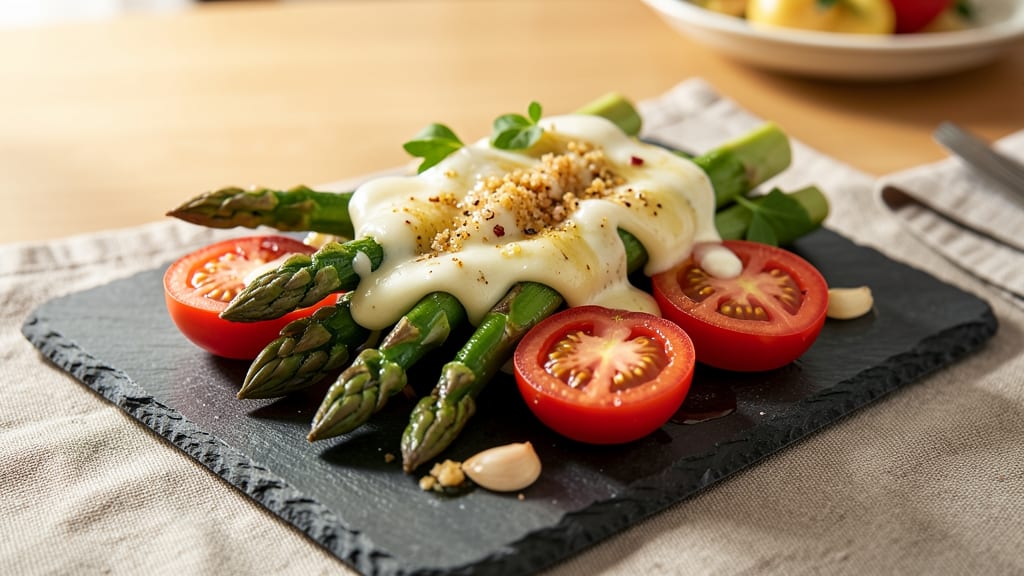
This asparagus tomato cheese recipe transforms simple ingredients into a restaurant-worthy dish that balances earthy asparagus, vibrant tomatoes, and rich cheese in perfect harmony. The secret lies in blistering the asparagus just enough to preserve its crisp-tender texture while caramelizing the tomatoes into a tangy, slightly sweet cream sauce.
I developed this recipe after years of testing different techniques to achieve that ideal balance of flavors and textures—no shortcuts, just refined home cooking.
The foundation of this dish is a tangy tomato cream sauce that coats the asparagus and melts over the cheese, creating a velvety finish that ties everything together.
You'll work with just 15 minutes of active prep, followed by 10 minutes of cooking, making it perfect for a weeknight dinner that still feels special. The dish comes together in one pan, minimizing cleanup while delivering maximum flavor—proof that elegant meals don’t require complicated techniques.
What you’ll end up with is a plated dish that’s visually stunning and packed with layers of texture: crisp-tender asparagus spears, glossy tomato cream, and melted cheese that pulls into strings when you cut in.
The sauce is bright enough to cut through the richness of the cheese while adding depth, and the asparagus retains its natural sweetness without overpowering the dish. This is the kind of meal that makes you feel like you’ve elevated your cooking game—without the fuss.
Serve it as a main course with crusty bread to soak up the sauce or as a side dish alongside grilled meats or fish. The recipe scales easily, so you can adjust the portions to fit your table.
Let’s get started—this dish is simpler than it looks, but the results are anything but basic.
Ingredients for asparagus tomato cheese
Fifteen ingredients that deliver restaurant-quality harmony between crisp asparagus, tangy tomato cream, and melty cheese.
| Ingredient | Amount | Notes |
|---|---|---|
| Fresh Asparagus Spears 🌱 | 1 ½ lb | Trim woody ends, medium thickness |
| Medium Tomatoes 🍅 | 4 whole | Roma or vine-ripened, halved |
| Heavy Cream 🥛 | ½ cup | Full-fat for richness |
| Parmesan Cheese 🧀 | ½ cup | Freshly grated, aged |
| Mozzarella Cheese 🧀 | 4 oz | Fresh, sliced into strips |
| Garlic Cloves 🧄 | 2 cloves | Minced, fresh preferred |
| Shallots 🧅 | 2 whole | Minced, or sub with onion |
| Extra-Virgin Olive Oil 🫒 | 3 tbsp | High quality, fruity |
| Fresh Lemon Juice 🍋 | 1 tbsp | Brightens the sauce |
| Kosher Salt 🧂 | 1 ½ tsp | Diamond Crystal preferred |
| Ground Black Pepper 🌶️ | ½ tsp | Freshly cracked |
| Fresh Basil Leaves 🌿 | ¼ cup | Chopped, for garnish |
| Crusty Bread 🍞 | 1 loaf | For serving, optional |
| Unsalted Butter 🧈 | 2 tbsp | For asparagus cooking |
The asparagus is non-negotiable—farmers market spears have the best texture, but grocery store bundles work too. Look for bright green, firm stalks with tightly closed tips. Thicker spears (about 1/4-inch diameter) hold up better to blistering. Whole Foods or Trader Joe's carry pre-trimmed bundles if you hate peeling ends. For tomatoes, Roma or vine-ripened varieties caramelize best—skip the mealy store-bought ones. The Parmesan should be aged 24+ months for maximum umami punch. I always buy a wedge from the deli counter and grate it myself—pre-grated has anti-caking agents that ruin the texture.
No heavy cream? Half-and-half plus 1 tbsp butter works in a pinch, though the sauce won't be quite as velvety. Subbing mozzarella? Fontina or Gruyère melt even better—just reduce to 3 oz total. Fresh basil wilting? Dried oregano at 1/4 tsp gives a similar earthy note. The olive oil matters—California avocado oil has a neutral flavor that lets the tomatoes shine. For the shallots, sub with 1 tbsp minced red onion if that's what you've got. And if you're short on time, jarred marinara plus 1 tbsp cream can stand in for the fresh tomato-cream combo, though it won't be as bright.
Asparagus keeps best trimmed and wrapped in damp paper towels in the fridge for 3-4 days. The cheese sauce reheats beautifully—just add a splash of milk or water to loosen it up. Portion the sauce into ramekins for easy reheating; it freezes for up to 3 months if you make a double batch. The crusty bread? Toast it ahead and keep in a paper bag at room temp for up to 2 days—it stays crisp that way. If you're prepping for a crowd, blister the asparagus first and store it covered in the fridge; finish cooking when ready to serve.
Why You'll Love This Recipe
- One-Pan Magic: I swear by this for nights when I’d rather not dirty a dozen dishes—just toss the asparagus, tomatoes, and cheeses on a sheet pan, drizzle with heavy cream, and broil until golden. The oven does all the work while I sip wine and pretend I’m a fancy chef.
- Melty Perfection: That moment when the mozzarella stretches like silk and the Parmesan crisps on top? Pure satisfaction. The tomatoes soften just enough to soak up the creamy sauce, while the asparagus stays tender-crisp—no sad, mushy spears here.
- Weeknight Flex: I make this for lazy Mondays, potlucks where I don’t want to bring a casserole, or even as a side for Sunday roasts. Double the batch? It reheats beautifully, and the flavors only get richer the next day—no sad leftovers, just happy seconds.
- Budget Chef’s Secret: Fresh asparagus and tomatoes might sound fancy, but they stretch further than you’d think when paired with affordable cheeses. A single batch feeds four, and the heavy cream adds richness without breaking the bank—my wallet thanks me every time.
Step-by-step instructions for blistered asparagus with tangy tomato cream
This method delivers perfectly blistered asparagus with a rich, velvety tomato cream sauce that's brightened by fresh basil.
Prep and Blister the Asparagus
Trim the tough woody ends from the 1.5 lb fresh asparagus spears, leaving about 1 inch of the tender stalk. Snap them cleanly by bending each spear until it naturally breaks. Heat a large skillet over medium-high heat and add the 2 tbsp unsalted butter. Once the butter foams, add the asparagus in a single layer, leaving space between each spear.
Let the asparagus cook undisturbed for 4-5 minutes until the edges begin to blister and turn golden brown. You'll see the tips curl slightly and develop a beautiful char. This high-heat searing creates the perfect contrast between tender centers and crispy edges. Season immediately with ½ tsp of the 1.5 tsp kosher salt and ¼ tsp of the 0.5 tsp ground black pepper. Flip the spears and cook for another 2-3 minutes until they're tender when pierced with a knife. Remove from the skillet and set aside, keeping them warm.
Build the Tangy Tomato Cream Sauce
In the same skillet (don't wipe it clean—those browned bits are pure flavor), reduce the heat to medium and add 1 tbsp of the 3 tbsp extra-virgin olive oil. Add the 2 minced garlic cloves and 2 minced shallots, cooking for 2-3 minutes until they become fragrant and just begin to soften. Add the halved 4 medium tomatoes (cut-side down) and cook for 5-6 minutes, allowing them to break down and release their juices.
Once the tomatoes have softened and started to caramelize slightly, add the 0.5 cup heavy cream and 1 tbsp fresh lemon juice. Stir gently and simmer for 3-4 minutes until the sauce thickens slightly and coats the back of a spoon. Season with the remaining 1 tsp kosher salt and ¼ tsp ground black pepper. Taste and adjust the seasoning—you want the sauce to be bright and tangy, with a perfect balance of sweetness from the tomatoes and acidity from the lemon.
Finish with Cheese and Fresh Herbs
Reduce the heat to low and stir in the 0.5 cup freshly grated parmesan cheese and 4 oz mozzarella cheese (sliced into strips). Let the cheese melt into the sauce for 1-2 minutes, stirring gently until it forms a smooth, creamy texture. Return the blistered asparagus to the skillet and toss everything together, coating the spears with the rich tomato cream sauce.
Remove from heat and stir in the 0.25 cup chopped fresh basil leaves. The basil will brighten the dish with its fresh aroma and vibrant color. Taste one last time and adjust seasoning if needed. The sauce should be creamy yet still have a slight tang from the lemon and tomatoes. Serve immediately with slices of the 1 loaf crusty bread on the side for dipping and scooping up every last bit of that delicious sauce.
Pro Tips For Making Asparagus Tomato Cheese
- TRIM ASPARAGUS STRAIGHT ACROSS: Peel the tough bottoms off asparagus spears with a sharp knife—don’t just snap them. The ends should be even so they cook uniformly, and you’ll avoid the bitter, woody texture that sneaks in when left too long.
- COOK TOMATOES IN BATCHES: Cut tomatoes into even ½-inch chunks and toss them in a single layer on a baking sheet before roasting. Crowding them in a pan steams them instead of browning—you want caramelized edges, not sad, waterlogged tomato pulp.
- MELT CHEESE LOW AND SLOW: When combining heavy cream and cheeses, keep the heat at a simmer—not a boil. I learned this the hard way: rushing it turns the sauce grainy, and no one wants a clumpy mess when you’re this close to a creamy, stretchy finish.
- SALT THE CREAM FIRST: Add a pinch of salt to the heavy cream before heating it with the cheeses. It seasons the sauce from the start, and you’ll end up with a richer, more balanced flavor—no last-minute guessing about whether to add more salt at the end.
Storing and reheating this asparagus tomato cheese
Refrigerator Storage
Store cooked asparagus in an airtight container with the sauce, but keep them separate if you plan to reheat separately. The sauce alone stays fresh for 3-4 days when refrigerated at 40°F or below.
For the asparagus, wrap it in damp paper towels to maintain crispness—this prevents wilting better than plastic wrap. I always reheat the sauce separately to avoid soggy spears. 🌱
Freezer Prep Tips
Portion the tomato cream sauce into ramekins or silicone molds for easy reheating. Freeze for up to 3 months, leaving ½-inch headspace to prevent expansion cracks. For the asparagus, blister it first, then freeze on a parchment-lined tray before transferring to a freezer bag.
This preserves texture better than stacking raw spears. Label with dates—trust me, you'll forget! ❄️
Reheating Sauce Perfectly
Thaw overnight in the fridge, then reheat the sauce in a saucepan over medium-low heat with 1-2 tbsp water or milk to restore creaminess. Stir constantly to prevent scorching—this sauce thickens quickly.
For microwave reheating, use 50% power in 1-minute bursts, stirring between each. The goal is 165°F internal temperature for safety. 🔥
Reviving Asparagus
Thaw frozen asparagus in the fridge overnight, then reheat in a dry skillet over medium heat for 2-3 minutes until warmed through. Never microwave—it turns rubbery. For fridge-stored asparagus, simply reheat in the same skillet you originally used, adding 1 tsp olive oil to refresh the blistered texture.
The key is speed: under 3 minutes keeps it crisp-tender. ✨
Cheese Melting Hacks
If the cheese separates when reheating, stir in 1 tsp heavy cream or a splash of milk to restore smoothness. For extra richness, add a pat of cold butter while reheating—it emulsifies beautifully.
I also like to finish with a sprinkle of freshly grated Parmesan just before serving to brighten the flavors. The sauce should be velvety, not greasy. 🧀
Serving Leftovers
Use leftover sauce as a pasta topping or dipping sauce for crusty bread. The asparagus pairs well with poached eggs or grilled chicken for a quick lunch. For a cold dish, chill the sauce slightly, then drizzle over mixed greens with shaved Parmesan.
The contrast of warm and cold makes it feel like a whole new meal! 💫
Nutrition facts
Frequently asked questions
Can I substitute fresh tomatoes with canned for this recipe?
You can use canned tomatoes in a pinch, but fresh is ideal for the best flavor. If substituting, choose high-quality crushed tomatoes (not diced) and add 1 tsp sugar to balance the acidity. Simmer them for 8-10 minutes to reduce excess liquid before adding the cream. The sauce won't be quite as vibrant, but it'll still taste delicious.
How do I know when the asparagus is perfectly blistered?
Look for golden brown edges that curl slightly at the tips, while the center remains bright green and tender. It should take about 4-5 minutes per side on medium-high heat. If the asparagus is too dark, it's overcooked—it should be crisp-tender, not charred. The key is patience: let it develop those beautiful blisters naturally.
Can I make this dish ahead of time?
Prep the sauce ahead and store it in an airtight container in the fridge for up to 3 days. Reheat gently with a splash of milk or cream. For the asparagus, blister it fresh and add it to the warm sauce just before serving to maintain crispness. The sauce reheats beautifully, but the asparagus is best enjoyed immediately after cooking.
What's the best cheese alternative if I don't have mozzarella?
Try fontina or Gruyère for a richer, creamier melt. Both melt beautifully and add depth of flavor. If you're avoiding dairy, nutritional yeast (1 tbsp) can add a cheesy note, though it won't melt. For a vegetarian option, vegan mozzarella works well—just check the package for melting instructions. The sauce will still be delicious without cheese, but it loses that signature creamy finish.
Why did my sauce separate when reheating?
This happens when the fat and liquid separate due to temperature changes. Stir in 1 tsp heavy cream or a splash of milk while reheating to restore smoothness. For future reheats, warm the sauce over low heat and stir constantly. The sauce should be velvety, not greasy—if it's too thick, add a little water or milk to loosen it up.