
Main Courses
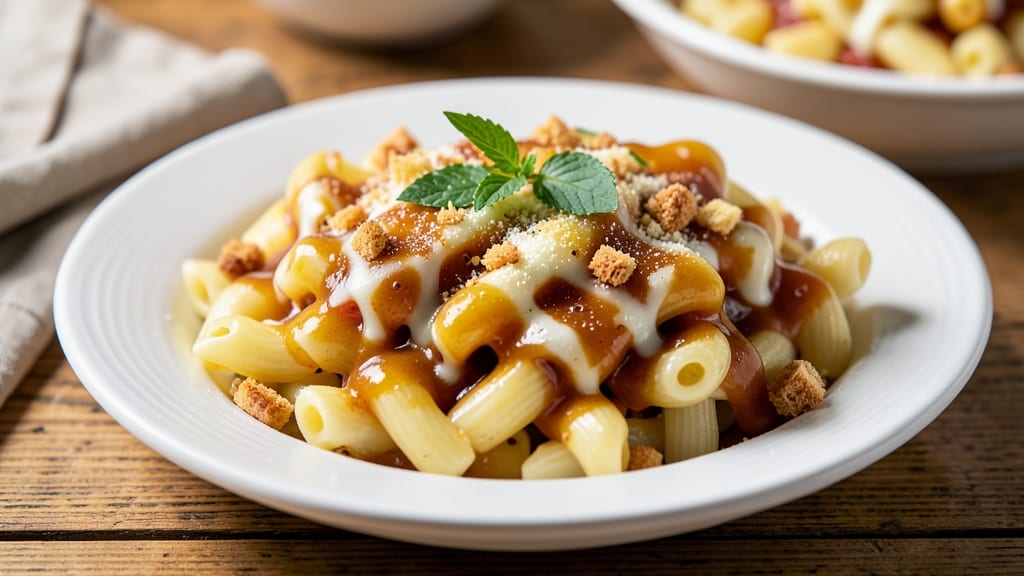
This Au Bon Pain mac and cheese recipe delivers the restaurant’s signature triple-layered crunch and gooey cheese streaks right in your oven. The secret lies in a precise blend of sharp cheddar, a buttery roux, and a crispy breadcrumb topping that locks in moisture while creating that coveted golden crust.
After perfecting this technique through countless test batches, I’ve streamlined it for home cooks—no fancy equipment required, just attention to temperature and timing.
The foundation begins with al dente pasta cooked in salted water, then tossed with a velvety cheese sauce made from a rich roux and a mix of cheddar cheeses. The sauce must coat every noodle completely, creating that signature creamy texture with visible cheese ribbons.
What sets this apart is the layering technique: a crispy breadcrumb topping bakes directly onto the cheese, forming a caramelized crust that contrasts perfectly with the tender pasta beneath.
By the time it emerges from the oven, you’ll have a dish that rivals the original—golden, bubbling, and with that signature crunch that makes every bite satisfying. The cheese sauce remains luscious and stretchy, clinging to each noodle, while the breadcrumb topping adds a delightful textural contrast.
This is comfort food at its finest, elevated by restaurant-quality techniques you can replicate at home.
Serve immediately with a side of garlic bread or a simple green salad to let the mac and cheese take center stage. The key to success? Precision in cooking times and cheese temperatures—don’t skip the broiling step, as it’s what creates that perfect crispy top.
Let’s get started on recreating this iconic dish.
Ingredients for au bon pain mac and cheese
Sixteen ingredients. One iconic dish. The secret's in the layers and timing.
| Ingredient | Amount | Notes |
|---|---|---|
| Elbow Macaroni 🍝 | 1 ½ lb | Al dente pasta, cooked to firm bite |
| Sharp White Cheddar Cheese 🧀 | 1 ½ cups | Shredded, block preferred for texture |
| Extra-Sharp Cheddar Cheese 🧀 | 1 cup | Shredded, adds depth of flavor |
| Monterey Jack Cheese 🧀 | ½ cup | Shredded, creamy texture |
| Unsalted Butter 🧈 | ½ cup | Cold, cut into small cubes |
| All-Purpose Flour 🌾 | ¼ cup | For roux, sifted for smooth texture |
| Whole Milk 🥛 | 2 cups | Full-fat for creaminess |
| Heavy Cream 🥛 | ½ cup | For extra richness |
| Panko Breadcrumbs 🍞 | 1 cup | For crispy topping |
| Parmesan Cheese 🧀 | ¼ cup | Freshly grated, for umami |
| Garlic Powder 🧄 | 1 tsp | For subtle depth |
| Onion Powder 🧅 | 1 tsp | Enhances flavor profile |
| Kosher Salt 🧂 | 1 ½ tsp | Diamond Crystal preferred |
| Black Pepper 🌶️ | ½ tsp | Freshly ground for heat |
| Extra-Virgin Olive Oil 🫒 | 2 tbsp | For greasing baking dish |
The cheeses are non-negotiable here. Sharp white cheddar gives the signature tang, while extra-sharp cheddar adds depth—both need to be freshly shredded from blocks (pre-shredded gets clumpy). Monterey Jack keeps the sauce creamy. Grab these at Whole Foods or your local specialty cheese shop if possible; the flavor difference is noticeable. For the roux, unsalted butter is key—it should foam but not brown. The milk? Whole milk and heavy cream combo makes this sauce velvety, not watery. Don't skimp on the fat content here.
No sharp cheddar? Pepper jack at half the amount works in a pinch, but the flavor won't be identical. Pre-shredded cheese? Toast it in a dry pan for 2 minutes to remove excess moisture. Running low on panko? Toasted breadcrumbs from a baguette (pulse in food processor) give the same crunch. The garlic and onion powders can be swapped for fresh minced garlic and onion if you prefer, but the powders are more reliable for consistent flavor. And for the love of cheese, don't use powdered milk substitutes—the sauce will curdle.
This dish is all about timing. Cook the pasta 1 minute less than package instructions—it finishes baking in the oven. The cheese sauce should be thick but pourable; if it's too stiff, whisk in 1-2 tbsp milk. Assemble the casserole at least 30 minutes before baking to let flavors meld. Leftovers? 3-4 days refrigerated, but honestly, it's best eaten fresh. For make-ahead, assemble the dish, refrigerate overnight, then bake straight from cold—add 10 minutes to baking time. Worth it for a crowd.
Why You'll Love This Recipe
- One-Pot Magic: I swear by this recipe because it’s literally one pot, one stove. No extra bowls, no straining—just melt butter, toast the pasta, add the cheeses, and let it bubble into that golden, stretchy perfection. My weeknights thank me.
- Sharp Cheese Obsession: That combo of sharp white cheddar, extra-sharp, and Monterey Jack? It’s like a flavor explosion in every bite—creamy, tangy, and just a little funky. Honestly, I’ve tried fancier recipes, but this one hits the spot every time without overcomplicating things.
- Lunchbox Legend: Between us, this mac and cheese is my go-to for meal prep. Pack it in a thermos, and it stays warm and creamy for hours—perfect for school lunches or office dinners. (My kids argue over who gets the leftovers.)
- Budget Stretch: A bag of elbow mac, a block of cheddar, and butter? That’s it. It feeds four for under $10 and tastes like a restaurant dish. I’ll be real: I’ve made this on grocery store staples, and it’s still ridiculously good.
Step-by-step instructions for triple-layered mac and cheese
Here's how to build that iconic Au Bon Pain texture—crispy crust, gooey cheese, and perfect al dente pasta.
Cook the Pasta to Al Dente Perfection
Bring a large pot of water to a rolling boil and add the 1.5 lb elbow macaroni. Season generously with 1.5 tsp kosher salt—the water should taste like the sea. Cook until 1 minute before the package suggests al dente (about 11-12 minutes). The pasta should have a slight bite when you taste it.
Drain the pasta in a colander, but don't rinse it—those starches are essential for the sauce to cling. Transfer the hot pasta to a large mixing bowl and set aside. Here's the thing—overcooking pasta ruins everything. You want each bite to have that satisfying resistance.
Make the Ultra-Creamy Cheese Sauce
In a separate large pot, melt the 0.5 cup unsalted butter over medium heat. Once fully melted, whisk in the 0.25 cup all-purpose flour to create a roux. Cook for 1-2 minutes until the mixture bubbles and smells nutty—this removes the raw flour taste.
Gradually whisk in the 2 cups whole milk and 0.5 cup heavy cream, letting each addition absorb completely before adding more. Bring the mixture to a gentle simmer and cook for 5-7 minutes until thickened. Now for the cheese—add the 1.5 cups sharp white cheddar, 1 cup extra-sharp cheddar, and 0.5 cup monterey jack, stirring constantly until fully melted and smooth.
Combine Pasta and Sauce for Maximum Gooeyness
Pour the melted cheese sauce over the hot pasta in the mixing bowl. Add the 1 tsp garlic powder, 1 tsp onion powder, and 0.5 tsp black pepper. Using a wooden spoon or spatula, fold everything together until the pasta is fully coated in the sauce. Taste and adjust seasoning—you might need a pinch more salt.
This is where the magic happens. The residual heat from the pasta will help melt the cheese completely, creating those signature cheese streaks. If the sauce looks too thick, add 1-2 tablespoons of pasta water to loosen it to a creamy consistency that clings beautifully to each noodle.
Assemble the Triple-Layered Crust
Preheat your oven to 375°F and grease a 9x13-inch baking dish with 2 tbsp extra-virgin olive oil. Spread half of the macaroni mixture evenly in the bottom of the dish. In a small bowl, mix the 1 cup panko breadcrumbs with the 0.25 cup freshly grated parmesan cheese—this is your crispy topping.
Sprinkle half of the breadcrumb mixture over the first layer of macaroni. Add the remaining macaroni mixture on top, then sprinkle the remaining breadcrumb mixture evenly over the top. Press down gently but firmly—this ensures maximum crispiness when baked.
Bake to Golden, Crispy Perfection
Bake uncovered for 20-25 minutes until the top is deep golden brown and the edges are crispy. The cheese should be bubbling and pulling away from the sides slightly. If it's browning too quickly, tent loosely with foil for the last 5 minutes to prevent burning.
Let the mac and cheese rest for 10 minutes before serving—this allows the layers to set slightly and makes slicing much easier. The result should be a crispy, crunchy top layer that contrasts perfectly with the creamy, cheesy interior. Serve warm with a side of garlic bread for the ultimate comfort food experience.
Pro Tips For Making Au Bon Pain Mac And Cheese
- Cook pasta al dente: The Au Bon Pain recipe counts on elbow macaroni with a slight bite—test for doneness before draining, then finish cooking in the cheese sauce. I learned this the hard way: overcooked pasta turns mushy when it hits the butter and cheese, no matter how much you stir.
- Grate cheese aggressively: Sharp White and Extra-Sharp Cheddar need small, sharp shards to melt evenly—use a box grater or food processor, not a pre-shredded bag. Monterey Jack can handle larger pieces, but the sharps need the extra surface area to blend smoothly. (Yes, even if you’re impatient like me.)
- Melt butter low and slow: The sauce starts with butter, and if you rush it, you’ll get grainy cheese instead of a silky emulsion. Keep heat at a gentle simmer—just enough to make bubbles break slowly—before adding the flour. After burning three batches, I finally figured out patience pays off here.
- Reserve starchy pasta water: Drain the cooked macaroni, but save half a cup of the starchy water. When combining the sauce and pasta, add it a splash at a time—it’s the glue that makes the cheese cling instead of clumping. (Your future self will thank you.)
Essential equipment for this dish
Essential Baking Dish
You’ll need a 9x13-inch baking dish—preferably made of heavy-gauge aluminum or stainless steel to distribute heat evenly. I recommend a Wilton Professional Baking Pan (about $20) for its durability and even heat conduction.
Avoid dark-colored pans—they can cause uneven browning. Grease it thoroughly with 2 tbsp extra-virgin olive oil before adding the macaroni mixture to prevent sticking. 🧈
Precision Thermometer
A kitchen thermometer is non-negotiable for this recipe. I use a Thermoworks Thermapen ONE ($50) to monitor the oven temperature and ensure it stays at 375°F—fluctuations can ruin the crispy crust.
If your oven runs hot, reduce the temperature to 350°F for more consistent results. A basic instant-read thermometer (like OXO Good Grips, $20) works too, but it’s less precise for long bakes.
Mixing Tools
For the roux and sauce, use a heatproof mixing bowl (I love Le Creuset stoneware bowls) and a wooden spoon or heat-resistant silicone spatula to stir without scratching your pot.
A hand mixer (like KitchenAid KHM5221USB, $100) isn’t essential, but it saves time when whisking in the milk and cheese. For folding the pasta, a large, sturdy spatula (like OXO Good Grips) ensures even coating without breaking noodles.
Breadcrumbs & Cheese Prep
Freshly shredded cheese makes all the difference—use a box grater (like Microplane) for sharp white cheddar and extra-sharp cheddar to avoid clumping. For the breadcrumb topping, panko is ideal, but if you’re using regular breadcrumbs, pulse them in a food processor for a finer texture.
A small mixing bowl (like Pyrex glass) works perfectly for combining panko with Parmesan cheese before topping the mac and cheese.
Oven Rack Position
Place your baking dish on the middle rack of your oven for even heat distribution. If your oven has a broiler, use it for the last 2-3 minutes of baking to achieve that signature golden, crispy crust.
Just watch it closely—broilers can burn quickly! A timer (set on your phone or oven) ensures you don’t overbake, which can turn the top rubbery instead of crunchy. 🕒
Optional: Food Processor
For extra efficiency, a food processor (like Ninja FP101, $50) can quickly pulse stale bread into homemade breadcrumbs.
If you’re making this ahead of time, a large airtight container (like Rubbermaid Brilliance) keeps the assembled mac and cheese fresh in the fridge for up to 24 hours before baking. Just add 10 extra minutes to the baking time if starting from cold.
Nutrition facts
Frequently asked questions
Why does Au Bon Pain mac and cheese have that signature crispy top?
The crispy crust comes from a clever layering technique: panko breadcrumbs mixed with Parmesan cheese form the topping. Pressing them firmly onto the cheese sauce creates maximum surface area for browning. Baking at 375°F for 20-25 minutes caramelizes the breadcrumbs while keeping the cheese gooey underneath. The key is patience—don't rush the baking time!
Can I make this mac and cheese ahead of time?
Assemble the dish completely in a greased 9x13-inch baking dish, cover tightly with plastic wrap, and refrigerate for up to 24 hours. When ready to bake, add 10 extra minutes to the baking time (about 30-35 minutes total) since it starts cold. The texture will be just as perfect—maybe even better!
What's the best way to reheat leftovers?
For best results, cover loosely with foil and reheat at 350°F for 15-20 minutes until warmed through. The crispy top may soften slightly, but you can revive it with 2 minutes under the broiler at the end. Avoid microwaving—it makes the breadcrumbs soggy. Leftovers keep well in the fridge for 3-4 days in an airtight container.
Can I substitute any of the cheeses?
The cheese blend is crucial for authentic flavor. Sharp white cheddar provides the signature tang, while extra-sharp cheddar adds depth. Monterey Jack keeps it creamy. In a pinch, you could replace 1/4 cup of the Monterey Jack with pepper jack, but the flavor won't be identical. Never use pre-shredded cheese—it contains anti-caking agents that prevent proper melting.
How do I fix a sauce that's too thick or too thin?
If your sauce is too thick after adding the cheese, whisk in 1-2 tablespoons of pasta water to loosen it. For a sauce that's too thin, remove from heat and let it cool slightly while stirring—it will thicken as it cools. Never add flour or cornstarch directly to the sauce after cooking, as it can make the texture grainy. The sauce should coat the back of a spoon but still be pourable.