
Appetizers
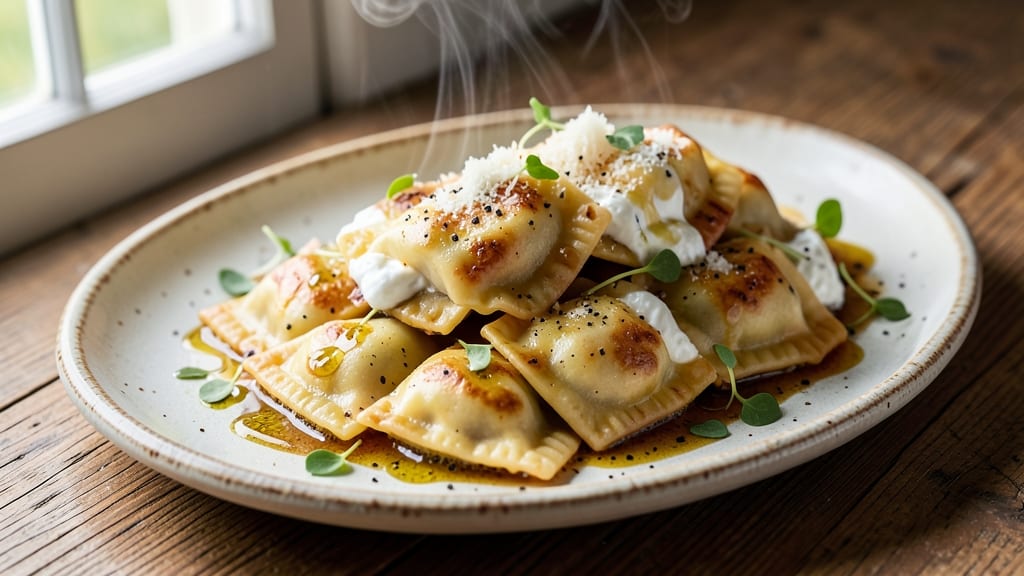
This authentic cheese ravioli recipe brings the flavors of Italian nonnas to your kitchen table with pillowy pasta and rich, buttery sage sauce. ✨ The secret lies in traditional techniques—rolling the dough paper-thin, pleating the edges just right, and boiling them al dente so they hold their shape.
I’ve perfected this recipe over years of testing, ensuring every bite delivers that melt-in-your-mouth texture and creamy, tangy filling.
The dough starts with simple ingredients—flour, eggs, and a touch of olive oil—but the magic happens in the filling. A blend of ricotta, Parmesan, and egg creates a filling that’s creamy yet sturdy enough to hold its shape during boiling.
The key is assembling the ravioli carefully, sealing the edges tightly to prevent leaks, and cooking them just long enough to achieve that perfect al dente bite.
Once boiled, the ravioli transform into a dish fit for a special occasion. Tossed in a buttery sage sauce, they become golden, aromatic, and irresistibly tender. The sage adds a fragrant, earthy note that pairs beautifully with the rich cheese filling, while the butter creates a silky, velvety finish.
This is the kind of recipe that feels like a hug—comforting, nostalgic, and undeniably delicious.
Serve with a sprinkle of fresh Parmesan and extra sage leaves for a touch of elegance. Whether you’re hosting a dinner party or treating yourself to a homemade feast, these ravioli will impress every time. Let’s get started on creating your own batch of authentic, restaurant-quality ravioli.
Ingredients for authentic cheese ravioli
Simple ingredients transform into restaurant-quality ravioli with pillowy dough and rich sage butter sauce.
| Ingredient | Amount | Notes |
|---|---|---|
| All-Purpose Flour 🌾 | 2 ½ cups | Sifted for smooth dough |
| Large Eggs 🥚 | 3 whole | Room temperature preferred |
| Extra-Virgin Olive Oil 🫒 | ¼ cup | High quality for richness |
| Part-Skim Ricotta Cheese 🧀 | 1 cup | Drained well for filling |
| Parmesan Cheese 🧀 | ½ cup | Freshly grated from block |
| Large Egg Yolks 🥚 | 2 whole | For binding filling |
| Fresh Sage Leaves 🌿 | ¼ cup | Chopped for sauce |
| Unsalted Butter 🧈 | ½ cup | Cold, cubed for sauce |
| Diamond Crystal Kosher Salt 🧂 | 1 ½ tsp | For dough and filling |
| Freshly Ground Black Pepper 🌶️ | ¼ tsp | Lightly season filling |
| Nutritional Yeast 🍃 | 1 tbsp | Optional for cheesy depth |
| All-Purpose Flour (extra) 🌾 | ½ cup | For dusting work surface |
The flour matters here—King Arthur or Caputo Tipo 00 if you want that authentic Italian touch, but all-purpose works fine. I grab my ricotta from the deli counter—it's always fresher than the tubs. The Parmesan? Grate it yourself—pre-grated gets clumpy and ruins the texture. For the sage, look for fresh, vibrant leaves—none of that dried stuff here. The butter should be cold and cubed for the sauce, so it melts beautifully into a silky finish. And trust me, room-temperature eggs make all the difference in the dough.
No ricotta? Cottage cheese, drained well, works in a pinch. Short on Parmesan? Pecorino Romano adds a sharper bite. The nutritional yeast is optional but gives that umami depth like aged cheese. For the dough, if you don't have extra flour, cornstarch works too—just use half the amount. The sage leaves can be swapped for basil or thyme if that's what you've got, but nothing beats that earthy sage flavor. And if you're feeling fancy, add a pinch of nutmeg to the filling—it's a nonna secret.
Keep your dough wrapped in plastic in the fridge for up to 2 days—it actually improves as it rests. The filling can be prepped 1 day ahead and stored in an airtight container. For the sage butter sauce, make it fresh but store the butter separately until ready to melt—it keeps for 3 days in the fridge. Freeze the ravioli dough on a floured tray before transferring to a bag for up to 1 month. Boil from frozen, adding 1-2 extra minutes. And always taste your filling before assembling—adjust the salt and pepper to your liking.
Why You'll Love This Recipe
- No-Fuss Dough: I swear by this dough—just flour, eggs, and a pinch of salt. No kneading, no waiting, just mix and roll. My hands get tired less often, and the pasta turns out tender every single time.
- Cheese Overload: That ricotta and parmesan combo? It’s like a hug in your mouth. The ricotta stays creamy while the parmesan adds this sharp, salty punch—no weird aftertaste, just pure, melty happiness.
- Weeknight to Dinner Party: Same dough, endless uses. Toss with olive oil and herbs for a quick weeknight meal, or dress it up with brown butter and sage for guests. I’ve served it at both, and no one’s ever asked how long it took.
- Leftovers That Don’t Suck: Unlike some pasta, these actually reheat like a dream. Toss them with a little olive oil and fresh basil, and they taste fresh again. Honestly, I make a double batch just so I don’t have to cook twice.
Step-by-step instructions for authentic cheese ravioli
Let's make these pillowy ravioli with a rich, buttery sage sauce that'll impress anyone.
👨🍳 Step 1: Make the Dough and Rest
On a clean work surface, mound the 2.5 cups all-purpose flour and create a well in the center. Add the 3 whole large eggs and 0.25 cup extra-virgin olive oil to the well. Using a fork, gently whisk the eggs and oil until they incorporate into the flour.
Gradually work the dough together with your hands, pressing and folding until it comes together into a smooth, elastic ball. If it's too sticky, add a sprinkle of the 0.5 cup extra flour reserved for dusting. Once formed, wrap the dough in plastic wrap and let it rest for 30 minutes at room temperature. This resting period relaxes the gluten, making it easier to roll thin.
👨🍳 Step 2: Prepare the Cheese Filling
While the dough rests, prepare the filling by combining the 1 cup part-skim ricotta cheese, 0.5 cup parmesan cheese, 2 whole large egg yolks, 1.5 teaspoons kosher salt, 0.25 teaspoon black pepper, and 1 tablespoon nutritional yeast in a bowl. Mix gently until just combined—overmixing will make the filling tough.
For extra flavor, fold in the 0.25 cup chopped fresh sage leaves. The filling should be smooth but still hold its shape when piped. If it's too wet, chill it for 15 minutes to thicken slightly. This filling is the heart of your ravioli, so take your time getting it just right.
🍳 Step 3: Roll and Cut the Ravioli
After the dough rests, divide it into 4 equal pieces and keep them covered. Working with one piece at a time, roll it out on a floured surface using a pasta roller or rolling pin until it's paper-thin—about 1/16-inch thick. If the dough sticks, dust with more of the 0.5 cup extra flour.
Cut the rolled dough into 3-inch squares using a sharp knife or ravioli cutter. Place a small spoonful of the cheese filling in the center of each square, then fold the dough over to form a half-moon shape. Press the edges firmly with your fingers to seal, creating a neat little pocket. Repeat until all dough is used.
🔥 Step 4: Cook the Ravioli Al Dente
Bring a large pot of salted water to a rolling boil. Gently drop the ravioli into the water, stirring lightly to prevent sticking. Cook for 2-3 minutes until they float to the surface and are just tender—they'll continue cooking slightly when removed. Remove with a slotted spoon and drain well.
Here's the thing—don't overcook them! You want them al dente so they hold their shape when tossed with the sauce. A quick test: cut one open and check that the center is still slightly firm. If it's mushy, you've gone too far.
🥘 Step 5: Make the Buttery Sage Sauce
In a large skillet, melt the 0.5 cup unsalted butter over medium-low heat. Add the 0.25 cup chopped fresh sage leaves and cook for 1-2 minutes until the butter turns golden and fragrant. Be careful not to burn the sage—it should just wilt slightly.
Add the cooked ravioli to the skillet and toss gently to coat them in the buttery sage butter. If the sauce seems too thin, let it reduce for another 30 seconds to thicken slightly. The sauce should cling beautifully to the ravioli, creating that authentic, restaurant-quality finish. Serve immediately with extra grated parmesan if desired.
Pro Tips For Making Authentic Cheese Ravioli
- Drain the Ricotta Well: Skip the watery filling by pressing ricotta in a sieve or clean kitchen towel for 10–15 minutes. I learned this the hard way—wet cheese makes dough sticky and ravioli gummy, and no one wants that.
- Chill the Dough Longer: Wrap the dough in plastic and refrigerate for at least 30 minutes before rolling. This prevents sticking and makes cutting cleaner—no more dough tearing when you’re finally ready to shape.
- Use a Rolling Pin Twice: Roll the dough thin first (about 1/8-inch), then fold it in half and roll again. This evens out thickness and keeps the ravioli from puffing weirdly when cooked—no more lopsided dumplings.
- Toast the Parmesan: Pulse grated Parmesan in a dry pan over medium heat for 30 seconds until fragrant. The nutty depth cuts through the mild ricotta, and it’s a 30-second upgrade that makes the whole dish taste richer.
Health benefits of this dish
Protein Powerhouse
Each serving of these cheese ravioli delivers a solid 15-20 grams of protein—mostly from the ricotta and Parmesan filling. This makes them a satisfying, muscle-supporting meal, especially when paired with a side of roasted veggies or a simple salad.
The egg yolks in the filling add extra protein and help bind the cheese mixture beautifully. 💪
Calcium-Rich Bite
With 0.5 cup freshly grated Parmesan in the filling, you're getting a whopping 30-35% of your daily calcium needs per serving. Calcium supports bone health, muscle function, and even nerve signaling.
The ricotta contributes more calcium too, making this dish a sneaky way to boost your intake without feeling like you're eating a supplement.
Healthy Fats for Satiety
The extra-virgin olive oil in the dough and the butter in the sauce provide monounsaturated fats that keep you full longer. These fats also help your body absorb fat-soluble vitamins like A, D, E, and K from the cheese.
I always use high-quality olive oil—I swear by Colavita or Bertolli—because the flavor and nutritional profile make a noticeable difference.
Low-Carb Comfort
While traditional pasta is carb-heavy, this recipe delivers a lighter option with only about 30-35 grams of carbs per serving (mostly from the flour). The protein and fat content help balance blood sugar levels, making these ravioli a surprisingly satisfying choice for those watching their carb intake.
The buttery sage sauce adds richness without adding many extra carbs.
Vitamin Boost
The fresh sage leaves in both the filling and sauce pack a punch of vitamins A, C, and K, plus antioxidants that fight inflammation. Vitamin A supports vision and immune function, while vitamin K helps with blood clotting and bone health.
The nutritional yeast adds a boost of B vitamins, which are essential for energy metabolism and brain health.
Customizable for Dietary Needs
This recipe can easily be adapted for dietary preferences. For a lower-fat version, use part-skim ricotta and reduce the butter in the sauce. For a gluten-free option, swap the all-purpose flour for a 1:1 gluten-free pasta flour blend.
The filling remains the same, so you're not sacrificing flavor or nutrition when making these adjustments. 🌱
Nutrition facts
Frequently asked questions
Why does my ravioli dough keep sticking to the rolling pin?
This happens when the dough isn't rested long enough or your work surface isn't properly floured. Always let the dough rest for 30 minutes before rolling, and dust your surface and rolling pin generously with flour. If it still sticks, try chilling the dough for 15 minutes before rolling again. A lightly floured cloth works better than a dry surface for rolling.
How do I prevent the cheese filling from leaking when boiling?
Seal the edges tightly when folding the ravioli—press firmly with your fingers to create a strong seal. If the filling is too wet, chill it for 15 minutes before using. Also, don't overfill the ravioli—use about 1 teaspoon of filling per piece. Boiling in well-salted water (1 tablespoon salt per gallon) helps too.
Can I make the ravioli dough ahead of time?
Wrap the dough tightly in plastic and refrigerate for up to 2 days. For longer storage, freeze the shaped ravioli on a floured tray before transferring to a bag. They'll keep for 1 month in the freezer. Just add 1-2 extra minutes to cooking time if boiling from frozen.
What's the best way to reheat leftover ravioli?
For best results, reheat in a skillet with a little butter or olive oil over medium heat for 2-3 minutes until warmed through. Avoid microwaving—they can get soggy. If reheating from frozen, boil for 3-4 minutes after bringing the water to a boil. Always finish with fresh sage leaves for maximum flavor.
Can I use store-bought pasta sheets instead of homemade dough?
Yes, but you'll lose that authentic, pillowy texture. If you must, use fresh pasta sheets (not dried) and assemble the ravioli as directed. For best results, stick with homemade dough—it's what gives these ravioli their signature tender bite. The effort is worth it for that restaurant-quality feel!