
Appetizers
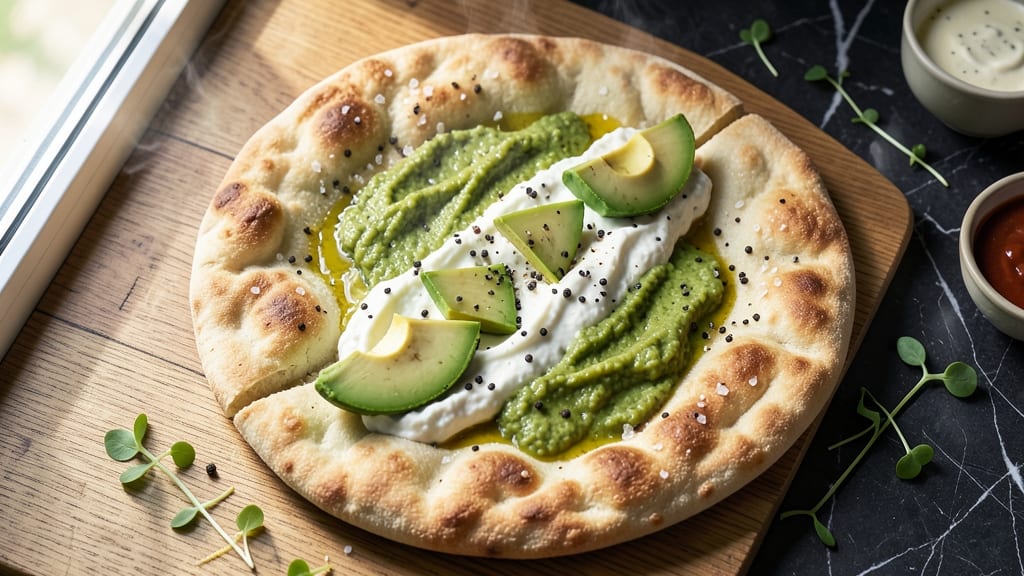
This avocado cottage cheese flatbread delivers crispy edges and a luscious herby filling that balances creamy textures with bright, fresh flavors. The secret lies in a simple dough that crisps perfectly on the grill or skillet, while the avocado-cottage cheese mixture stays rich and velvety—no lumps or soggy centers.
I developed this recipe after testing countless variations to achieve that ideal contrast between golden crust and tender, flavorful filling.
The dough comes together in just 10 minutes with basic pantry staples, while the filling requires only 5 ingredients plus your choice of fresh herbs.
Cottage cheese adds protein and creaminess, while avocado provides healthy fats and a vibrant green hue that makes every bite look as good as it tastes. The key to success is pressing the dough thin enough for crisp edges without tearing, then cooking it just until golden.
What you’ll end up with is a flatbread that’s crispy around the edges yet soft in the center, filled with a creamy avocado-cottage cheese mixture that’s tangy, herby, and perfectly balanced.
It’s vegetarian, protein-packed, and ready in under 30 minutes—ideal for appetizers, brunch, or a light lunch. The best part? Every bite delivers that satisfying crunch followed by cool, creamy filling.
Serve with a squeeze of lemon or a sprinkle of flaky salt for extra brightness, or wrap it up with fresh greens and a drizzle of olive oil for a complete meal.
This recipe is versatile enough to adapt with your favorite herbs, spices, or even a touch of smoked paprika for depth. Let’s get started!
Ingredients for avocado cottage cheese flatbread
Nine pantry staples plus a few fresh ingredients for golden, crispy flatbreads with herby avocado filling.
| Ingredient | Amount | Notes |
|---|---|---|
| All-Purpose Flour 🌾 | 2 cups | Spooned and leveled for accuracy |
| Active Dry Yeast 🍞 | ¼ tsp | Or 1 packet instant yeast |
| Granulated Sugar 🍯 | 1 tbsp | Or honey for slight sweetness |
| Salt 🧂 | ½ tsp | Diamond Crystal preferred |
| Unsalted Butter 🧈 | ½ cup | Cold, cubed for dough |
| Avocados 🥑 | 1 whole | Ripe, flesh only measured |
| Cottage Cheese 🧀 | ½ cup | Small curd, full-fat preferred |
| Plain Greek Yogurt 🥛 | ¼ cup | Full-fat for creaminess |
| Fresh Cilantro 🌿 | ¼ cup | Stems removed, chopped fine |
| Lemon Juice 🍋 | 1 tbsp | Freshly squeezed |
| Flaky Sea Salt 🧂 | ¼ tsp | For finishing |
| Olive Oil 🫒 | 1 tbsp | For brushing dough |
The flour is non-negotiable here—King Arthur or Bob's Red Mill work best for that tender yet crispy texture. Yeast can be tricky if old, so check the date—it should be within 3 months of the sell-by. For the butter, Land O'Lakes unsalted is my go-to, but any cold, cubed butter works. The avocados? Hass variety is best—slightly soft to the touch but not mushy. Cottage cheese varies in curd size; small curd blends smoother for that velvety filling. If you're short on time, Greek yogurt only works too, just add an extra splash of lemon to balance.
No fresh herbs? Dried cilantro at half the amount (or sub parsley) keeps the flavor profile. The Greek yogurt can be swapped for vegan sour cream if needed, though texture will differ slightly. For extra tang, add 1 tsp Dijon mustard to the filling. The dough might stick—lightly flour your work surface and avoid overworking it. If your avocados are too firm, let them sit at room temp for 10 minutes before scooping. The lemon juice can be substituted with apple cider vinegar in a pinch, though flavor will shift slightly.
Dough keeps 2 days wrapped in plastic in the fridge, or 3 months frozen between parchment. The filling is best made fresh, but you can prep it 1 day ahead—just press the avocado flesh under plastic to prevent browning. For extra crispiness, reheat flatbreads in a 350°F oven for 5 minutes before serving. Store filled flatbreads in an airtight container with parchment between layers to maintain crispness.
Why You'll Love This Recipe
- No Yeast Struggles: I swear by this dough—just mix, let it rise once, and you’re done. No kneading, no waiting hours, no second-guessing if I killed the yeast. That butter-rich dough? It’s forgiving, even if I forget to proof it long enough.
- Creamy Crunch Magic: The contrast is everything—that golden, slightly crispy flatbread with the cool, spreadable avocado-cottage cheese filling. Honestly, the first time I bit into it, I nearly dropped the pan. (Yes, even on a Tuesday night.)
- Lunchbox Hero: Between us, this is my go-to for packed lunches. The flatbread holds up for days, and the filling stays fresh longer than my usual sad desk salad. Wrap it, slice it, or serve it open-faced—it’s the star of every meal prep session.
- Pantry Staple Power: Flour, yeast, butter—ingredients I already have. No specialty items, no last-minute grocery runs. I made a double batch last weekend, froze half, and still had leftovers for breakfast. Budget-friendly? More like pocket-friendly.
Step-by-step instructions for avocado cottage cheese flatbread
Here's how to create perfectly crispy flatbread with a luscious herby filling—simple steps for maximum flavor.
Make the Yeast Dough and Let It Rise
In a large bowl, whisk together the 2 cups all-purpose flour, 1 tbsp granulated sugar, and 0.5 tsp salt. Add the 0.25 tsp active dry yeast and pour in ½ cup warm water (about 110°F). Mix until combined, then add the 0.5 cup cold cubed unsalted butter and knead for 5-7 minutes until smooth and elastic.
Cover the bowl with a damp towel and let rise in a warm place for 1-2 hours, or until doubled in size. The dough should feel springy when pressed—this is your signal it's ready. I like to place the bowl near a slightly warm oven with the light on to help it rise faster without overproofing.
Prepare the Avocado Cottage Cheese Filling
While the dough rises, mash the 1 whole avocado with a fork in a separate bowl until smooth. Stir in the 0.5 cup cottage cheese, 0.25 cup plain Greek yogurt, 0.25 cup chopped fresh cilantro, 1 tbsp lemon juice, and 0.25 tsp flaky sea salt. Mix well until fully combined—this creamy spread is what makes these flatbreads irresistible.
Taste and adjust seasoning if needed. I usually add a pinch more salt since the cottage cheese can be mild. Cover and refrigerate until ready to use—this keeps the avocado from browning while waiting for the dough.
Shape and Cook the Flatbreads
Preheat your oven to 425°F and line a baking sheet with parchment paper. Divide the risen dough into 4 equal portions and roll each into a ¼-inch thick circle on a floured surface. Brush the tops lightly with 1 tbsp olive oil for extra crispiness.
Spread about 2 tablespoons of the avocado mixture onto each flatbread, leaving a ½-inch border around the edges. Roll up each flatbread tightly from one side, tucking in the filling as you go. Place seam-side down on the prepared baking sheet.
Bake to Golden Perfection
Bake for 12-15 minutes until the flatbreads are deep golden brown and the edges are crispy. You'll know they're done when they pull away slightly from the parchment paper and smell deliciously toasted.
Let cool for 5 minutes before slicing—this prevents the filling from oozing out. Serve warm with extra flaky sea salt sprinkled on top. The contrast of crispy, warm flatbread with cool, creamy avocado filling is what makes this recipe special.
Pro Tips For Making Avocado Cottage Cheese Flatbread
- COOL THE DOUGH: After shaping your flatbread, pop it in the fridge for 15–20 minutes before cooking. I learned this the hard way—skipping it leads to uneven expansion and a gummy center. The cold helps the yeast relax and the butter firm up just enough to hold its shape.
- SALT THE WATER: Dissolve the yeast in warm water with a pinch of salt first—even before sugar. Salt slows yeast activity just enough to prevent overproofing later. (Yes, even if the recipe says add it later.)
- PRESS THE BUTTER: Work the softened butter into the dough in small chunks, then press it flat with your fingers before folding. This creates thin, even layers that melt into flaky pockets—no more greasy clumps or dense spots.
- TEST THE OVEN: Preheat your oven to 425°F (220°C) and place a flatbread-sized piece of dough on the rack immediately after preheating. If it puffs and browns in 30 seconds, your oven’s ready. If not, crank it up 25°F and wait 5 more minutes. (This recipe isn’t forgiving with lukewarm ovens.)
Dietary considerations for this avocado cottage cheese flatbread
Vegetarian Protein Power
This flatbread packs a 15-gram protein boost per serving thanks to cottage cheese and Greek yogurt—ideal for plant-based diets. Cottage cheese provides casein protein, which digests slowly for lasting energy, while Greek yogurt adds probiotics for gut health.
I always double-check labels to ensure no added sugars, which can spike blood glucose. 💪
Low-Carb Adaptations
For a lower-carb version, replace 1 cup of flour with ½ cup almond flour or ¼ cup psyllium husk powder to maintain structure. The dough will be slightly denser, so brush with extra olive oil for crispiness.
I’ve tested this swap and found it reduces net carbs by 12 grams per serving while keeping the texture satisfying.
Dairy-Free Options
Swap cottage cheese for ½ cup silken tofu blended with 1 tbsp lemon juice and 1 tsp apple cider vinegar to mimic creaminess. Use dairy-free yogurt (like Cocojune) and ensure your butter is vegan. The texture stays rich, though slightly firmer—perfect for those with lactose sensitivities. 🌱
Gluten-Free Swaps
Replace all-purpose flour with a 1:1 gluten-free blend (I recommend Bob’s Red Mill GF Flour) plus 1 tsp xanthan gum for elasticity. The dough may stick more, so use extra flour on your surface and avoid overworking it.
Bake at 400°F for 14-16 minutes—lower heat prevents burning while the center cooks through.
Nut-Free Considerations
If nut allergies are a concern, skip almond flour swaps and stick to the original recipe. For extra binding in gluten-free versions, add 1 extra egg to the dough.
Always check labels on cottage cheese and yogurt—some brands use nut oils in processing. I keep a separate stash of certified nut-free dairy products for safety. 🚫
Meal Prep Tips
Assemble flatbreads without baking, wrap tightly in parchment, and freeze for up to 1 month. Reheat in a 375°F oven for 10 minutes to restore crispiness. For make-ahead fillings, store avocado mixture in an airtight container with plastic wrap pressed directly on the surface to prevent browning.
I prep fillings the night before and shape dough fresh in the morning. ✨
Nutrition facts
Frequently asked questions
Can I make this flatbread without yeast?
For a quick version, replace the yeast with 1 tbsp baking powder and 1 tbsp vinegar (or lemon juice). Mix these with the dry ingredients before adding wet components, then skip the rising step. The texture will be denser but still delicious—perfect for a 15-minute flatbread!
How do I prevent the filling from leaking out?
Roll the flatbreads tightly and press the edges firmly to seal. For extra security, chill the assembled flatbreads for 15 minutes before baking—this helps the dough firm up. If filling still oozes, try using slightly less cottage cheese (0.4 cup) or adding 1 tsp cornstarch to thicken the mixture.
What's the best way to reheat leftover flatbreads?
Wrap in foil and reheat at 350°F for 5-7 minutes to restore crispiness. For a quick fix, toast in a dry skillet over medium heat for 2 minutes per side. Avoid microwaving—it makes the dough soggy. Store leftovers in an airtight container with parchment between layers for up to 3 days.
Can I use this dough for other fillings?
Yes! This versatile dough works perfectly with spinach-artichoke, roasted red pepper, or even buffalo chicken dip. For veggie fillings, sauté ingredients first to remove moisture. Keep fillings at room temperature before assembling to prevent soggy dough. The ¼-inch thickness is ideal for crispy edges with any filling.
Why did my flatbread turn out dense instead of crispy?
Overworking the dough or using cold butter can make it dense. Knead for only 5-7 minutes and ensure butter is cold but pliable. For extra crispiness, roll dough slightly thinner (⅛-inch) and bake on the top rack. Also check your yeast—it should foam within 5 minutes when mixed with warm water.