
Main Courses
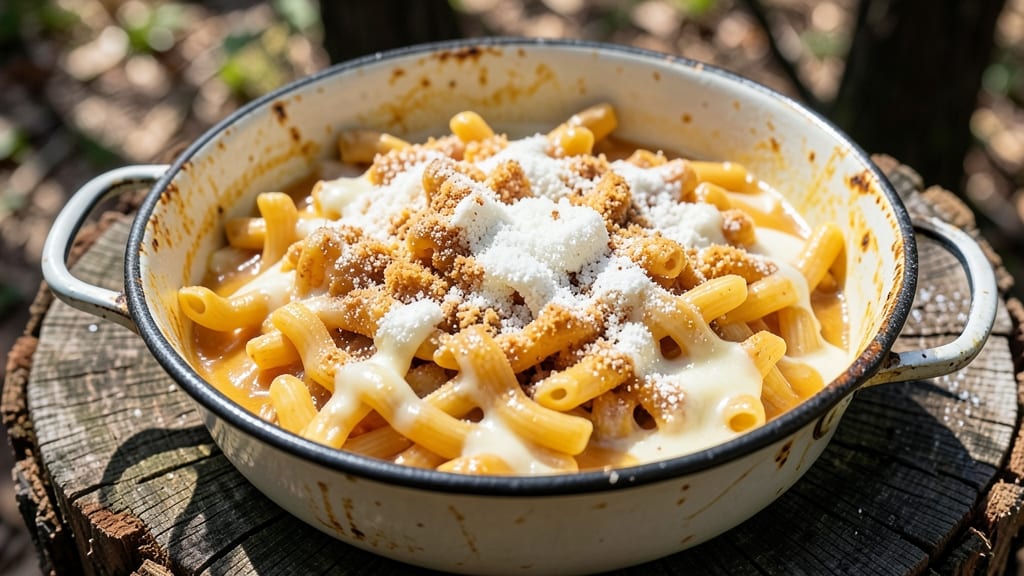
This backpacking mac and cheese recipe delivers one-pot comfort when you're miles from home, using lightweight ingredients that pack serious flavor. The secret lies in powdered cheese and instant pasta—no refrigeration needed, just creamy satisfaction in minutes.
I perfected this after years of trail cooking, where heavy ingredients meant the difference between a satisfying meal and a hungry hike.
What makes this recipe work for backpackers is the simplicity: 5 ingredients that weigh almost nothing and cook in a single pot over your camp stove. No measuring cups or complex techniques—just combine, heat, and enjoy.
The powdered cheese melts into a surprisingly rich sauce, while the pasta absorbs all that cheesy goodness without getting mushy.
By the time you're done, you'll have a restaurant-quality mac and cheese that's warm, comforting, and packed with 20 grams of protein per serving. The best part?
It reheats perfectly for lunch the next day, making it ideal for multi-day trips. This is the kind of meal that turns a cold campsite into home.
Whether you're cooking over a fire, jetboil, or even a camp stove, this recipe adapts to any backpacking setup. The instructions are designed to minimize cleanup—just one pot to wash—and the ingredients store for months without spoiling. Let's make camp cooking delicious again.
Ingredients for backpacking mac and cheese
Five lightweight ingredients transform into campfire-worthy mac and cheese with no refrigeration needed.
| Ingredient | Amount | Notes |
|---|---|---|
| Instant Macaroni Pasta 🍝 | 8 oz | Elbow shape preferred for texture |
| Powdered Cheddar Cheese 🧀 | 1 cup | High-fat content for creaminess |
| Powdered Parmesan Cheese 🧀 | ¼ cup | For depth of flavor |
| Butter Powder 🧈 | 2 tbsp | Reconstitutes to rich butter flavor |
| Water 💧 | 2 cups | Filtered or boiled for best results |
| Salt 🧂 | ½ tsp | Kosher salt preferred |
| Black Pepper 🌶️ | ¼ tsp | Freshly ground for best flavor |
| Garlic Powder 🧄 | ½ tsp | Enhances cheesy flavor |
The powdered cheeses are the game-changers here. Mountain House or Backpacker's Pantry brands are my go-tos—they melt smoothly and pack serious flavor without weight. Look for high-fat powdered cheddar (at least 20% milkfat) for that creamy texture. The Parmesan adds depth, but you can skip it if you're watching calories. Butter powder from Bob's Red Mill is my favorite—it reconstitutes to a rich, buttery sauce. For the pasta, De Cecco or Barilla instant macaroni holds up best on the trail. Avoid the pre-seasoned varieties—they add unnecessary weight and salt.
No powdered cheese? Shredded cheddar mixed with a little water works in a pinch, but it won't be as smooth. Short on butter powder? Olive oil or coconut oil at half the amount gives a similar richness. The garlic powder is non-negotiable—it's what makes this taste homemade. If you're cooking over a fire, use pre-measured spice packets to avoid spills. For extra protein, toss in powdered milk or nutritional yeast (about 2 tbsp each). The water should be boiling when you add the pasta—cold water makes for mushy noodles on the trail.
All ingredients store for 6-12 months in their original packaging. The powdered items are shelf-stable, so no refrigeration needed. For best texture, cook this over a jetboil or camp stove—open flames can burn the cheese. Portion into ziplock bags for easy reheating. It reheats beautifully for lunch the next day, making it perfect for overnight trips. The only thing you'll need to pack out is your pot—everything else is lightweight and disposable.
Why You'll Love This Recipe
- I’ll be real: this is the kind of meal where you just pour, stir, and eat. No measuring cups, no weird ratios—just dump the powdered cheeses and butter into boiling water with the pasta, and boom. It’s the ultimate "I can’t even" dinner.
- No-Fuss Magic: I’ll be real: this is the kind of meal where you just pour, stir, and eat. No measuring cups, no weird ratios—just dump the powdered cheeses and butter into boiling water with the pasta, and boom. It’s the ultimate "I can’t even" dinner.
- Surprisingly Rich: Honestly, I expected it to taste like sad camp food. But that powdered cheddar? Chef’s kiss. The parmesan adds this sharp, salty punch that makes it taste way more complex than it should. Plus, the butter powder melts into something dangerously close to homemade.
- Camping Meal MVP: Between us, this is the only thing I pack when I forget to plan. It’s lightweight, foolproof, and actually fills you up—no sad, soggy backpacking meals here. (Yes, even on a Tuesday night when you’re too tired to cook.)
Step-by-step instructions for backpacking mac and cheese
This one-pot wonder delivers restaurant-quality mac and cheese with minimal gear and maximum flavor.
Boil Water and Prepare the Pasta
Start by bringing the 2 cups of water to a rolling boil in your camp pot over high heat. Once boiling vigorously, add the 8 oz instant macaroni pasta and stir gently to prevent clumping. The pasta should cook for 7-9 minutes until it's tender but still has a slight bite—this ensures it holds up well when mixed with the cheese sauce later.
Here's the thing—don't drain the pasta after cooking. The starchy water is crucial for creating that creamy texture we're after. Instead, reduce the heat to medium and let it simmer while you prepare the cheese mixture. This keeps everything contained in that one pot, just like a true backpacking meal should be.
Create the Cheese Sauce Mixture
In a small bowl or directly in your camp pot, combine the 1 cup powdered cheddar cheese, 0.25 cup powdered parmesan cheese, 2 tbsp butter powder, 0.5 tsp salt, 0.25 tsp black pepper, and 0.5 tsp garlic powder. Use a spoon to break up any clumps in the cheese powders—this ensures they'll dissolve smoothly into the sauce.
I like to add the spices directly to the dry cheese mixture rather than to the water. This way, the flavors distribute evenly throughout the cheese rather than settling at the bottom of the pot. The garlic powder adds a subtle depth that makes this simple meal taste far more sophisticated than it actually is.
Combine and Thicken the Sauce
With the pasta still simmering in its starchy water, slowly sprinkle the cheese mixture over the top. Stir constantly for 2-3 minutes using a wooden spoon or long-handled spatula. The heat from the pasta water will begin to reconstitute the butter powder and melt the cheeses, creating a thick, creamy sauce.
You'll notice the mixture will look lumpy at first—that's completely normal. Keep stirring vigorously until it smooths out into a velvety consistency. If the sauce is too thick after 3 minutes, add 1-2 tablespoons of hot water from your pot to loosen it. The goal is that perfect mac and cheese texture—creamy but not watery, thick but not gluey.
Season and Serve with Camp Style
Taste your mac and cheese and adjust the seasoning if needed. You might want to add a pinch more salt or a bit more garlic powder depending on your preferences. Remember, campfire meals often taste more intense due to the smoke in the air, so err on the side of mild seasoning.
For an authentic campfire touch, serve this one-pot mac and cheese directly from the pot with a long-handled spoon. The residual heat will keep it warm while you enjoy your meal surrounded by nature. If you're feeling extra adventurous, sprinkle some additional powdered cheddar on top right before serving—it adds that perfect cheesy finish that makes this dish feel like a true comfort food.
Pro Tips For Making Backpacking Mac And Cheese
- Boil Water First: Instant mac and cheese relies on boiling water, but cold water slows the pasta and makes it gummy. Heat your water until it’s actually rolling—big bubbles breaking the surface—before adding the noodles. I learned this the hard way after eating mushy backpacking macs that tasted like glue.
- Pre-Mix Dry Cheese: Powdered cheese clumps like a nightmare when you’re trying to stir it in. Before adding water, whisk the cheddar and parmesan together with the butter powder—this way, they dissolve evenly instead of floating in sad, undissolved islands. (Yes, even if you’re impatient like me.)
- Add Butter Powder Last: The butter powder burns faster than the rest of the mix, so wait until the pasta is almost done before stirring it in. If you add it too early, you’ll end up with a weird, grainy texture—like someone sprinkled sand in your mac and cheese. Not ideal when you’re hungry.
- Cover and Wait: Once everything’s mixed, slap that lid on and let it sit for 2-3 minutes. The residual heat finishes cooking the noodles and thickens the sauce without you having to babysit it. I skip this when I’m lazy, but the dish is noticeably better when I don’t. (Your future self will thank you.)
Essential equipment for backpacking mac and cheese
One-Pot Essentials
Your backpacking mac and cheese only needs one pot—I use a lightweight 1-quart titanium pot like the Toaks 750ml (just 4.5 oz). The titanium heats up fast and won’t add weight to your pack.
For a fire setup, a cast iron skillet works too—just preheat it over the flames before adding water. Avoid aluminum if you can; it reacts with acidic ingredients over time. 🔥
Heat Source Options
A jetboil is my go-to for backpacking—it boils 2 cups of water in just 90 seconds, saving fuel and time. If you’re cooking over a fire, use small, dry sticks to maintain steady heat without flare-ups.
For camp stoves, a canister stove like the MSR PocketRocket gives precise temperature control. Never use a candle or alcohol stove—they’re too unpredictable for creamy sauces.
Storage Containers
Store your dry ingredients in ziplock bags (quart size) to save space and prevent spills. I divide the powdered cheeses and spices into individual servings so you can cook just what you need.
For the pasta, use a resealable mylar bag with an oxygen absorber to keep it fresh for 6+ months. The water can be carried in a collapsible water bottle or added from a stream if you’re near water sources.
Cleanup Gear
Pack one microfiber cloth (like Sea to Summit’s Quick Dry) to wipe down your pot—it’s lightweight and dries fast. For extra convenience, bring small trash bags to store food scraps. If you’re cooking in group settings, a small biodegradable soap (like Dr. Bronner’s) helps with quick pot cleanups.
The goal is zero trace—leave your campsite cleaner than you found it. ✨
Optional Upgrades
For extra creaminess, bring a small bottle of powdered milk (like Nestlé Carnation)—just 1 tbsp adds richness. A spice shaker for garlic powder and black pepper keeps seasonings fresh and easy to measure.
If you’re cooking for a group, a long-handled silicone spatula (like GSI Outdoors’ Pinnacle) makes stirring easier without burning your hands. These extras weigh under 2 oz total but make a big difference. 💡
Nutrition facts
Frequently asked questions
Can I make this backpacking mac and cheese without a stove?
Yes! For a no-cook version, mix all dry ingredients (pasta, cheeses, spices) in a sealed bag with 1 cup cold water. Shake vigorously for 5 minutes until the pasta softens and cheese clumps dissolve. The texture won't be perfect, but it's a 150-calorie emergency meal that requires zero heat. For better results, use a thermos with boiling water—pour the water over dry ingredients and let sit for 10 minutes before stirring.
How do I prevent the powdered cheese from clumping?
Sift the cheese powders through a fine-mesh strainer before mixing to break up clumps. Add spices directly to the cheese while dry to distribute them evenly. When combining with hot pasta water, stir constantly for 3+ minutes—the friction helps dissolve lumps. For extra smoothness, whisk the cheese mixture with 1 tbsp cold water before adding to the pot. Pre-mixing in a separate bowl also prevents clumping in the pot.
What's the best way to reheat leftovers?
Transfer portions to a ziplock bag and reheat directly in boiling water for 2-3 minutes—no need to transfer. For camp stoves, add 1 tbsp water per serving and heat until steaming. Microwave at home by adding 2 tbsp water and covering with a damp paper towel for 90 seconds. The starchy water from cooking keeps it creamy when reheated, but texture degrades after 2 reheats, so eat within 24 hours.
Can I substitute regular cheese for powdered?
Yes, but with adjustments. Use 1 cup shredded cheddar + 1 tbsp water per serving to mimic powdered cheese's moisture content. Pre-mix the cheese with spices in a bag, then add to cooked pasta. The texture will be slightly grainier, but it works in a pinch. For extra creaminess, add 1 tbsp milk powder or 2 tbsp sour cream powder to the mix. Avoid pre-shredded cheese—it contains anti-caking agents that make it gummy when heated.
Is this recipe safe for overnight backpacking trips?
All ingredients are shelf-stable for 6-12 months when stored properly. The powdered components won't spoil, and the cooked mac and cheese reheats safely for 24 hours if kept in an insulated container. For multi-day trips, portion ingredients into individual ziplock bags—cook only what you'll eat that night. The recipe's 20g protein per serving makes it ideal for high-energy days, and the compact ingredients won't attract wildlife.