
Sauces & Condiments
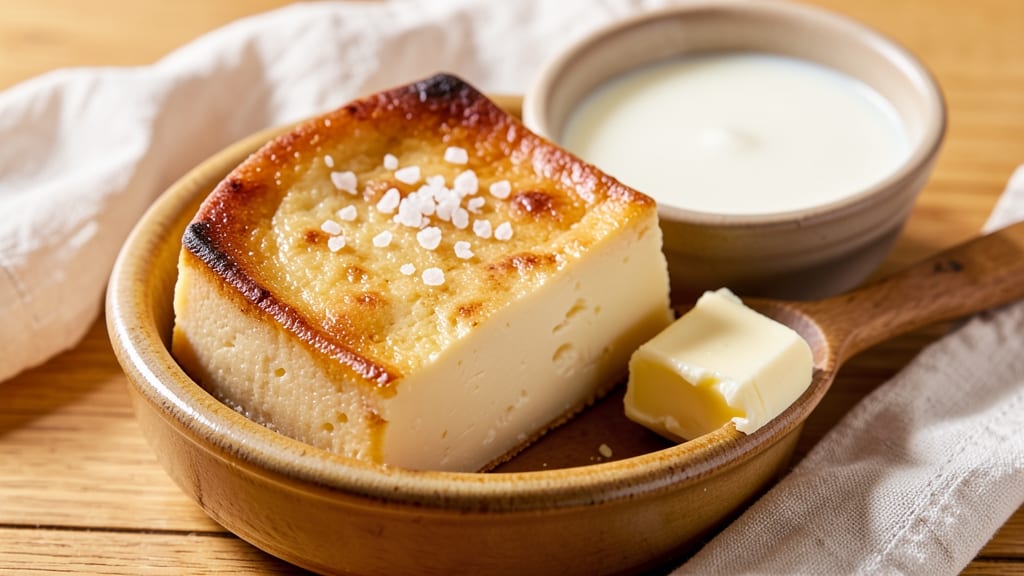
This Amish butter cheese brings the rich, tangy tradition of Pennsylvania farm kitchens into your home with just raw milk, butter, and a simple starter culture. The process mirrors generations of Amish homesteaders who relied on fermentation to preserve dairy—no fancy equipment needed, just patience and care.
What makes this recipe special is how the butterfat develops that signature creamy yet firm texture while building complex, tangy flavors over days of aging. The method begins with culturing warm milk overnight, then churning it into a thick, buttery curd before pressing out excess whey.
This traditional approach ensures the final product has that distinctive Amish tang without artificial additives. The cheese keeps beautifully in the refrigerator for weeks, making it perfect for spreading on fresh bread or pairing with hearty farmhouse meals.
What you’ll end up with is a homemade soft cheese that’s richer than store-bought versions, with a velvety mouthfeel and a depth of flavor that comes from raw milk and natural fermentation.
The process is straightforward but requires attention to timing—especially during the culturing and pressing stages—to achieve that ideal balance of creaminess and tang. Once you’ve mastered this technique, you’ll never buy butter cheese again. Here’s how to make it the traditional way, step by step.
Ingredients for amish butter cheese
Four simple ingredients transform into rich, tangy Amish butter cheese with just time and care.
| Ingredient | Amount | Notes |
|---|---|---|
| Raw Whole Milk 🥛 | 4 cups | Whole milk, 3.25% fat minimum |
| Unsalted Butter 🧈 | ½ cup | Cold, cut into small cubes |
| Plain Yogurt Starter Culture 🍶 | ¼ cup | Store-bought plain yogurt with live cultures |
| Non-Chlorinated Water 💧 | ½ cup | For thinning if needed |
| Cheesecloth 🧵 | 1 sheet | Muslin or clean cotton cloth |
| Kosher Salt 🧂 | ½ tsp | Diamond Crystal preferred |
| Lemon Juice 🍋 | 1 tbsp | Freshly squeezed |
| Buttermilk 🥛 | ¼ cup | Optional for extra tang |
Raw milk is the heart of this cheese—look for organic or local farm milk if possible, but regular whole milk works fine. The butter should be cold and cubed (European-style butter works best). For the starter culture, any plain yogurt with live cultures will do—Fage or Siggi's are my go-to brands. The cheesecloth? Grab a clean kitchen towel if you don't have muslin—just make sure it's lint-free. The lemon juice and buttermilk are optional but add that extra tang that makes this cheese stand out. If you're feeling fancy, Trader Joe's sells pre-cultured buttermilk that works perfectly.
No raw milk? Pasteurized whole milk works in a pinch, but the flavor won't be quite as rich. Short on butter? Cream cheese at half the amount gets you close, though the texture will differ slightly. The cheesecloth substitute? Paper towels work too, but they don't drain as well. For extra tang without buttermilk, add an extra tablespoon of lemon juice. Want to skip the starter culture? Store-bought plain yogurt is the easiest swap—just make sure it says 'live cultures' on the label. If your cheese turns out too thick, thin with a splash of water during pressing.
This cheese keeps beautifully in the fridge for 3-4 weeks if properly sealed. For longer storage, portion into small jars and freeze for up to 6 months. The flavor actually improves with age—like a good wine! Store it in a glass jar with a tight lid, submerged in its whey. When ready to use, just scoop out what you need and enjoy. It's perfect for spreading on fresh bread, pairing with apple slices or jam, or even melting into soups for extra richness.
Why You'll Love This Recipe
- No Special Tools Needed: I swear by this recipe because it only asks for a pot, a thermometer, and cheesecloth—stuff you already own. The real magic happens when you strain that warm curds through a simple cloth, and honestly? No fancy gadgets required.
- Rich Without Effort: That first bite of creamy, buttery cheese with just a hint of tang? It’s like someone took all the richness of homemade butter and folded it into something you can spread on toast or melt into soups. The yogurt culture does the heavy lifting—you just let it work.
- Leftovers That Last: This cheese keeps beautifully in the fridge for weeks, and it’s the perfect snack for when you’re craving something simple. I’ll often make a big batch on Sunday and use it all week—on crackers, in sandwiches, or even stirred into mashed potatoes for extra decadence.
- Budget-Friendly Luxury: Using raw whole milk and unsalted butter might sound fancy, but it’s actually cheaper than store-bought specialty cheeses. Plus, the small amount of yogurt culture stretches to make multiple batches, so you’re not breaking the bank for something that tastes like a gourmet treat.
Step-by-step instructions for Amish butter cheese
Here's how to transform simple ingredients into that creamy, tangy spread Amish families love.
Heat and Acidify the Milk
Pour the 4 cups raw whole milk into a heavy-bottomed saucepan and warm it over medium heat to 110°F. You'll know it's ready when you see tiny bubbles forming around the edges and the milk has a slight sheen - not boiling, just gently steaming. Remove from heat immediately and whisk in the 1 tablespoon lemon juice and 0.25 cup buttermilk (if using). This acidification is crucial for proper curd formation later.
Let the mixture sit undisturbed for 5 minutes while it develops a slightly thickened, custard-like consistency. The acid will begin breaking down the milk proteins, preparing them for the next stage. Here's where the magic starts - this step sets the foundation for that authentic Amish tang you're after.
Add Culture and Incubate
Stir in the 0.25 cup plain yogurt starter culture until completely dissolved. The mixture should look smooth with no visible lumps. Pour the cultured milk into a clean glass jar or container, cover loosely with the cheesecloth (secured with a rubber band), and place in a warm environment. I like to use my oven with the light on for 12-14 hours - this maintains a consistent 110-115°F temperature.
During this incubation, the cultures will transform the milk into a thick yogurt-like curd. You'll know it's ready when it reaches a pudding consistency that doesn't run when tilted. The longer it incubates within this temperature range, the more pronounced the tangy flavor becomes - that signature Amish depth you're aiming for.
Drain and Blend the Curds
Once properly set, line a colander with the cheesecloth and pour the cultured milk through, allowing the whey to drain completely for 2-3 hours. The curds should form a solid mass that holds together when gently pressed. This draining removes excess moisture while concentrating the creamy texture.
Transfer the drained curds to a food processor and blend until completely smooth. Here's where you'll notice the transformation - what started as lumpy curds becomes a velvety base. If the mixture is too thick, gradually add the 0.5 cup non-chlorinated water, 1 tablespoon at a time, until you reach a spreadable consistency.
Incorporate Butter and Salt
Add the 0.5 cup cold, cubed unsalted butter to the food processor and blend until fully incorporated. The butter should melt into the cheese mixture, creating that signature rich, buttery texture. Add the 0.5 teaspoon kosher salt and pulse just until evenly distributed. Taste and adjust seasoning if needed - this is your chance to perfect the balance between tangy and creamy.
Here's the thing about Amish butter cheese - the butter content makes it more spreadable than traditional cream cheese while maintaining that authentic farmhouse character. The salt enhances all the flavors, so don't skimp. Once properly blended, transfer to a clean jar and refrigerate for at least 4 hours before serving to let all the flavors meld together.
Pro Tips For Making Amish Butter Cheese
- Acidify the Milk First: Add 1 tablespoon of lemon juice or vinegar to the raw whole milk before heating—it’s the only way to guarantee a clean, firm curd. I learned this the hard way when my first batch turned into a soupy mess because I skipped it.
- Use Cold Butter: Chill the unsalted butter until it’s firm but still pliable—this prevents it from melting into the curds and turning your cheese greasy. I used to just grab it straight from the fridge, and the texture always suffered.
- Strain Longer Than You Think: Let the whey drain for at least 12 hours, even if the curds look dry sooner—this is when the flavor develops. I rushed it once and got a bland, watery cheese that tasted like nothing.
- Skip the Cheesecloth Twist: Fold the cheesecloth loosely over the colander and press gently—twisting it too tight traps moisture and makes the cheese rubbery. My grandmother swore by this, and she was right: patience here pays off.
Creative variations of this dish
Sweetened Fruit Twist
Add 2 tablespoons of honey or 1 tablespoon of maple syrup to the blended cheese mixture before refrigerating. This creates a sweet-and-tangy variation that pairs beautifully with warm apple slices or peach jam.
I like to use local wildflower honey for that extra depth of flavor—it balances the tang perfectly. 🍯
Herbed Garden Version
For a savory twist, blend in 1 tablespoon of finely chopped fresh dill or 1 teaspoon of dried chives along with the salt. This herb-infused version works wonderfully as a spread for cucumber sandwiches or as a topping for roasted vegetables.
If you're feeling adventurous, add ½ teaspoon of garlic powder for an extra kick. The herbs brighten up the richness of the butter cheese beautifully.
Spiced Chai Variation
Warm ½ cup of milk with 1 teaspoon of chai spice blend (or a mix of cinnamon, cardamom, ginger, and cloves) and let it steep for 5 minutes. Stir this spiced milk into the cheese mixture before refrigerating.
The result is a fragrant, aromatic cheese that’s perfect for spreading on warm croissants or pairing with black tea. This variation is inspired by Amish traditions of using spices to enhance dairy products.
Smoky Chipotle Kick
For those who love a little heat, blend in ½ teaspoon of chipotle powder or ¼ teaspoon of smoked paprika along with the salt. This smoky, slightly spicy version adds a bold twist to the classic recipe.
It’s fantastic on grilled cheese sandwiches or as a dip for cornbread. If you want to go even further, add ½ teaspoon of liquid smoke for an extra smoky depth. 🌶️
Creamy Dill Pickle
Mix in 2 tablespoons of finely chopped dill pickles and ½ teaspoon of garlic powder for a tangy, briny variation that’s perfect for pairing with smoked meats or crusty bread.
The pickles add a refreshing contrast to the richness of the butter cheese, making it a crowd-pleaser for any gathering. This version is inspired by the Amish love of preserving and combining flavors in creative ways.
Lemon-Basil Bright
Add 1 tablespoon of fresh lemon zest and 1 tablespoon of finely chopped fresh basil to the cheese mixture for a bright, citrusy twist. This version is light yet flavorful, making it ideal for spreading on toasted baguette slices or pairing with fresh mozzarella and tomatoes.
The basil adds a fresh herbal note that complements the tangy cheese beautifully. 🍋
Nutrition facts
Frequently asked questions
Can I use pasteurized milk instead of raw milk for Amish butter cheese?
Yes, you can use pasteurized whole milk, but the flavor won't be quite as rich or tangy. Raw milk contains natural enzymes that contribute to the authentic Amish depth of flavor. If you must use pasteurized milk, look for organic or grass-fed varieties—they have a higher fat content and better flavor profile. The texture will still be creamy, but the tang will be milder.
How do I know when the cheese is properly cultured?
The cheese is ready when it reaches a thick, pudding-like consistency that doesn't run when you tilt the jar. It should hold its shape but still be soft enough to blend easily. If it's too thin, let it culture for another 1-2 hours. If it's too thick, you can thin it slightly with a splash of water during blending. The ideal texture is smooth and spreadable, not grainy.
What if my cheese turns out too soft or too firm?
Too soft? Add 1-2 tablespoons of cold butter and blend again to firm it up. Too firm? Thin with 1 tablespoon of water or buttermilk during blending. The key is balancing the butterfat content—Amish butter cheese should be creamy but hold its shape when spread. If it's still too firm after adjustments, let it rest in the fridge for 24 hours to soften naturally.
Can I make Amish butter cheese without a food processor?
Yes! If you don't have a food processor, use a blender or even a hand mixer with a whisk attachment. For a more rustic texture, you can also mash the drained curds by hand with a potato masher or fork. Just be prepared for a slightly lumpier result. The butter will still blend in smoothly if you work it thoroughly. This method works best for small batches.
How long does homemade Amish butter cheese keep?
Properly stored in an airtight container submerged in its whey, this cheese stays fresh for 3-4 weeks in the refrigerator. For longer storage, portion into small jars and freeze for up to 6 months. The flavor actually improves with age, developing deeper tanginess. Always use clean utensils when scooping to prevent contamination.