
Appetizers
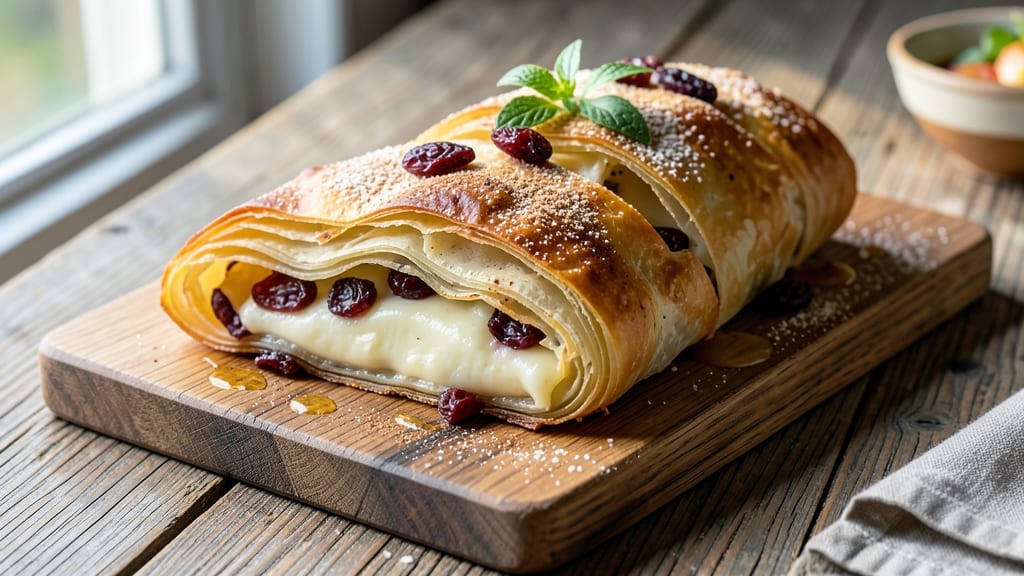
This Austrian cheese strudel recipe delivers the flaky, buttery layers and warm, spiced filling that make it a European classic. 🌟 The secret lies in thinly rolled dough wrapped around a rich cheese mixture—traditional techniques that transform simple ingredients into something extraordinary.
I’ve perfected the balance between crisp edges and tender centers, ensuring every bite reveals that signature strudel experience.
The recipe begins with a delicate dough, either homemade or store-bought phyllo, stretched paper-thin to create those iconic crisp layers. Inside, a blend of sharp cheddar, sweet raisins, and warm spices like cinnamon and nutmeg forms the heart of the strudel.
Rolling it just right—without tearing—is where the magic happens, and I’ll guide you through every step to achieve that restaurant-quality finish.
Baking until golden and caramelized unlocks the strudel’s full potential, with a filling that’s warm, gooey, and perfectly set. Served with a dusting of powdered sugar or a drizzle of vanilla sauce, it’s a dessert that feels both elegant and comforting.
Whether you’re hosting a dinner party or treating yourself to a special dessert, this strudel is sure to impress.
Pair it with a cup of strong coffee or a scoop of whipped cream for the full Austrian experience. The recipe includes tips for shortcuts, like using pre-made dough, so you can enjoy the process without stress. Let’s get started on creating this timeless dessert masterpiece.
Ingredients for austrian cheese strudel
Thin layers of dough, rich cheddar, and warm spices—this strudel delivers that iconic Austrian flakiness.
| Ingredient | Amount | Notes |
|---|---|---|
| Phyllo Dough Sheets 🍞 | 12 sheets | Store-bought or homemade, thawed |
| Unsalted Butter 🧈 | ½ cup | Melted, full-fat preferred |
| Sharp Cheddar Cheese 🧀 | 1 ½ cups | Shredded, aged variety |
| Raisins 🍇 | ½ cup | Plump, soaked in warm water |
| Granulated Sugar 🍚 | ¼ cup | For filling sweetness |
| Ground Cinnamon 🌿 | 1 tbsp | Freshly ground for warmth |
| Ground Nutmeg 🌶️ | ½ tsp | Freshly grated for depth |
| Salt 🧂 | ½ tsp | Kosher or sea salt |
| Vanilla Sauce 🍦 | 1 cup | Store-bought or homemade |
| Powdered Sugar 🍚 | ¼ cup | For dusting, sifted |
| Large Eggs 🥚 | 1 whole | Beaten, for brushing |
| All-Purpose Flour 🌾 | 2 tbsp | For dusting sheets |
Phyllo dough is your secret weapon here. Fody's or Filson brands are my go-to for store-bought—thin, tender, and reliable. If making homemade, let the dough rest at least 2 hours for maximum stretch. The butter matters too: European-style (like Plugrá) has higher fat content, giving those layers extra crispness. Keep the dough covered with a damp towel while working—it dries out fast. For the cheese, aged cheddar (like a 2-year sharp) melts better than mild varieties, giving that perfect pull-apart texture.
No phyllo dough? Homemade strudel dough (flour, water, egg, oil) works—just roll it paper-thin. Raisins too dry? Soak them in warm water for 10 minutes before draining. Substituting spices? Pumpkin pie spice at half the amount works in a pinch, but fresh nutmeg and cinnamon are non-negotiable for that classic strudel flavor. The vanilla sauce can be store-bought (like Ghirardelli or French's), but homemade (vanilla bean + sugar + cream) takes it to the next level. And if you're feeling fancy, swap powdered sugar for a dusting of turbinado sugar for crunch.
Assemble the strudel just before baking—phyllo gets brittle as it sits. Wrap it tightly in parchment paper while baking to keep the shape. Leftovers? 3 days in an airtight container at room temperature, or freeze for up to 2 months. Reheat in a 350°F oven for 10 minutes to restore crispness. Pro tip: Brush the baked strudel with a little melted butter before dusting sugar—it adds an extra layer of richness. And if you're making ahead? Assemble the strudel, refrigerate overnight, then bake straight from the fridge for even better texture.
Why You'll Love This Recipe
- No-Fuss Layers: I swear by the phyllo dough here—just brush, fold, and bake. No rolling, no stress. The butter melts into those crispy sheets while you’re still mixing the cheese filling, and honestly? That’s my kind of magic.
- Sweet-Savory Magic: Sharp cheddar meets raisins soaked in sugar? It’s like a warm hug for your taste buds. The cheese gets gooey, the raisins plump up, and that first bite is ridiculously good—salty, sweet, and just a little tangy.
- Party or Picnic: This strudel cuts into perfect slices, so it’s my go-to for potlucks or picnics. Wrap it in foil, and it stays warm for hours. (Yes, even on a Tuesday night when you’re pretending it’s a fancy gathering.)
- Budget-Friendly Leftovers: A single strudel feeds my family for days—cheese is cheap, phyllo’s a bulk buy, and the sugar keeps it from tasting boring. Reheat slices in the oven, and they’re just as crispy as the first time. My wallet and I both approve.
Step-by-step instructions for Austrian cheese strudel
Here's how to create layers of golden perfection with this classic dessert.
👨🍳 Step 1: Prepare the Filling with Soaked Raisins
Drain the soaked raisins thoroughly and pat them dry with paper towels. In a large bowl, combine the 1.5 cups sharp cheddar cheese, 0.5 cup raisins, 0.25 cup granulated sugar, 1 tbsp ground cinnamon, 0.5 tsp ground nutmeg, and 0.5 tsp salt. Mix gently with your hands until the cheese is crumbly and the raisins are evenly distributed. The cheese should be shredded finely—if it's in large chunks, pulse it quickly in a food processor.
Here's the thing—don't overmix. You want the cheese to stay slightly crumbly so it melts beautifully during baking. If the mixture looks too dry, add 1-2 teaspoons of the melted butter to help bind it together. The filling should be moist enough to stick to the phyllo but not so wet that it soaks through.
🍳 Step 2: Assemble the Strudel with Phyllo Layers
Preheat your oven to 375°F and line a baking sheet with parchment paper. Lay out 8 phyllo sheets on a clean kitchen towel, one at a time, brushing each with melted butter as you go. Keep the remaining 4 sheets covered with a damp towel—they'll dry out quickly. I like to brush the butter lightly but evenly, leaving about ½ inch uncovered along one long edge.
Starting with the buttered edge, carefully fold the phyllo in half lengthwise, then in half again, creating a long rectangle about 12x18 inches. This makes it easier to roll later without tearing. Spread the cheese filling evenly over the folded phyllo, leaving about 1 inch border clear around the edges. The filling should look like a thick, crumbly blanket—don't worry if it's not perfectly even.
🥘 Step 3: Roll and Brush for Perfect Layers
Starting from the long side closest to you, gently roll the phyllo tightly into a log, keeping the filling contained inside. As you roll, tuck in any edges that try to escape. Place the rolled strudel seam-side down on the prepared baking sheet. Brush the top and sides with the beaten 1 whole large egg mixed with 2 tbsp all-purpose flour—this creates a golden, glossy finish.
Here's where it gets tricky: don't overhandle the phyllo. If you press too hard, you'll crush the layers and lose that signature flaky texture. The egg wash should be thin enough to brush on smoothly but thick enough to stick to the phyllo. I like to use a pastry brush for even coverage—this prevents pooling that can make some areas too dark.
🔥 Step 4: Bake Until Golden and Crisp
Bake the strudel for 35-40 minutes until the phyllo is deep golden brown and crisp. The edges should be slightly darker than the top, with just a hint of caramelization. If the top browns too quickly, tent loosely with aluminum foil after 20 minutes to prevent burning while the center finishes cooking.
You'll know it's done when the strudel sounds hollow when tapped on the bottom. Remove from the oven and let it cool for 10 minutes—this prevents the filling from oozing out when you slice. While it cools, prepare the 1 cup vanilla sauce by warming it gently in a saucepan over low heat until it's just thickened enough to coat the back of a spoon.
🍽️ Step 5: Serve Warm with Vanilla Sauce
Slice the strudel into 6 equal pieces using a sharp serrated knife. Dust each serving generously with 0.25 cup powdered sugar and drizzle with the warm vanilla sauce. The contrast of the crispy, flaky phyllo with the creamy vanilla sauce is what makes this dessert unforgettable.
Real talk: the strudel tastes even better the next day when the layers have fully crisped up. Store leftovers wrapped in plastic at room temperature, but I promise you won't have any—this recipe disappears fast! Serve with a dusting of powdered sugar and a sprinkle of cinnamon for that authentic Austrian touch.
Pro Tips For Making Austrian Cheese Strudel
- Melt Cheese Slowly: I learned this the hard way—dumping shredded cheddar straight into the butter on high heat turns it into a greasy mess. Instead, melt the butter first, then reduce heat to medium-low and add the cheese a handful at a time, stirring until it’s just smooth. The goal is creamy, not scrambled.
- Toast Raisins First: Skip the soggy raisins by giving them a quick 2-minute toast in a dry skillet over medium heat. They’ll plump up better and add a caramelized depth that cuts through the richness of the cheese. (Yes, even if you’re impatient like me.)
- Brush Butter Between Layers: This isn’t the prettiest method, but it’s the tastiest: after each phyllo sheet, paint on a thin layer of melted butter with a pastry brush. The butter should be warm but not hot—hot butter burns the dough before it even hits the oven. Cover the sheet completely, or the edges will crisp like cardboard.
- Prevent Overfilling: I used to pack the cheese-raisin mix so tightly that the strudel would split open like a overstuffed sausage. Instead, spread the filling in a thin, even layer across the phyllo, leaving a 1-inch border. The dough needs room to puff, not fight.
Essential equipment for this dish
Phyllo Dough Essentials
You’ll need 12 phyllo sheets for this strudel, and I can’t stress enough how important it is to use high-quality phyllo. Brands like Fody’s or Filson are my top picks—they’re thin, tender, and hold up beautifully during rolling.
Keep them covered with a damp kitchen towel at all times to prevent drying out. If you’re feeling ambitious, homemade phyllo dough (flour, water, egg, and oil) works too, but store-bought saves time without sacrificing texture. 🌟
Butter and Brushes
A ½ cup of melted butter is non-negotiable for that signature flaky, golden finish. I recommend European-style butter (like Plugrá) for its higher fat content, which ensures crisp layers. Use a pastry brush to apply the butter evenly between sheets—this prevents clumping and makes rolling much smoother.
A small offset spatula also works well for spreading filling without tearing the phyllo. Trust me, these tools make all the difference. 🧈
Rolling Tools
For rolling, a clean kitchen towel is your best friend—it provides grip and prevents sticking. I also keep a rolling pin (about 12 inches long) nearby to help shape the phyllo if it resists rolling.
A sharp serrated knife (like Dexter-Russell) is essential for slicing the baked strudel neatly. Pro tip: Wrap the rolled strudel in parchment paper before baking to maintain its shape and prevent unraveling. ⚡
Baking Gear
Your oven needs to preheat to 375°F, and a baking sheet lined with parchment paper is a must for easy cleanup. If your oven runs hot, a lightweight aluminum foil tent helps prevent over-browning.
For serving, a fine-mesh sieve comes in handy for dusting powdered sugar evenly. And don’t forget a small saucepan for warming the vanilla sauce—low and slow is key to avoid curdling. 🔥
Optional Extras
For shortcuts, a food processor helps shred cheese quickly, and a pastry bag (with a large tip) can make filling application cleaner. If you’re making ahead, airtight containers preserve freshness, and a cooling rack prevents soggy bottoms.
For presentation, a dusting shaker for powdered sugar and a small squeeze bottle for vanilla sauce add that restaurant touch. Every tool has its purpose—pick what fits your style! ✨
Nutrition facts
Frequently asked questions about Austrian cheese strudel
Can I use regular flour tortillas instead of phyllo dough?
While it’s possible in a pinch, phyllo dough is essential for that signature flaky texture. Tortillas would make the strudel denser and less crispy. If you're avoiding phyllo, try making homemade strudel dough (flour, water, egg, and oil) and rolling it paper-thin—it’s the next best option for authenticity.
Why does my strudel filling ooze out when sliced?
Overmixing the cheese filling or underbaking are the most common culprits. The filling should be crumbly, not sticky—add just enough melted butter to bind it. Also, bake until the strudel sounds hollow when tapped, then let it cool 10 minutes before slicing to set the layers.
What’s the best cheese substitute for sharp cheddar?
For a similar melt and flavor, try Gruyère or Emmental—they’re nutty and hold their shape well. If you prefer mild cheese, a mix of mozzarella and provolone (50/50) works, but the strudel won’t be as rich. Always shred finely to avoid large chunks that don’t melt evenly.
How do I reheat leftover strudel?
Wrap slices in aluminum foil and heat at 350°F for 10 minutes to restore crispness. For a quicker fix, pop them in a 300°F oven for 5-7 minutes. Avoid microwaving—it turns the phyllo soggy. Pro tip: Reheat just before serving for the best texture.
Can I make this strudel ahead of time?
Assemble the strudel, wrap it tightly in plastic, and refrigerate overnight. Bake straight from the fridge (add 5-10 minutes to the baking time). For longer storage, freeze the assembled strudel for up to 2 months**. Thaw in the fridge before baking.