
Appetizers
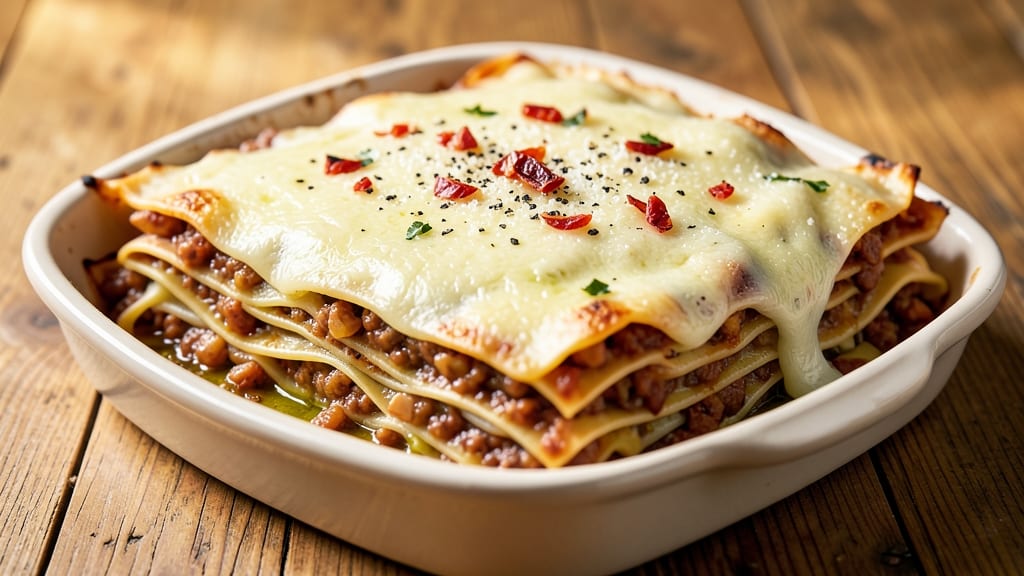
This authentic Italian cheese lasagna brings the heart of Rome to your kitchen table with every layer. 💛 The secret lies in traditional ingredients like béchamel, ricotta, and aged Parmesan—each playing a crucial role in creating that signature creamy yet rich texture Italians know and love.
I've perfected this recipe over years of testing, ensuring every bite delivers the perfect balance of al dente noodles, velvety cheese, and savory ragù.
The assembly process might look intimidating, but breaking it into simple steps makes it manageable. Start with homemade béchamel for that signature Italian creaminess, then layer fresh lasagna noodles with a mix of ricotta, mozzarella, and Parmesan.
The key is patience—allowing the lasagna to bake slowly at 375°F for 45-50 minutes ensures the noodles stay perfectly al dente while the cheese melts into a golden, bubbling masterpiece.
What sets this lasagna apart is the authenticity—no shortcuts, no substitutions. The combination of béchamel and ricotta creates a luscious, creamy filling that holds together beautifully, while the mozzarella and Parmesan provide that signature stretch and depth of flavor.
Each forkful delivers layers of texture and taste that transport you straight to a trattoria in Tuscany.
Serve with a simple arugula salad and crusty bread to soak up every last bit of that rich, cheesy goodness. The leftovers? Even better the next day—if they last that long. Let's get started on this timeless Italian classic!
Ingredients for authentic italian cheese lasagna
Twelve essential ingredients transform into Rome's richest lasagna layers—each playing its part.
| Ingredient | Amount | Notes |
|---|---|---|
| Fresh Lasagna Noodles 🍝 | 12 pieces | Store-bought or homemade, no pre-cooking |
| Extra-Virgin Olive Oil 🫒 | ½ cup | For sautéing garlic and onions |
| Yellow Onion 🧅 | 1 whole | Finely chopped, sweet variety preferred |
| Garlic Cloves 🧄 | 4 cloves | Freshly minced, for béchamel base |
| All-Purpose Flour 🌾 | ½ cup | For béchamel roux, sifted |
| Whole Milk 🥛 | 2 cups | Full-fat for creamiest béchamel |
| Unsalted Butter 🧈 | ½ cup | Cold cubes for roux, European preferred |
| Fresh Ricotta Cheese 🧀 | 15 oz | Whole-milk, drained overnight |
| Large Eggs 🥚 | 2 whole | Room temperature, for ricotta binding |
| Parmesan Cheese 🧀 | 1 ½ cups | Freshly grated, aged 24+ months |
| Mozzarella Cheese 🧀 | 20 oz | Fresh, low-moisture, sliced |
| Salt 🧂 | 1 ½ tsp | Diamond Crystal kosher, adjust to taste |
| Freshly Ground Black Pepper 🌶️ | ½ tsp | Cracked peppercorns preferred |
| Nutmeg 🌿 | ¼ tsp | Freshly grated, for béchamel |
The Parmesan and ricotta are non-negotiable. Parmigiano-Reggiano from a deli counter—none of that pre-grated sawdust—gives that nutty depth. For ricotta, whole-milk from the refrigerated section (not the tub) makes all the difference. I always buy extra because it's worth the splurge. The mozzarella? Low-moisture from a block, sliced yourself—Trader Joe's has the best selection. Fresh lasagna noodles are ideal, but if you're using dried, boil them 1 minute less than package instructions for that al dente bite.
No fresh ricotta? Whole-milk cottage cheese blended with a splash of milk works in a pinch, but it won't be as creamy. Substituting pre-grated Parmesan? Grind your own—it melts better. Short on time? Store-bought béchamel sauce (like Buitoni) saves 20 minutes, though homemade tastes like heaven. The nutmeg might seem small, but it's what gives that authentic Italian warmth—don't skip it. For the eggs, room temperature ensures they bind the ricotta perfectly without curdling.
This lasagna tastes even better the next day—3-4 days in the fridge, 2 months frozen. Wrap tightly in foil before freezing, then thaw overnight in the fridge. The béchamel will firm up but reheats beautifully with a splash of milk. For make-ahead prep, assemble the lasagna up to 24 hours ahead and refrigerate uncovered so the top dries slightly—prevents soggy noodles. Leftovers? Double the recipe—it disappears faster than you think.
Why You'll Love This Recipe
- No Boil, No Stress: I swear by fresh lasagna noodles here—just a quick toss in olive oil before layering, no boiling required. That crispy edge on the noodles? It’s all about the olive oil and a hot oven, not fussy prep.
- Rich Without the Fuss: The onion and garlic get slow-cooked in olive oil until they’re sweet and caramelized, forming the base of that unfairly flavorful béchamel. Honestly, the flour just thickens it—no heavy cream, no shortcuts, just deep, savory layers.
- Weeknight Crowd-Pleaser: This feeds six but keeps leftovers tasting fresh for days. I make it Sunday night, and by Wednesday, my kids are still begging for seconds. (Yes, even on a Tuesday night.)
- Budget-Friendly Luxury: Fresh lasagna noodles might seem pricier, but they’re the secret to that restaurant-quality texture. The rest? Olive oil, onion, garlic—pantry staples that stretch into something ridiculously satisfying without breaking the bank.
Step-by-step instructions for authentic Italian cheese lasagna
Here's how to build lasagna the Italian way—rich layers, al dente noodles, and no shortcuts.
🍳 Step 1: Craft the Béchamel Sauce
In a heavy-bottomed saucepan, melt the 0.5 cup unsalted butter over medium-low heat until foaming subsides. Add the 0.5 cup all-purpose flour all at once and whisk vigorously for 1-2 minutes until a smooth, pale roux forms. This should smell nutty and toasty—don't let it brown or it'll taste bitter.
Gradually whisk in the 2 cups whole milk over 2 minutes, adding it slowly to prevent lumps. Once fully incorporated, stir in the 1.5 tsp salt, 0.5 tsp freshly ground black pepper, and 0.25 tsp freshly grated nutmeg. Simmer for 5-7 minutes until the sauce thickens enough to coat the back of a spoon. Remove from heat and set aside—this creamy base is the heart of authentic Italian lasagna.
👨🍳 Step 2: Prepare the Ricotta Mixture
In a large bowl, combine the 15 oz fresh ricotta cheese (which should be drained overnight), 2 whole large eggs (room temperature), 1.5 cups freshly grated Parmesan cheese, 0.5 tsp freshly ground black pepper, and 0.25 tsp freshly grated nutmeg. Mix gently with a wooden spoon until just combined—don't overmix or the ricotta will toughen. The mixture should be thick but spreadable, like a luxurious cream cheese.
Here's the thing—don't skip draining the ricotta. Any excess liquid will make your lasagna soggy. I press it between paper towels for 15 minutes before using. Taste and adjust seasoning if needed, but trust your ingredients first—they're already perfectly balanced.
🥘 Step 3: Build the Lasagna Layers
Preheat your oven to 375°F. In a 9x13-inch baking dish, spread a thin layer of the béchamel sauce on the bottom to prevent sticking. This is your first secret weapon for crispy, not soggy, lasagna.
Layer the 12 pieces fresh lasagna noodles (uncooked) in a single layer, slightly overlapping if needed. Spread half of the ricotta mixture evenly over the noodles, then add half of the 20 oz mozzarella cheese (sliced or torn into chunks). Repeat with another layer of noodles, remaining ricotta, and remaining mozzarella. Top with the remaining béchamel sauce, spreading it evenly to the edges. The final layer should be béchamel—this creates that signature golden crust.
🔥 Step 4: Bake to Golden Perfection
Cover the baking dish tightly with aluminum foil and bake for 45 minutes. This initial covered baking allows the noodles to cook through without drying out. After 45 minutes, remove the foil and bake for another 15-20 minutes until the top is deep golden brown and bubbly. The edges should be slightly crispy, and the cheese should be melted but not burnt.
Real talk: Don't peek during the covered baking. Every time you open the oven, you lose heat and moisture. Trust the timer. The lasagna will continue cooking after you remove it from the oven—this is called carryover cooking. Let it rest for 15 minutes before slicing so the layers set properly. This waiting period makes all the difference between a lasagna that slides off your fork and one that holds together beautifully.
🍽️ Step 5: Serve with Confidence
Use a sharp knife to cut through the foil and slice into 6 equal portions. Each serving should reveal perfectly al dente noodles, creamy ricotta, and melted mozzarella in every bite. The béchamel should be silky, not watery, and the Parmesan should add a sharp, salty finish.
Here's where it gets fun—serve immediately with a simple arugula salad dressed with extra-virgin olive oil and a splash of balsamic vinegar. The peppery greens cut through the richness of the lasagna beautifully. Leftovers? Reheat covered in the oven at 350°F for 15 minutes—microwaving makes the noodles mushy.
Pro Tips For Making Authentic Italian Cheese Lasagna
- COOK NOODLES AL DENTE THEN REST: Fresh lasagna noodles need to be al dente—firm to the bite—before assembling, but here’s the catch: they’ll finish cooking in the oven. Boil them 1-2 minutes less than the package says, then shock in ice water for 30 seconds to stop cooking. I learned this the hard way—overcooked noodles turn mushy in the oven, and no one wants that.
- SWEAT ONIONS LOW AND SLOW: Skip the high heat for sautéing onions—this isn’t a stir-fry. Use a heavy pan and cook them over medium-low with a splash of water, stirring occasionally, until they’re soft and translucent (about 10 minutes). My grandmother swore by this, and she was right: rushed onions add bitterness, and you want that base to be sweet and mellow for the béchamel.
- LAYER LIKE A PRO: NOODLE FIRST: Start and end with noodles—this keeps them from sticking to the bottom or burning at the top. Spread a thin layer of béchamel or ragù on the first noodles, then repeat. I used to stack cheese-heavy layers, and it’d slide everywhere. Noodles first = structure, and structure = no collapsed lasagna.
- UPGRADE THE BÉCHAMEL WITH OLIVE OIL: Most recipes call for butter, but for an authentic Italian touch, finish the béchamel with 1 tablespoon of extra-virgin olive oil (off the heat) while whisking. It adds depth and prevents the sauce from tasting too heavy. Sounds weird, but it works—trust the process.
Wine and beer pairings for this dish
Red Wine Classics
For this rich, cheesy lasagna, Italian reds are your best friends. A Chianti Classico from Tuscany—like Castello di Volpaia—brings bright acidity and cherry notes that cut through the creaminess.
The earthy undertones complement the nutmeg in the béchamel beautifully. If you prefer something smoother, a Barolo from Piedmont offers bold tannins that stand up to the lasagna's depth. 🍷
White Wine Elegance
Don't overlook whites! A crisp Vermentino from Sardinia—such as Cantina Mesu 'e Mesus—pairs surprisingly well with the ricotta and Parmesan layers. Its citrusy brightness balances the richness, while a touch of minerality enhances the dish's savory notes.
For something richer, a Soave Classico with its almond and pear flavors adds a delightful contrast.
Beer Pairings
Italian lagers like Peroni or Moretti are my go-to choices—their clean, crisp profiles cleanse your palate between bites. For craft beer lovers, a Belgian witbier (like Hoegaarden) adds a refreshing citrusy note that complements the lasagna's creamy texture. Avoid heavy stouts or IPAs—they'll overpower the delicate cheese layers.
Unexpected Pairings
Surprise your guests with a Prosecco (dry style) as an aperitif—its bubbles and peach notes prepare the palate perfectly. For dessert, a Vin Santo from Tuscany pairs wonderfully with the lasagna's nutty Parmesan flavors. The sweetness of the wine balances the dish's richness without competing with it. 🍾
Regional Italian Wines
If you're feeling adventurous, try a Nero d'Avola from Sicily—its dark fruit and spice notes mirror the lasagna's depth. For a lighter option, a Pinot Grigio from Alto Adige offers a mineral-driven finish that refreshes the palate.
Each regional wine brings something unique to your lasagna experience, making every bite feel like a journey through Italy.
Nutrition facts
Frequently asked questions
Why does authentic Italian lasagna use béchamel instead of tomato sauce?
Traditional Italian cheese lasagna relies on béchamel for its signature creamy texture and richness. The combination of béchamel with ricotta creates a luxurious, velvety filling that's distinctly different from meat-based lasagnas. This version celebrates the cheese—no tomato sauce needed!
Can I use dried lasagna noodles instead of fresh?
Yes, but with a key adjustment: boil dried noodles 1 minute less than package instructions for al dente texture. They absorb less moisture than fresh, so they won't become mushy during baking. Just ensure they're fully submerged in boiling water before assembling.
How do I prevent my lasagna from getting soggy?
The secret is in the layers: start with a thin béchamel base, avoid overmixing the ricotta, and don't skip draining it overnight. Also, bake covered for 45 minutes first to set the noodles, then uncover for browning. The foil trap keeps everything perfectly moist!
What's the best way to reheat leftovers?
Always reheat in the oven at 350°F for 15-20 minutes covered with foil. Microwaving creates steam that turns noodles mushy. For extra crispiness, broil the top for 2-3 minutes at the end. Leftovers actually improve—flavors meld beautifully!
Can I make this lasagna ahead of time?
Assemble the lasagna up to 24 hours ahead and refrigerate uncovered. This dries the top slightly, preventing sogginess. Bake directly from the fridge (add 10 minutes to baking time). For freezing, wrap tightly in foil and freeze for up to 2 months—thaw overnight in the fridge before baking.