
Breakfast & Brunch
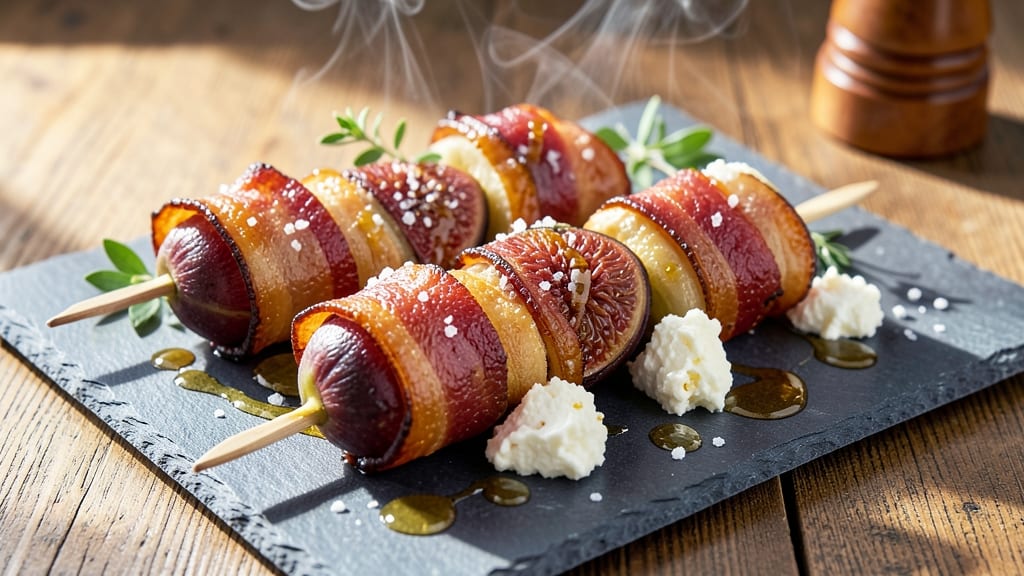
This bacon-wrapped figs with goat cheese recipe transforms a simple appetizer into an elegant, 15-minute masterpiece that balances sweet and savory perfectly. The crispy bacon adds smoky depth while the creamy goat cheese melts into the warm figs, creating a texture that's both tender and satisfying.
I developed this dish after realizing how often I reached for figs and bacon separately—until I combined them into one irresistible bite.
The secret lies in the high-heat searing of the bacon-wrapped figs, which renders the fat into crispy pockets while keeping the fruit just soft enough to hold the cheese. Goat cheese, with its tangy richness, cuts through the sweetness of the figs and complements the smoky bacon beautifully.
This dish works as a standalone appetizer, a brunch centerpiece, or even a sophisticated side for holiday gatherings.
What you’ll end up with is a visually stunning plate of golden-brown bacon-wrapped figs nestled in a pool of melted goat cheese, drizzled with honey for extra sweetness. The contrast of textures—crispy, creamy, and juicy—makes every bite unforgettable.
The best part? It’s easy to customize: swap in brie for a richer cheese or add a sprinkle of flaky salt for extra depth.
Perfect for impressing guests or treating yourself to a gourmet bite, this recipe proves that elegant flavors don’t require complicated techniques. Whether you’re grilling, baking, or pan-searing, the result is always restaurant-worthy. Let’s get cooking!
Ingredients for bacon wrapped figs with goat cheese
Four ripe figs, crispy bacon, and creamy goat cheese create this stunning appetizer in minutes.
| Ingredient | Amount | Notes |
|---|---|---|
| Fresh Figs 🍇 | 4 whole | Medium-sized, firm but ripe |
| Thick-Cut Bacon 🥓 | 8 slices | Applewood smoked preferred |
| Goat Cheese 🧀 | 8 oz | Soft, creamy variety like Chèvre |
| Extra-Virgin Olive Oil 🫒 | 1 tbsp | For drizzling, fruity variety |
| Honey 🍯 | 2 tsp | Wildflower or clover preferred |
| Flaky Sea Salt 🧂 | ½ tsp | Maldon or Jacobsen preferred |
| Fresh Thyme Leaves 🌿 | ¼ cup | Chopped, for garnish |
| Black Peppercorns 🌶️ | ¼ tsp | Freshly cracked, coarse grind |
| Unsalted Butter 🧈 | 1 tbsp | For extra richness |
| Wooden Skewers 🪵 | 4 whole | Soaked in water for 15 mins |
The figs are the star—look for plump, firm ones with a vibrant purple hue and no soft spots. Whole Foods or local farmers markets usually have the best selection, but any grocery store's produce section will do. Applewood-smoked bacon adds that perfect smoky depth, so grab a thick-cut pack from the deli counter if possible. Goat cheese should be soft and creamy (think Chèvre), not crumbly like feta. If yours is too firm, let it sit at room temperature for 15 minutes before using. For the honey, anything labeled 'wildflower' or 'clover' will give you that floral sweetness that pairs perfectly with the smoky bacon.
No applewood bacon? Regular bacon works fine—just skip the extra wood smoke notes. Short on goat cheese? Brie or fresh mozzarella melts beautifully, though the tang will be different. Fig substitutes? Fresh pears or peaches in season work well, though they'll need less cooking time. The wooden skewers are optional but help keep everything together—if you skip them, use toothpicks instead. For extra flair, try wrapping the figs in prosciutto instead of bacon—it's a game-changer for a more elegant presentation. And if you're feeling fancy, swap the thyme for fresh rosemary or even edible flowers for garnish.
Prep ahead by wrapping the bacon around the figs and storing them in the fridge for up to 4 hours before cooking—this lets the flavors meld. The goat cheese should stay cold until just before serving to prevent melting. Once cooked, these keep warm for 20 minutes on a wire rack over a baking sheet. For make-ahead meals, assemble the figs with cheese and honey, then refrigerate for up to 2 days—just warm through before serving. The bacon stays crispy best when cooked fresh, though, so plan to serve these within an hour of searing.
Why You'll Love This Recipe
- Five-Ingredient Magic: I swear by this recipe because it’s the kind of thing you can pull off with what’s already in your fridge. Fresh figs, thick-cut bacon, goat cheese—those are the stars, and they don’t need a sidekick. Honestly, the olive oil and honey just tie everything together like a hug.
- Crispy-Creamy Bliss: That first bite? Crispy bacon meets warm, jammy figs, then the cool, tangy goat cheese melts into a creamy center. It’s the kind of contrast that makes you close your eyes and sigh—no fancy plating required.
- Weeknight to Dinner Party: Between us, this is my go-to when I need something impressive but still feels like a weeknight. Toss a few on a charcuterie board for guests, or serve them as a side to steak and watch everyone reach for seconds. (Yes, even on a Tuesday night.)
- Leftovers? More Like Second Helpings: Here’s what sold me—you’ll make too many, but they reheat beautifully. Pop them in the oven for 5 minutes, and that bacon gets crispy again while the figs soften just enough. My kids beg for these the next day, and I don’t even pretend to be mad about it.
Step-by-step instructions for bacon-wrapped figs with goat cheese
Here's how to create a perfect balance of smoky, sweet, and creamy flavors in just minutes.
Prepare the Figs and Skewers
Start by soaking the 4 whole wooden skewers in water for 15 minutes—this prevents them from burning during cooking. While they soak, gently rinse the 4 whole fresh figs under cool water and pat them completely dry with paper towels. You want them to be clean but still firm, as this helps them hold their shape when wrapped.
Use a small sharp knife to carefully pierce each fig through the stem end and out the opposite side, creating a clean channel for the skewer. This step is crucial for even cooking and easy assembly later. I like to make the holes just wide enough to accommodate the skewers without tearing the delicate fruit skin.
Wrap Figs with Bacon and Assemble
Lay out the 8 slices of thick-cut bacon on a clean surface. Place one fig on each slice and wrap the bacon tightly around the fruit, securing it with a small piece of the wooden skewer if needed. You'll want each fig completely encased in bacon—this creates that perfect crispy exterior while keeping the fruit tender inside.
Once wrapped, slide each fig-bacon package onto the soaked wooden skewers. Arrange them on a plate and refrigerate for 10 minutes before cooking. This brief chilling helps the bacon hold its shape during the cooking process and prevents the figs from falling apart when you handle them.
Cook the Bacon-Wrapped Figs
Preheat your oven to 400°F and line a baking sheet with parchment paper. Arrange the fig skewers on the prepared sheet, spacing them about 1 inch apart to allow for even browning. Bake for 12-15 minutes until the bacon is golden brown and crispy, and the figs are tender when pierced with a small knife.
Watch closely after 10 minutes—the bacon should start to crisp up noticeably. If any pieces look like they're browning too quickly, rotate the skewers for even cooking. The figs should be warm through but still hold their shape. Remove from the oven and let cool for 2 minutes before serving.
Prepare the Goat Cheese Topping
While the figs cook, create the goat cheese topping by combining the 8 oz goat cheese, 2 tsp honey, 0.5 tsp flaky sea salt, and 0.25 tsp cracked black peppercorns in a small bowl. Mix gently with a fork until just combined—you want to preserve the texture of the goat cheese while incorporating the flavors.
Spread the mixture onto a serving platter or individual plates, creating small mounds about 1 inch in diameter. Drizzle with 1 tbsp extra-virgin olive oil and sprinkle with the 0.25 cup chopped fresh thyme leaves. This creates a beautiful presentation while enhancing the flavors with aromatic herbs and a touch of richness.
Assemble and Serve
Carefully transfer the cooked fig skewers to the goat cheese mixture, pressing down slightly so the figs nestle into the cheese. The warm figs will help soften the goat cheese slightly, creating a delicious contrast of temperatures and textures.
For extra richness, add a small dollop of 1 tbsp unsalted butter to each serving before plating. The butter adds a luxurious finish that complements the smoky bacon and sweet figs. Serve immediately while the bacon is still crispy and the goat cheese is at its best temperature for spreading.
Pro Tips For Making Bacon Wrapped Figs With Goat Cheese
- USE HALF THE GOAT CHEESE: Fresh figs are juicy—packing them with a full ounce of goat cheese risks a soggy mess. Start with ½ ounce per fig, then add more if you’re serving this as a standalone bite. Trust me, your first batch will tell you when to stop.
- WRAP FIG STEMS FIRST: The stem is where the bacon clings best—pinch the bacon strip around it before folding over the fig. This keeps the cheese from sliding out during baking and gives you a cleaner, more secure wrap. (Yes, it looks fussy, but it’s worth it.)
- BAKE AT 375°F FOR 18 MINUTES: Too low, and the bacon stays limp; too high, and the figs burn before the cheese melts. Stick to 375°F and pull them when the bacon’s edges are crisp but the center still has a little give. They’ll finish cooking on the plate.
- DRIZZLE HONEY AFTER BAKING: Adding honey too early makes the bacon sticky and uneven. Brush it on just before serving—let that heat caramelize it for a glossy finish. A quick drizzle of extra-virgin olive oil right after baking also keeps the cheese from drying out.
Pro cooking tips for perfect results
High-Heat Searing
Use a cast-iron skillet or baking sheet for maximum crispiness—both conduct heat evenly and create that perfect caramelized crust. If you prefer stovetop searing, cook the bacon-wrapped figs over medium-high heat for 3-4 minutes per side until golden.
For oven baking, 400°F is ideal—any hotter risks burning the bacon before the figs soften. I find the oven method gives the most even results for batch cooking. 🔥
Bacon Wrapping Tricks
Secure the bacon tightly around the figs using toothpicks or small skewer pieces—this prevents unraveling during cooking. For extra crispiness, wrap the bacon twice around each fig, overlapping the edges. If your bacon is thin, layer two slices per fig for better coverage.
I also recommend chilling the wrapped figs for 10 minutes before cooking to help the bacon hold its shape.
Goat Cheese Temperature
Serve the goat cheese mixture slightly warm (not melted) for the best texture—this creates a creamy, spreadable consistency that contrasts perfectly with the crispy bacon. If your kitchen is warm, assemble the cheese topping just before serving to prevent melting.
For extra elegance, use a small spoon to create neat mounds, then press the figs gently into the center. 🧀
Wooden Skewers Alternative
If you don’t have wooden skewers, use toothpicks or even sturdy cocktail picks—just soak them in water for 10 minutes first to prevent burning. For a more rustic look, skip skewers entirely and wrap the figs in bacon, then place them cut-side down on a baking sheet.
This method works well but requires extra care to prevent figs from falling apart during cooking.
Honey Drizzle Timing
Drizzle the honey right before serving to maintain its fresh, vibrant flavor—heat can make it lose its delicate floral notes. For a glossy finish, warm the honey slightly (10 seconds in the microwave) before drizzling.
I also recommend using a small squeeze bottle for even coverage. If you prefer a sweeter touch, add 1 extra teaspoon of honey to the goat cheese mixture before plating.
Make-Ahead Strategy
Assemble the bacon-wrapped figs up to 4 hours ahead and refrigerate—the flavors meld beautifully, but cook them fresh for the crispiest bacon. For the goat cheese topping, mix everything except the olive oil and store in an airtight container for up to 2 days.
Add the olive oil and thyme just before serving to keep the herbs fresh. Reheat the figs in a 350°F oven for 5 minutes before assembling with the cheese. ✨
Nutrition facts
Frequently asked questions
Can I use dried figs instead of fresh?
Fresh figs are ideal for this recipe because they hold their shape and texture perfectly when wrapped in bacon. Dried figs would become too soft and might fall apart during cooking. If you absolutely must use dried figs, rehydrate them in warm water for 10 minutes first, then pat completely dry before wrapping. The flavor will be concentrated but less tender than fresh.
What if I don't have wooden skewers?
No problem! Use toothpicks or sturdy cocktail picks instead—just soak them in water for 10 minutes before using to prevent burning. For a completely skewer-free approach, wrap the bacon tightly around the figs and place them cut-side down on a baking sheet. This method works well but requires extra care to keep the figs intact during cooking.
Can I make this ahead of time?
Yes! Assemble the bacon-wrapped figs up to 4 hours ahead and refrigerate—the flavors meld beautifully. Cook them fresh for the crispiest bacon, but if reheating, warm in a 350°F oven for 5 minutes before serving. For the goat cheese topping, mix everything except the olive oil and store in an airtight container for up to 2 days. Add the olive oil and herbs just before serving.
What's the best way to reheat leftover bacon-wrapped figs?
Reheat in a 350°F oven for 5-7 minutes on a wire rack over a baking sheet to maintain crispiness. Microwaving will make the bacon soggy. For extra flavor, brush with a little olive oil before reheating. The goat cheese topping should be added fresh after reheating to prevent melting.
Can I substitute goat cheese with something else?
For a richer option, use brie or camembert—they melt beautifully and add depth. For a lighter option, try fresh mozzarella, though it will be less tangy. If you prefer a nutty flavor, ricotta mixed with a little honey works well too. Just adjust the seasoning to complement your cheese choice.