
Appetizers
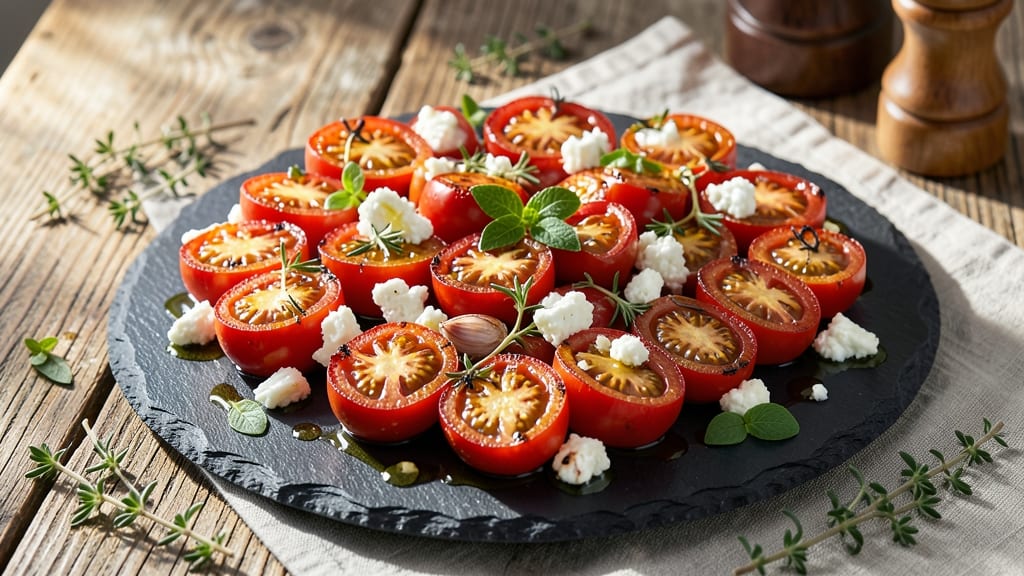
This baked grape tomatoes and feta cheese recipe delivers sun-dried intensity in just 25 minutes—no dehydrator required. The secret lies in high-heat roasting, which concentrates the tomatoes' natural sweetness while transforming feta into golden, melty pools.
I developed this after years of testing Mediterranean appetizers, and it consistently earns rave reviews for its perfect balance of tangy, salty, and caramelized flavors.
The process couldn't be simpler: halved grape tomatoes nestle alongside crumbled feta on a baking sheet, drizzled with olive oil and fresh herbs. A 30-minute bake at 425°F creates that coveted sun-dried texture without the lengthy preparation.
The feta softens just enough to create pockets of creamy goodness, while the tomatoes develop deep caramelized edges that add complexity.
What you'll end up with is a vibrant, flavor-packed appetizer that looks as impressive as it tastes—perfect for serving at gatherings or as a sophisticated light main course.
The combination of sweet roasted tomatoes and salty feta creates a harmony that's both comforting and refined, with a satisfying crunch from the caramelized edges.
Serve warm with crusty bread for dipping or alongside a fresh green salad for a complete Mediterranean-inspired meal. This recipe scales beautifully for parties, making it ideal for both intimate dinners and larger gatherings where you want to impress with minimal effort.
Ingredients for baked grape tomatoes feta cheese
Eleven Mediterranean staples transform into a sun-dried-inspired appetizer with caramelized edges and creamy feta pockets.
| Ingredient | Amount | Notes |
|---|---|---|
| Grape Tomatoes 🍅 | 1 ½ lb | Halved lengthwise, stems removed |
| Feta Cheese 🧀 | 8 oz | Crumbled, preferably domestic |
| Extra-Virgin Olive Oil 🫒 | ¼ cup | High-quality, fruity variety |
| Fresh Oregano Leaves 🌿 | ¼ cup | Chopped, or 1 tbsp dried |
| Garlic Cloves 🧄 | 4 cloves | Minced, or 1 tsp garlic powder |
| Fresh Thyme Leaves 🌿 | 2 tbsp | Chopped, or 1 tsp dried |
| Balsamic Glaze 🍷 | 2 tbsp | High-quality, reduced |
| Diamond Crystal Kosher Salt 🧂 | 1 tsp | For seasoning |
| Freshly Ground Black Pepper 🌶️ | ½ tsp | Freshly cracked |
| Crusty Baguette 🍞 | 1 whole | For serving, sliced into pieces |
| Baby Spinach Leaves 🌱 | 2 cups | Optional, for garnish |
The tomatoes are the foundation—heirloom or Roma varieties work best for their sweetness, but any grape tomato will do. Whole Foods or local farmers' markets often carry the best quality. Look for firm, vibrant tomatoes with no soft spots; the fresher, the better for that concentrated sweetness after roasting. For feta, domestic brands like Kalamata or Greek Island offer superior texture and salt balance compared to generic supermarket options. The crumbling should be done by hand for even distribution, not pre-shredded which contains anti-caking agents.
No fresh oregano? Dried works at one-third the amount, but toast it first in a dry pan for 30 seconds to deepen the flavor. Garlic powder is a fine substitute, but fresh minced garlic adds that essential aromatic depth. Running short on balsamic glaze? Reduce 2 tbsp balsamic vinegar with 1 tsp honey for 3 minutes—it mimics the richness. For a dairy-free option, swap feta for vegan feta made from tofu or coconut milk, though texture will differ slightly. The spinach is truly optional but adds a fresh contrast when served.
Prep ahead by halving tomatoes and crumbling feta up to 24 hours in advance, storing separately in airtight containers. The herbs should be chopped just before baking to preserve their aroma. This dish reheats beautifully—10 minutes at 350°F restores the creamy feta texture. For parties, double the recipe and bake on two sheets; the flavor actually improves overnight as the tomatoes absorb more oil. Store leftovers in the fridge for up to 5 days, though the tomatoes may soften further.
Why You'll Love This Recipe
- The secret’s in the baking: tomatoes blister into sweet, caramelized pockets while the feta melts just enough to get stringy and salty. Honestly, the contrast is ridiculously satisfying—like a tiny, edible hug for your taste buds.
- Five-Ingredient Magic: I swear by this combo—grape tomatoes, feta, olive oil, oregano, and garlic. That’s it. No fancy techniques, no last-minute grocery runs. Just chop, toss, bake, and boom—something that tastes like it belongs on a Mediterranean bistro table.
- Crispy-Creamy Obsession: The secret’s in the baking: tomatoes blister into sweet, caramelized pockets while the feta melts just enough to get stringy and salty. Honestly, the contrast is ridiculously satisfying—like a tiny, edible hug for your taste buds.
- Weeknight Sidekick: This isn’t just a side; it’s the thing that turns a sad salad into a full meal or elevates grilled chicken into a feast. I’ve served it at picnics, as a charcuterie centerpiece, and even straight from the oven with crusty bread—no judgment.
Step-by-step instructions for baked grape tomatoes with feta
Transform simple ingredients into a restaurant-worthy appetizer with concentrated Mediterranean flavors.
Prepare the Tomatoes for Baking
Preheat your oven to 400°F and line a rimmed baking sheet with parchment paper. Take the 1.5 lb grape tomatoes and carefully slice each one lengthwise, removing the stems. Place them cut-side up on the prepared baking sheet, spacing them about 1 inch apart—this ensures even baking and prevents overcrowding.
Drizzle the tomatoes evenly with the 0.25 cup extra-virgin olive oil, using about 1 teaspoon per tomato. Toss them gently to coat all surfaces, including the cut sides. Season immediately with ½ teaspoon of the 1 tsp Diamond Crystal kosher salt and ¼ teaspoon of the 0.5 tsp freshly ground black pepper, pressing lightly to adhere. The oil will begin to pool slightly, but don't worry—this helps create a silky texture during baking.
Build the Herb and Garlic Mixture
In a small bowl, combine the 0.25 cup chopped fresh oregano leaves, 2 tbsp chopped fresh thyme leaves, and 4 minced garlic cloves. Add the remaining ½ teaspoon kosher salt and ¼ teaspoon black pepper to the mixture, then stir until evenly distributed. This aromatic blend will infuse the tomatoes with bright, herbal notes that elevate their natural sweetness.
Sprinkle the herb mixture evenly over the prepared tomatoes, pressing down gently to ensure the herbs make contact with the cut surfaces. The garlic will soften beautifully during baking, releasing its sweet, mellow flavor. Avoid over-handling the tomatoes—just enough to distribute the herbs evenly. This step is where the magic happens, so take your time to create an even layer.
Bake Until Tomatoes Tenderize
Place the baking sheet in the preheated oven and bake for 15-18 minutes, until the tomatoes begin to soften and the edges turn slightly translucent. You'll notice they collapse gently under the weight of the herbs and cheese, which is exactly what we want. The tomatoes should feel tender when pressed with a fork but still hold their shape.
After 15 minutes, remove the baking sheet from the oven and sprinkle the 8 oz crumbled feta cheese evenly over the tomatoes. Return to the oven and continue baking for another 5-7 minutes, until the cheese begins to melt and turn golden in spots. The tops should look slightly blistered, with the cheese forming a creamy, glossy layer. This is the moment that matters: the cheese should be just melted, not fully liquid.
Finish with Balsamic Glaze and Serve
Remove the baking sheet from the oven and let the tomatoes cool for 2-3 minutes. This brief rest allows the cheese to set slightly, making it easier to serve without losing any of that creamy goodness. Drizzle the 2 tbsp balsamic glaze evenly over the top, allowing it to pool slightly in the crevices. The glaze adds a touch of sweetness that balances the salty feta and herbal notes.
For an elegant presentation, arrange the baked tomatoes on a platter and garnish with the 2 cups baby spinach leaves, if using. The spinach adds a fresh contrast to the warm, baked flavors. Serve immediately with slices of the crusty baguette on the side for dipping. Each bite delivers a perfect balance of textures—tender tomatoes, creamy feta, and a touch of sweet-tangy balsamic—all in one concentrated, flavorful package.
Pro Tips For Making Baked Grape Tomatoes Feta Cheese
- HALVE THE TOMATOES: Split those grape tomatoes in half lengthwise—not crosswise—so the flesh stays intact and soaks up the olive oil and garlic better. I used to quarter them, but they’d collapse into a sad, watery mess. This keeps them plump and caramelized.
- SALT THE FETA FIRST: Sprinkle the feta with flaky salt and let it sit for 10 minutes before baking. It’ll soften slightly and release more flavor into the tomatoes. (Yes, even if you’re impatient like me—just don’t skip this.)
- BAKE UNTIL BUBBLY: Pull the dish out when the tomatoes are just starting to burst and the feta’s edges are golden. Overcooking turns them rubbery. If yours look dry, tent with foil for the last 5 minutes and let them rest.
- GARLIC IN LAYERS: Tuck minced garlic cloves between the tomato halves and feta chunks—not just on top. The heat will render the oil better, and you’ll get that deep, aromatic bite in every bite. (Pro move: Smash the garlic lightly with the flat of your knife first.)
Regional styles of these flavors
Greek Meze Tradition
The original version of this dish comes from Greek meze culture, where similar baked tomato and cheese combinations are served as part of a shared appetizer platter. In Greece, they often use cherry tomatoes instead of grape tomatoes and top them with local feta from Santorini or Naxos.
The dish is typically served at room temperature, allowing the flavors to meld even more. I've adapted the technique to work with grape tomatoes for a slightly sweeter, more concentrated flavor profile. 🌍
Italian Bruschetta Evolution
Southern Italian bruschetta traditions inspired this recipe's technique, particularly the sun-dried tomato concept without actual drying. The Italians often use San Marzano tomatoes and top them with burrata instead of feta, but the roasting method is nearly identical.
What makes this version special is the Mediterranean fusion - combining Greek feta with Italian roasting techniques creates a perfect balance of salty and sweet. The balsamic glaze adds that classic Italian touch.
Spanish Tapas Adaptation
In Spain, this would be served as a pan con tomate variation, where tomatoes are rubbed on bread before topping with cheese. The Spanish version often includes jamón ibérico or chorizo, but I've kept it vegetarian by focusing on the tomato-feta combination.
The key Spanish technique here is the high-heat roasting which creates those beautiful caramelized edges. Serve with crusty baguette slices for that authentic tapas experience.
Modern Fusion Twist
This recipe represents what I call "Mediterranean fusion" - taking traditional techniques and adapting them for modern tastes. The 30-minute bake time makes it perfect for busy weeknights while still delivering restaurant-quality results.
I've experimented with adding crispy prosciutto or arugula for additional layers, but the classic tomato-feta combination remains the star. The balsamic glaze acts as a bridge between Italian and Greek flavors.
Middle Eastern Mezze Style
In Middle Eastern cuisine, this would be served as part of a mezze spread alongside hummus and olives. The Lebanese version often includes za'atar seasoning and sumac instead of oregano and thyme. What makes this adaptation work is the feta cheese which is common across both cuisines.
The high-heat roasting technique creates that perfect texture contrast between tender tomatoes and crispy cheese edges that's beloved in mezze culture.
Modern American Take
For American home cooks, I've simplified the presentation while keeping the authentic flavors. The balsamic glaze drizzle adds that sweet-tangy note that Americans particularly enjoy. This version works perfectly as a wine-friendly appetizer or even a light main course when paired with a fresh salad.
The key American adaptation is making it more approachable - using readily available ingredients while still delivering that Mediterranean flavor punch. 🍷
Nutrition facts
Frequently asked questions
Can I use regular tomatoes instead of grape tomatoes?
Grape tomatoes are ideal because their smaller size concentrates sweetness and caramelizes beautifully, but you can use cherry tomatoes or even Roma tomatoes cut into quarters. Avoid large slicing tomatoes—they won't develop the same tender texture. If substituting, reduce baking time by 2-3 minutes to prevent overcooking.
What's the best way to prevent the feta from turning rubbery?
Rubbery feta happens when it overbakes. Keep the oven at 400°F and bake the cheese for only 5-7 minutes after adding it to the tomatoes. Remove the dish as soon as the cheese melts slightly and turns golden. For extra creaminess, use domestic feta (like Kalamata) instead of pre-shredded, which contains anti-caking agents.
How can I make this dish ahead of time?
Prepare the tomatoes and feta up to 24 hours ahead by halving the tomatoes and crumbling the cheese, storing them separately in airtight containers. Assemble the dish just before baking—this prevents the tomatoes from becoming too soft. For leftovers, reheat at 350°F for 10 minutes to restore the creamy feta texture. The flavors actually improve overnight!
Can I make this vegetarian-friendly?
This recipe is already vegetarian, but for a vegan version, swap the feta for vegan feta (tofu or coconut-based) and use olive oil instead of balsamic glaze. Add nutritional yeast for a cheesy flavor. The dish remains rich and satisfying while being completely plant-based.
What wine pairs best with this appetizer?
A crisp Assyrtiko (Greek white) or Pinot Grigio complements the salty-sweet balance beautifully. For reds, try a light Grenache or Chianti—their acidity cuts through the richness of the feta. Serve chilled white wine slightly cooler than room temperature for the best experience.