
Appetizers
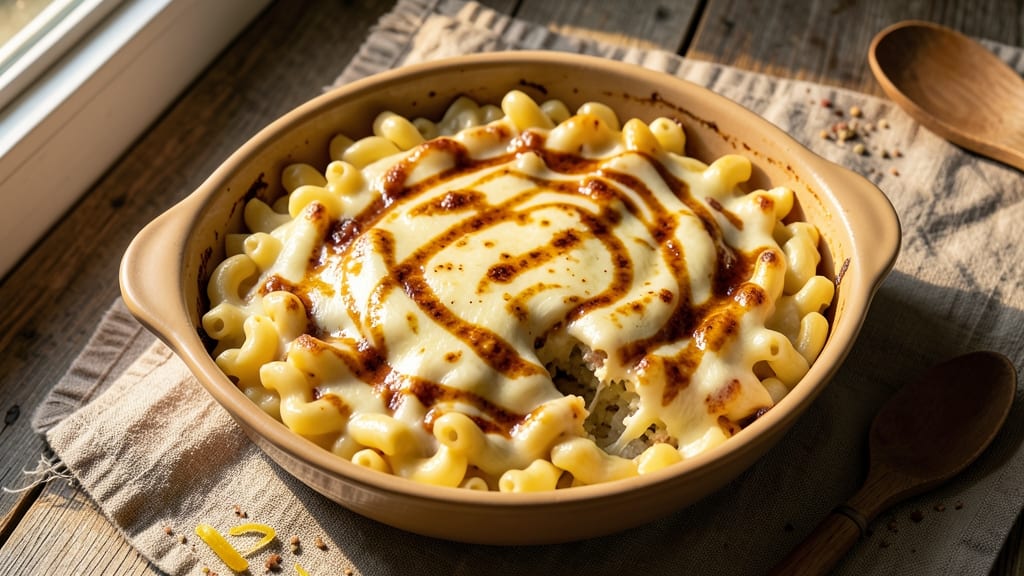
This baked mac and cheese recipe with mustard transforms a classic comfort dish into something bold and sophisticated—all while keeping the creamy, cheesy goodness you love. The secret? A touch of Dijon mustard, which cuts through the richness and adds a sharp, tangy depth that makes every bite unforgettable. I developed this recipe after years of perfecting the balance between creamy sauce and crispy topping, and the mustard was the final game-changer.
The mustard doesn’t just add flavor—it creates texture too. A spoonful of Dijon or whole-grain mustard folded into the cheese sauce adds a subtle bite that prevents the dish from feeling too heavy, while also helping the sauce cling perfectly to the pasta.
And when you bake it, the mustard’s acidity reacts with the cheese, creating a bubbly, golden crust that’s impossible to resist. This isn’t just mac and cheese; it’s a restaurant-quality dish that feels like a hug in every bite.
What makes this recipe stand out is how approachable it is. You’ll start with elbow macaroni cooked to al dente perfection, then build a velvety cheese sauce using sharp cheddar, Gruyère, and a splash of heavy cream—all tied together with that mustard kick.
The result? A dish that’s creamy inside, crispy on top, and packed with layers of flavor that’ll have everyone asking for seconds. The best part? It’s ready in under an hour, with minimal effort but maximum impact.
Whether you’re serving it as a main course for a cozy dinner or bringing it to a potluck, this mac and cheese delivers on comfort and sophistication.
The mustard’s sharpness elevates the dish without overpowering it, making it a versatile favorite for any occasion. Let’s get cooking—your taste buds will thank you.
Ingredients for baked mac and cheese recipe mustard
Here's what you need to make this mustard-kissed mac and cheese that's creamy inside and crispy on top.
| Ingredient | Amount | Notes |
|---|---|---|
| Elbow Macaroni 🍝 | 12 oz | Cooked to al dente perfection |
| Sharp White Cheddar Cheese 🧀 | 2 cups | Shredded, block preferred |
| Gruyère Cheese 🧀 | 1 cup | Shredded, nutty flavor |
| Heavy Whipping Cream 🥛 | ½ cup | Full-fat for richness |
| Dijon Mustard 🍯 | 1 tbsp | Sharp, tangy variety |
| Butter 🧈 | 4 tbsp | Unsalted, melted |
| All-Purpose Flour 🌾 | 2 tbsp | For thickening sauce |
| Milk 🥛 | ¼ cup | Whole milk preferred |
| Garlic Cloves 🧄 | 2 cloves | Minced for flavor |
| Salt 🧂 | ¾ tsp | Kosher or sea salt |
| Black Pepper 🌶️ | ½ tsp | Freshly ground preferred |
| Panko Breadcrumbs 🍞 | ¼ cup | For crispy topping |
| Extra-Virgin Olive Oil 🫒 | 1 tbsp | For crispy topping |
The mustard is non-negotiable here—Dijon is the gold standard, but whole-grain works too. Whole Foods or Trader Joe's carry great options, but any jarred Dijon will do. The Gruyère is what separates this from basic cheddar—it adds that nutty depth that makes it feel restaurant-quality. Buy a wedge and grate it yourself; pre-shredded gets clumpy. For the pasta, elbow macaroni holds its shape best when baked, but any short pasta works. Cook it al dente—it'll finish cooking in the oven.
No Dijon? Yellow mustard at half the amount works in a pinch, but you'll lose that sophisticated tang. Sharp cheddar is key—Kraft is fine, but Cabot or Parmalat take it to the next level. The butter matters here too—unsalted so you control the seasoning. If you're watching calories, light cream works, but trust me on the full-fat version. Panko for the topping? No substitutions—it's what gives that perfect crunch. Toast it in the oil for 2 minutes before baking for extra crispiness.
This reheats beautifully—just cover with foil and warm in the oven for 10 minutes. Keeps in the fridge for 4-5 days in an airtight container. For leftovers, portion into individual servings before baking—it's less messy that way. Freezes for 3 months, though texture changes slightly. The mustard flavor actually intensifies overnight, so it's even better the next day.
Why You'll Love This Recipe
- One-Pot Magic: I swear by this recipe when I’m too tired to scrub pots—just boil the pasta, mix in the cheese sauce (that Gruyère melts like a dream), and fold in the Dijon mustard for that tangy kick. Cleanup? One bowl, one spatula, and I’m out in five minutes.
- Mustard Magic: Between us, that sharp Dijon mustard is the secret weapon here. It cuts through the richness of the cheddar and Gruyère, giving it this grown-up depth that still feels cozy. (Yes, even on a Tuesday night.)
- Lunchbox Hero: I pack this cold the next day—yes, really—and it’s a hit with my kids. The mac holds together, the cheese stays creamy, and the mustard adds just enough zing to make it feel like a special treat. No sad soggy leftovers here.
- Cheap Thrills: Sharp cheddar and Gruyère stretch further than you’d think, and the mustard adds flavor without costing a fortune. For under $10, I feed four people a meal that feels indulgent. Budget win, every time.
Step-by-step instructions for baked mac and cheese with mustard
Here's how to create a rich, tangy baked mac and cheese that brings classic comfort to new heights.
Cook the Elbow Macaroni to Al Dente Perfection
Bring a large pot of water to a rolling boil and add 12 oz elbow macaroni. Stir immediately to prevent sticking. Cook for 1 minute less than the package directions—this ensures the pasta finishes cooking in the oven while absorbing the creamy sauce. Drain the pasta and transfer it to a large bowl.
While the pasta cooks, I like to prepare the sauce components. The slight undercooking prevents mushy pasta, and the residual heat in the oven will finish the cooking process beautifully. You'll know it's perfect when you can still feel a slight bite in the center of the pasta.
Create the Creamy Mustard Sauce
In a medium saucepan, melt 4 tbsp butter over medium heat. Add 2 tbsp all-purpose flour and whisk constantly for 1-2 minutes until the mixture forms a smooth paste and turns golden. This roux forms the foundation of our creamy sauce.
Slowly pour in 0.5 cup heavy whipping cream and 0.25 cup milk while whisking continuously. Bring the mixture to a gentle simmer and cook for 3-4 minutes until it thickens enough to coat the back of a spoon. Remove from heat and stir in 1 tbsp Dijon mustard, 2 cloves minced garlic, 0.75 tsp salt, and 0.5 tsp black pepper.
Here's where the mustard really shines—the tangy depth cuts through the richness of the cheese, creating a balanced flavor profile. If you prefer a smoother texture, you can strain the sauce through a fine-mesh sieve at this point to remove any garlic bits.
Combine Cheeses and Pasta
Add the cooked elbow macaroni to the saucepan with the warm sauce. Stir well to coat each strand completely. Then, gradually add the 2 cups sharp white cheddar cheese and 1 cup gruyère cheese, stirring constantly until fully melted and smooth.
The gruyère adds a wonderful nutty complexity that pairs perfectly with the sharp cheddar. If you notice any unmelted cheese pockets, add a splash of hot milk from the pot to help it melt completely. The mixture should be thick and creamy, almost like a thick soup that coats a spoon.
Assemble and Bake to Golden Perfection
Preheat your oven to 375°F. Grease a 9x9-inch baking dish with 1 tbsp extra-virgin olive oil or butter. Transfer the macaroni and cheese mixture to the prepared dish and spread it evenly. The dish should be about ¾ full—don't overfill it or the cheese might overflow during baking.
In a small bowl, mix together 0.25 cup panko breadcrumbs with 1 tbsp extra-virgin olive oil and a pinch of salt. Sprinkle this mixture evenly over the top of the macaroni and cheese. The panko will create a delicious crispy crust that contrasts beautifully with the creamy interior.
Bake Until Bubbly and Golden
Bake the macaroni and cheese for 20-25 minutes until the top is golden brown and the edges are bubbling. You'll know it's ready when the cheese is fully melted and the top crust has developed a beautiful golden color. If it's browning too quickly, tent it loosely with aluminum foil.
Let the baked macaroni and cheese rest for 5-10 minutes before serving. This resting period allows the cheese to set slightly, making it easier to slice and serve. The mustard's sharpness will have mellowed just enough to complement the rich, creamy cheese without overpowering it.
Pro Tips For Making Baked Mac And Cheese Recipe Mustard
- CRANK THE OVEN HIGHER: That 375°F setting is too polite for mustard mac and cheese. Bake it at 400°F for the first 10 minutes—this gets the top golden fast while keeping the center creamy. I learned this after two batches where the crust turned sad and pale.
- GRATE CHEESE FRESH: Pre-shredded cheese has anti-caking agents that make your sauce grainy. Buy blocks of sharp cheddar and Gruyère, then grate them yourself—it takes 5 minutes but makes a world of difference. (Yes, even if you’re impatient like me.)
- WHISK THE MUSTARD IN COLD: Add the Dijon mustard to the warm cream while it’s still coolish—around 100°F. If you dump it in too hot, the mustard will cook out its sharpness and turn bitter. Stir it in last, then heat gently to blend.
- DON’T OVERMIX THE PASTA: Toss the cooked macaroni with the cheese sauce just until fully coated—no more. Overmixing makes it gummy and turns the baked top into a sad, flat blanket. A few dry spots? That’s normal. They’ll melt into perfection.
Regional styles of these flavors
Southern Comfort Style
In the American South, mac and cheese gets a smoky, soulful twist that pairs perfectly with mustard’s tang. Add ½ tsp smoked paprika and ¼ tsp cayenne pepper to the cheese sauce for a subtle BBQ-inspired depth.
Top with crumbled bacon and green onions before baking—this version feels like a hug from a Southern grandma. Serve with collard greens or cornbread for a full menu. 🌶️
New England Crispy Top
New England cooks prioritize that perfect crispy crust, and mustard takes it to the next level. Mix ¼ cup crushed Ritz crackers with the panko topping for extra crunch. Add 1 tsp Dijon mustard to the breadcrumb mix before sprinkling over the cheese.
Bake at 400°F for the last 5 minutes to get a deep golden crust. This version is a hit at family dinners—everyone fights for seconds. 🍞
Midwest Mustard Swirl
The Midwest loves bold flavors, and this version incorporates mustard in a creative way. After combining the cheese sauce with pasta, divide it into two bowls. In one, mix in 1 tbsp Dijon mustard and 1 tbsp heavy cream.
Swirl the two mixtures together in the baking dish for marbled effect. The mustard creates beautiful golden streaks throughout. Top with toasted breadcrumbs and a sprinkle of black pepper. 💛
Texas BBQ Twist
Texas-style baked mac and cheese gets a smoky-sweet upgrade with mustard. Add ¼ cup BBQ sauce (like Stubb's) to the cheese sauce along with the mustard. Stir in ½ cup cooked pulled pork (or shredded rotisserie chicken) for a hearty main course.
Top with crushed tortilla chips instead of panko for a Tex-Mex fusion. This version screams "weekend dinner" with minimal effort. 🔥
French-Inspired Gruyère
For a more elegant approach, lean into the Gruyère's French roots. Add 1 tbsp white wine (like Sauvignon Blanc) to the cheese sauce along with the mustard. Fold in 2 tbsp chopped shallots for depth.
Top with grated Parmesan and a sprinkle of fresh thyme before baking. This version feels fancy enough for dinner parties but still delivers that comforting mac and cheese experience. 🍷
Nutrition facts
Frequently asked questions
Can I use yellow mustard instead of Dijon in this recipe?
Yes, but you'll need to adjust the amount. Use ½ tablespoon of yellow mustard instead of 1 tablespoon Dijon since it's milder. The flavor won't be as sophisticated, but it'll still add a subtle tang. For best results, stick with Dijon—its sharpness cuts through the richness perfectly.
Why does my baked mac and cheese get watery after baking?
This usually happens when the cheese sauce isn't thick enough or the pasta releases too much moisture. To fix it, make sure your roux cooks for 2-3 minutes until golden before adding liquids. Also, drain your pasta very well and pat it dry with a towel. For extra insurance, add 1 tbsp cornstarch to the cheese mixture before baking.
What's the best way to reheat leftover baked mac and cheese?
Cover the dish with aluminum foil and warm in a 350°F oven for 10-15 minutes until heated through. For microwave reheating, sprinkle a few drops of milk over the surface first to restore creaminess. Avoid high heat—it can make the cheese greasy. The mustard flavor actually improves overnight, so leftovers taste even better!
Can I make this recipe ahead of time?
Assemble the dish (without baking) up to 24 hours ahead and refrigerate. When ready to bake, cover with foil and bake at 375°F for 30-35 minutes (5-10 minutes longer than fresh). For freezing, bake first, then cool completely before wrapping tightly. It keeps for 3 months in the freezer—just thaw overnight in the fridge before reheating.
What cheese can I substitute if I don't have Gruyère?
Try Parmigiano-Reggiano (½ cup) for a nutty flavor or fontina (1 cup) for extra creaminess. Avoid pre-shredded cheese—it contains anti-caking agents that prevent proper melting. If you're vegetarian, vegan cheddar works too, though the texture will be slightly different. The mustard still adds great depth to any cheese blend!